

12 Ambient Lighting Ideas for a Warm, Inviting Home
My talented and hospitable mother taught me from an early age that the right lighting is essential for a beautiful home. In this post, I’m going to dive into the importance of lighting in interior design and share 12 easy ambient lighting ideas that help create a warm and welcoming atmosphere.
This post contains affiliate links that earn me a commission. For more information, read my disclaimer.
Types of Interior Lighting
First, let’s go over the three basic types of interior lighting: ambient lighting, task lighting, and accent lighting.
1. Ambient Lighting
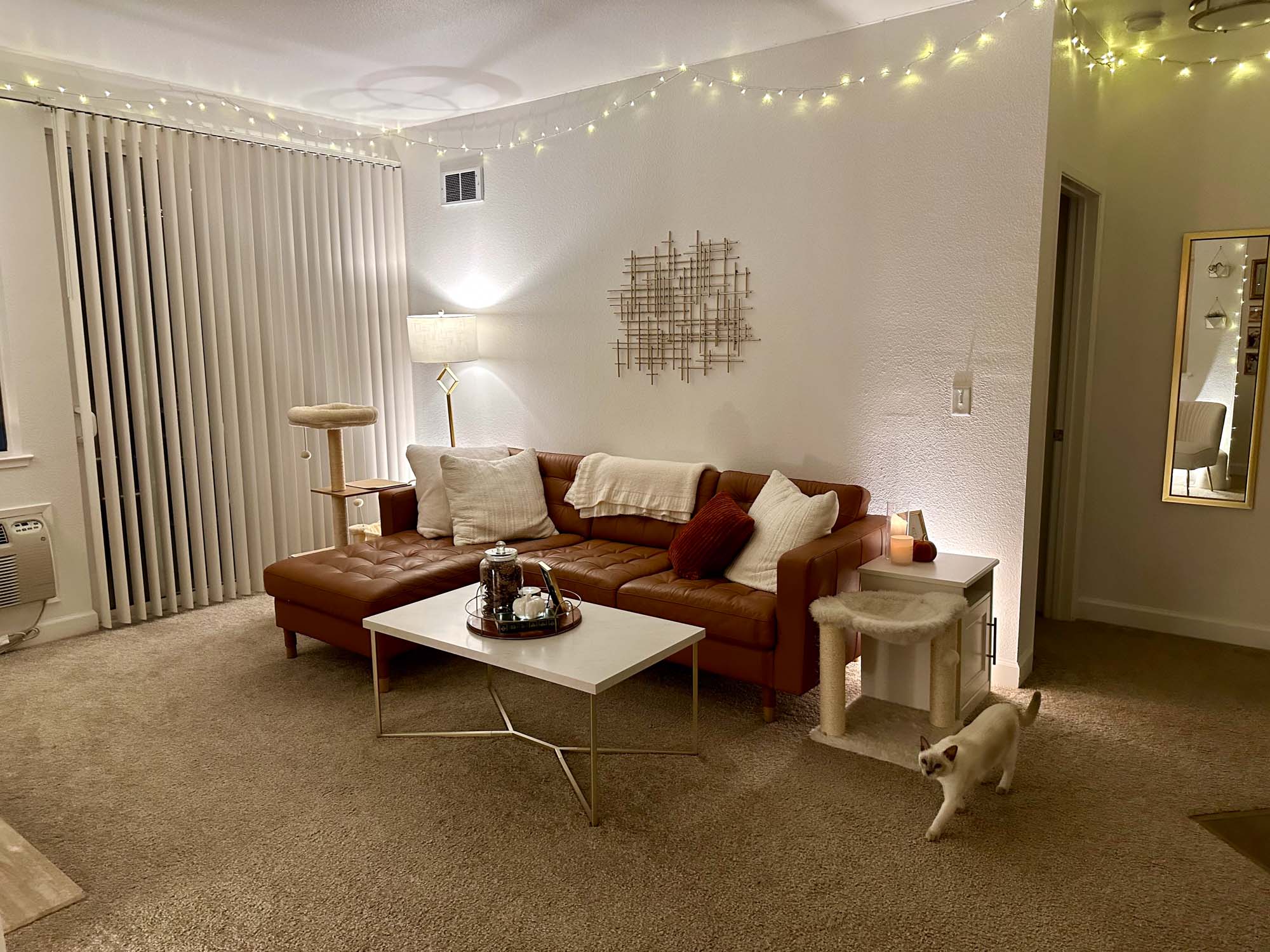
Ambient lighting is also known as general lighting. You’re probably familiar with the word “ambience” — it comes from the French word, which means “surrounding.”
That’s exactly what ambient lighting is — it surrounds you with its presence in an unobtrusive way that produces a general “glow.” It is usually (but not always) warm-toned, which creates an environment of tranquility and coziness.
2. Task Lighting
Task lighting is pretty self-explanatory — it is lighting that is used to accomplish a specific task, such as reading, working, or cooking. Generally speaking, task lighting is used more functionally than artistically. And while task lighting certainly plays an important role in lighting, it’s not something that I typically depend on as part of my interior design strategy.
For example, my primary kitchen light at our previous apartment was a bright overhead light that was probably fluorescent (more on that later). While I turned it on at night when cooking, it’s not part of my ambient lighting.
There are instances where task lighting can contribute to or amplify ambient lighting. For example, we have lamps by our couch and bed that we use to read, but they are also part of our general lighting and help fill out the room.
3. Accent Lighting
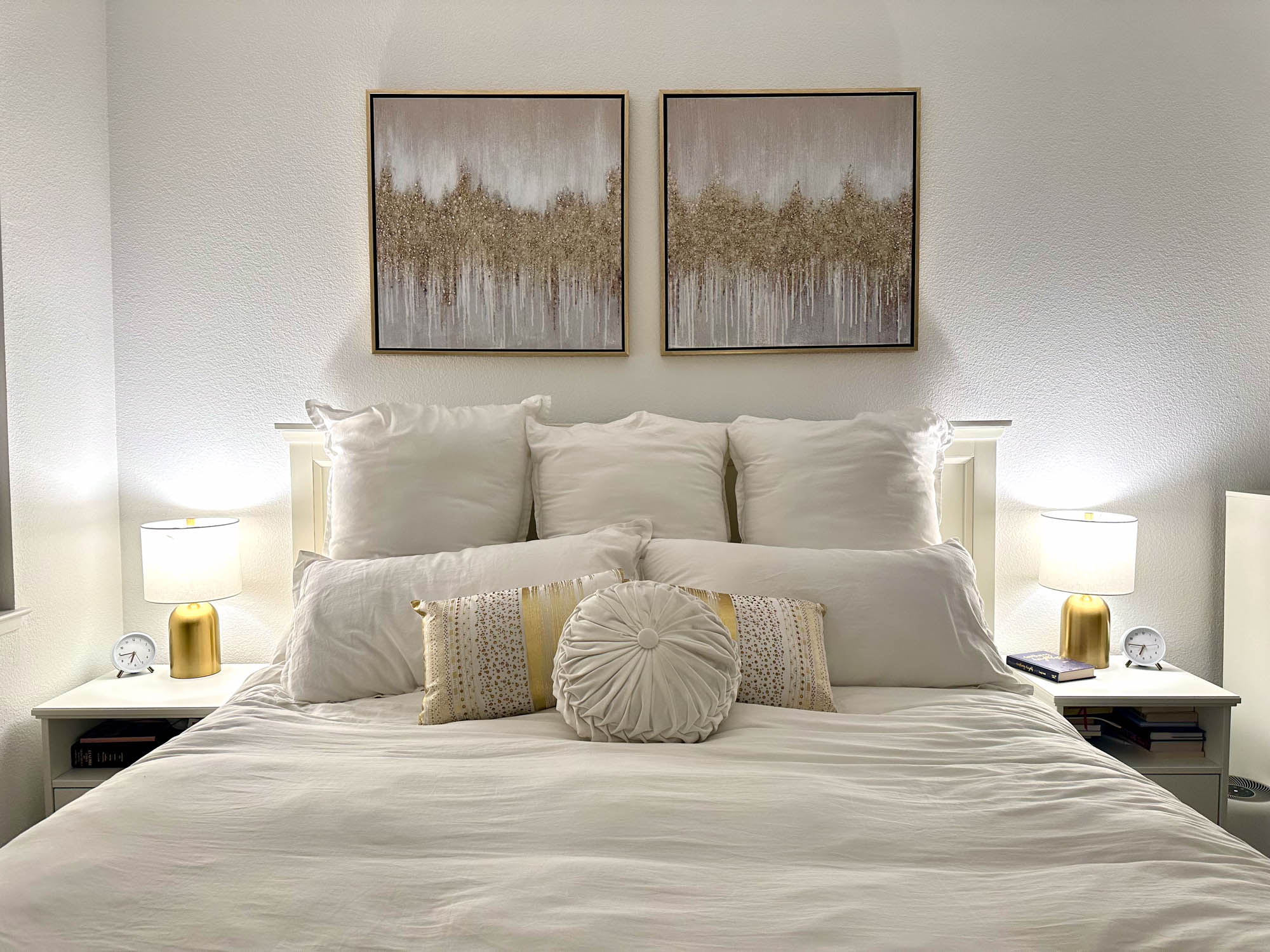
Accent lighting is lighting that is designed to highlight specific areas of the home. This type of lighting is aimed directly at something to showcase it, and is particularly effective with statement pieces like art. Accent lighting is supposed to be three to five times brighter than ambient light.
In my opinion, accent lighting is difficult to pull off well, especially if you currently rent your space (as we do) and have limited control over installing additional permanent light fixtures. That’s why in our home, I have chosen to focus primarily on ambient lighting, rather than attempt accent lighting. But it’s definitely something I’m interested in exploring at some point in the future!
12 Easy Ambient Lighting Ideas to Warm Up Your Home
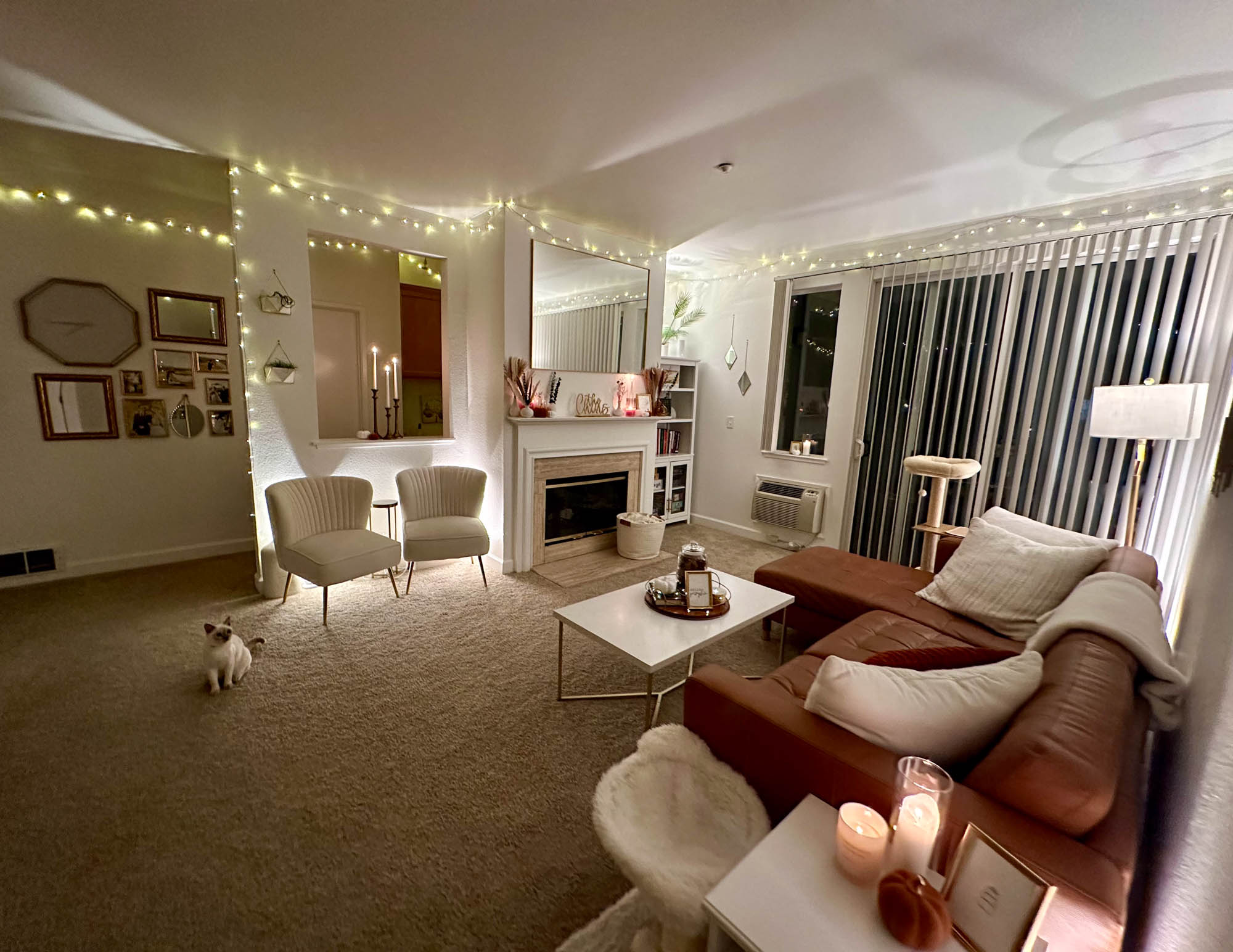
Now that we’ve gone over the primary different types of lighting, let’s talk about ambient lighting. When you hear the word ambience, you typically think of atmosphere. This type of lighting is all about creating a warm and peaceful environment that wraps you up in a metaphorical blanket.
One disclaimer: as mentioned, we are currently renters. Therefore, we don’t have as much freedom as some people do to install permanent lighting fixtures such as wall sconces, recessed lights, pendant lights, etc.
While there are many excellent options to explore that will help you create the ultimate ambient interior lighting, many people face limitations similar to ours. Even for those who do have the ability to add additional lighting, it can be difficult and expensive. For those reasons, my post will focus primarily on ways you can add light to a space without needing to install any additional fixtures.
Now, here are 12 easy and practical ambient lighting ideas that you can use to warm up your space!
1. Swap Out Harsh Bulbs for Warm LEDs
What exactly is warm light? It isn’t about the temperature — it’s related to color. According to the Kelvin Temperature Scale, warm light tends to be in the 2000K-3000K range.
This is partially a personal preference, but generally speaking, ambient lighting tends to be warm-toned rather than cool-toned. That’s partly because warm lighting promotes relaxation and plays an important role in our circadian rhythms to help us fall asleep. Warm lighting is also closer to the temperature of firelight, which is automatically cozy!
Many homes (especially apartments) have harsh, fluorescent lighting, but it’s actually difficult to determine whether the lighting is fluorescent vs. a bright LED without looking at the light bulb itself. While fluorescent is the worst culprit, LEDs can be harsh and cool-toned as well, which can be very detrimental to ambient lighting.
If you have this type of lighting, remain calm — just don’t ever turn it on (kidding, sort of). As mentioned previously, I do use bright lighting, but sparingly and primarily as task lighting. For the purpose of ambient lighting, you’ll need to explore some additional options for your home.
As you may be aware, incandescent light bulbs were banned in the U.S. due to their energy inefficiency. While fluorescent lights are not a good option for soft and cozy lighting, fortunately, LED lights now have many warm-toned options!
If you have harsh/cool lights in your space and you’re a renter like us, sometimes you can replace LED light bulbs with warmer options. However, it depends on the fixtures/bulbs.
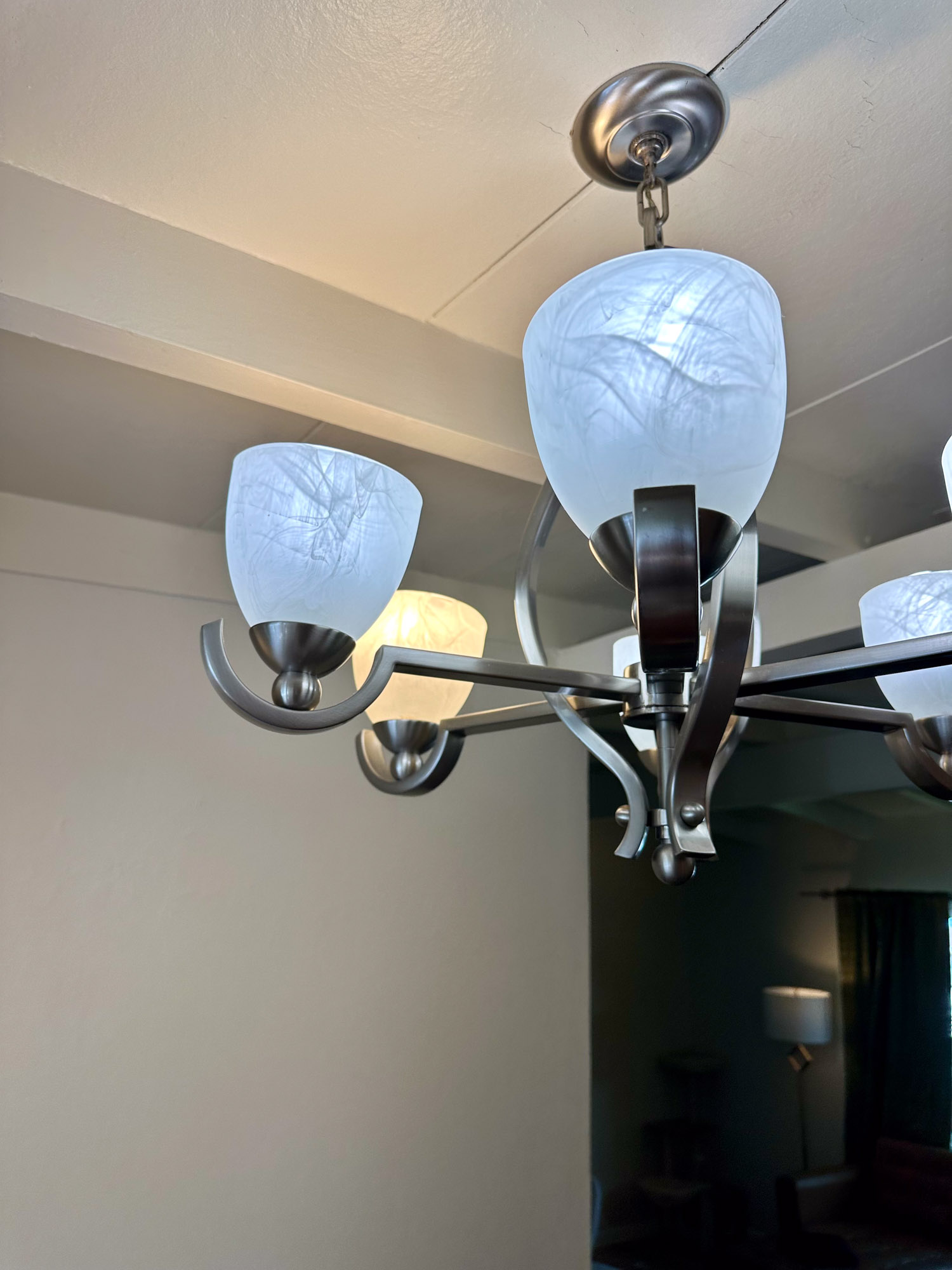
In this photo, one of the cool bulbs has been swapped out for a warm LED — you can see the huge difference that it makes!
2. Turn Off Bright Overhead Lights
This is not a universal rule, but in general, overhead lighting tends to be a) too bright or b) fluorescent.
In our dining area, you can see the difference in atmosphere with the overhead lighting turned on vs. off at our previous apartment. This lighting definitely did not contribute to our ambient lighting, so we generally left it off unless we needed it for task lighting.
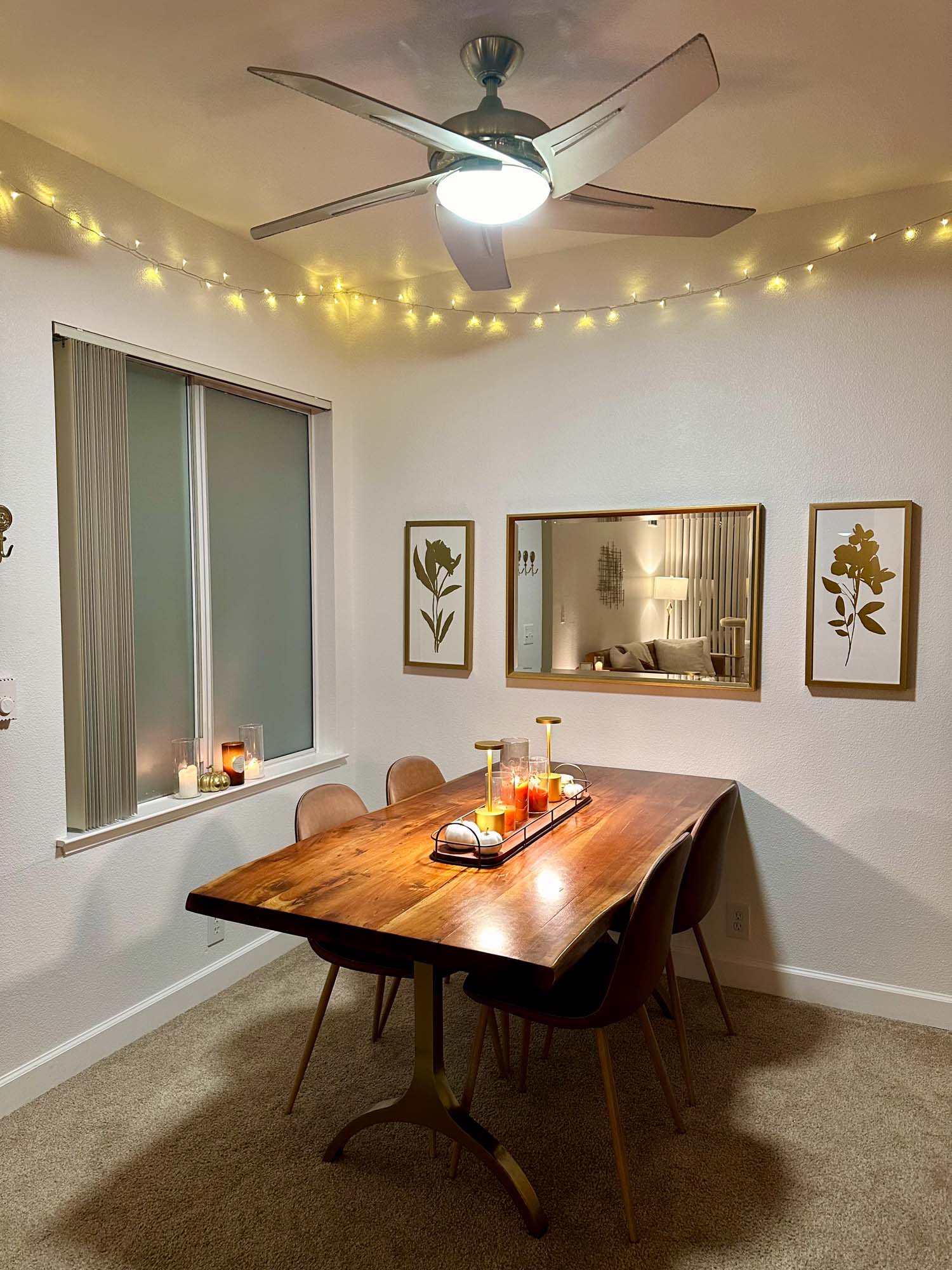
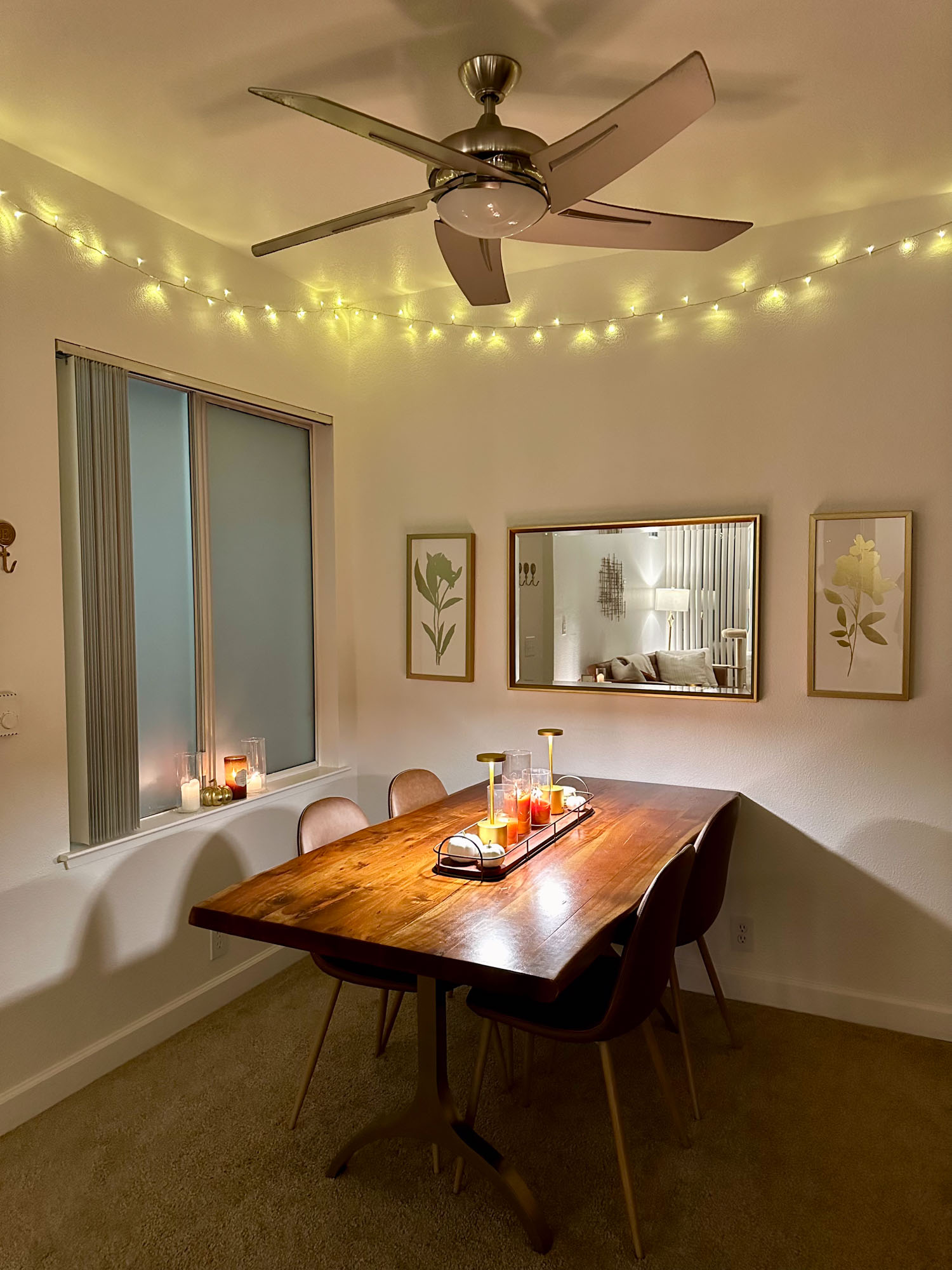
Again, I’m speaking from the perspective of an apartment renter. There are certainly many types of overhead lighting that can contribute to ambient lighting.
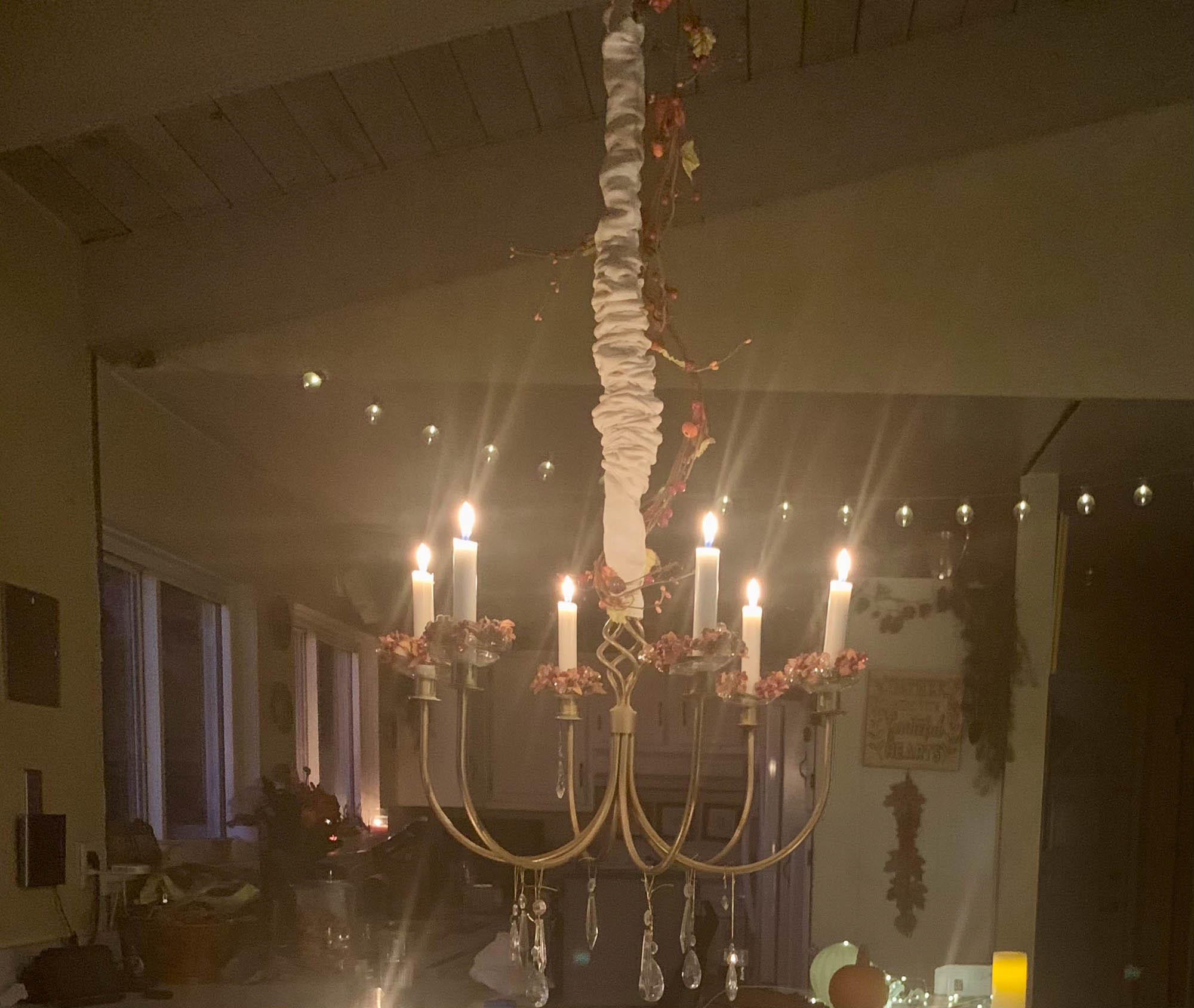
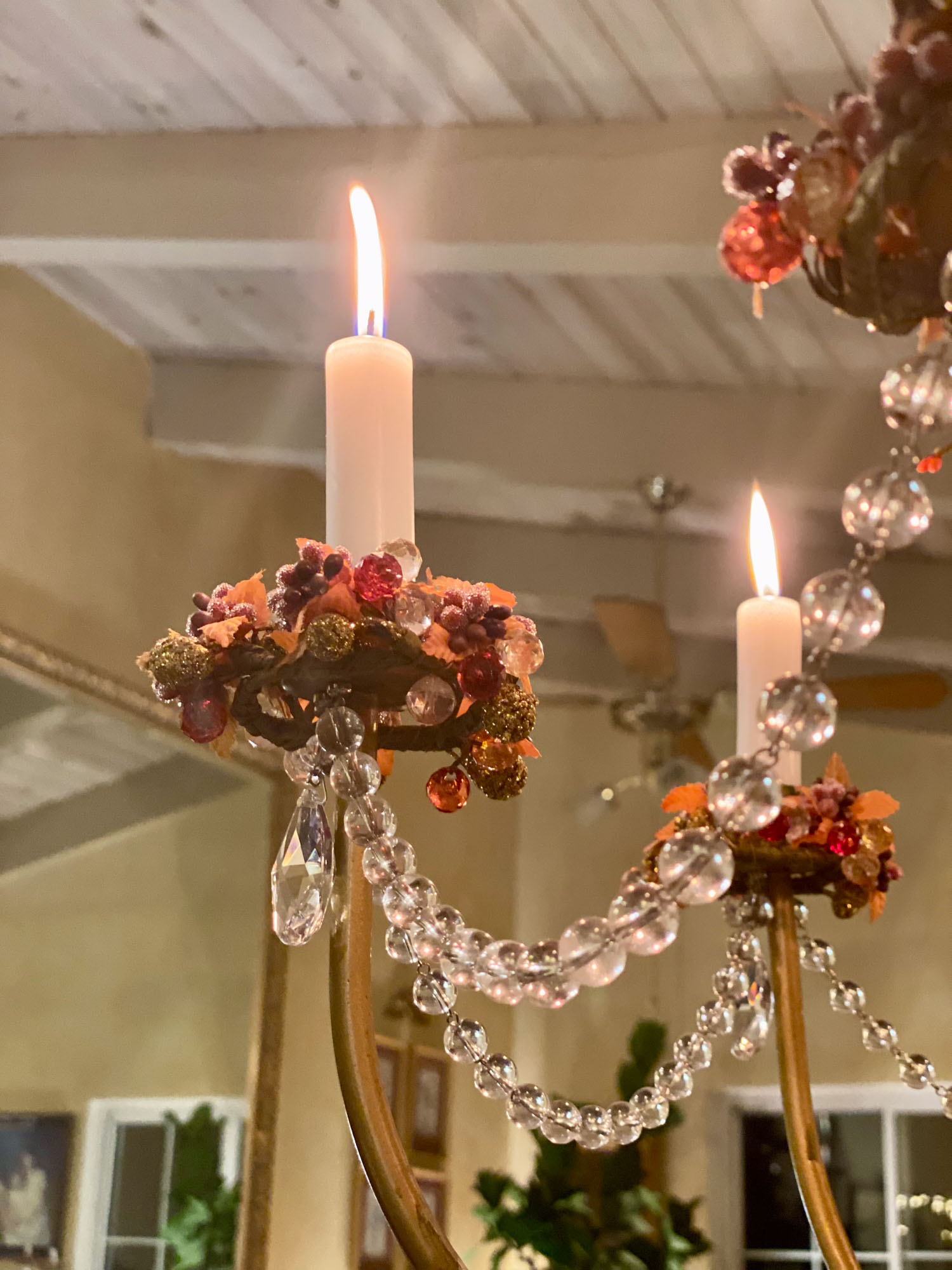
For example, if you are fortunate enough to own a chandelier (or are considering getting one!), you should absolutely use that in your lighting strategy. Chandeliers are beautiful as decor, and do a great job of distributing light in a space. My mom even has one with candles instead of electric lighting, which I think is magical!
3. Distribute Lighting Evenly
Spaces tend to have places that get more light naturally, either from windows, placement of pre-installed lighting, or areas that allow easy placement of additional lighting. One of the key ways to create ambient lighting is to ensure that your lighting is at least somewhat distributed throughout your space.
Obviously, it won’t be perfect, but you don’t want any dark corners or patches that the eye will immediately jump to. Having cohesive lighting distributed throughout your home is what produces the glow that is associated with ambient lighting.
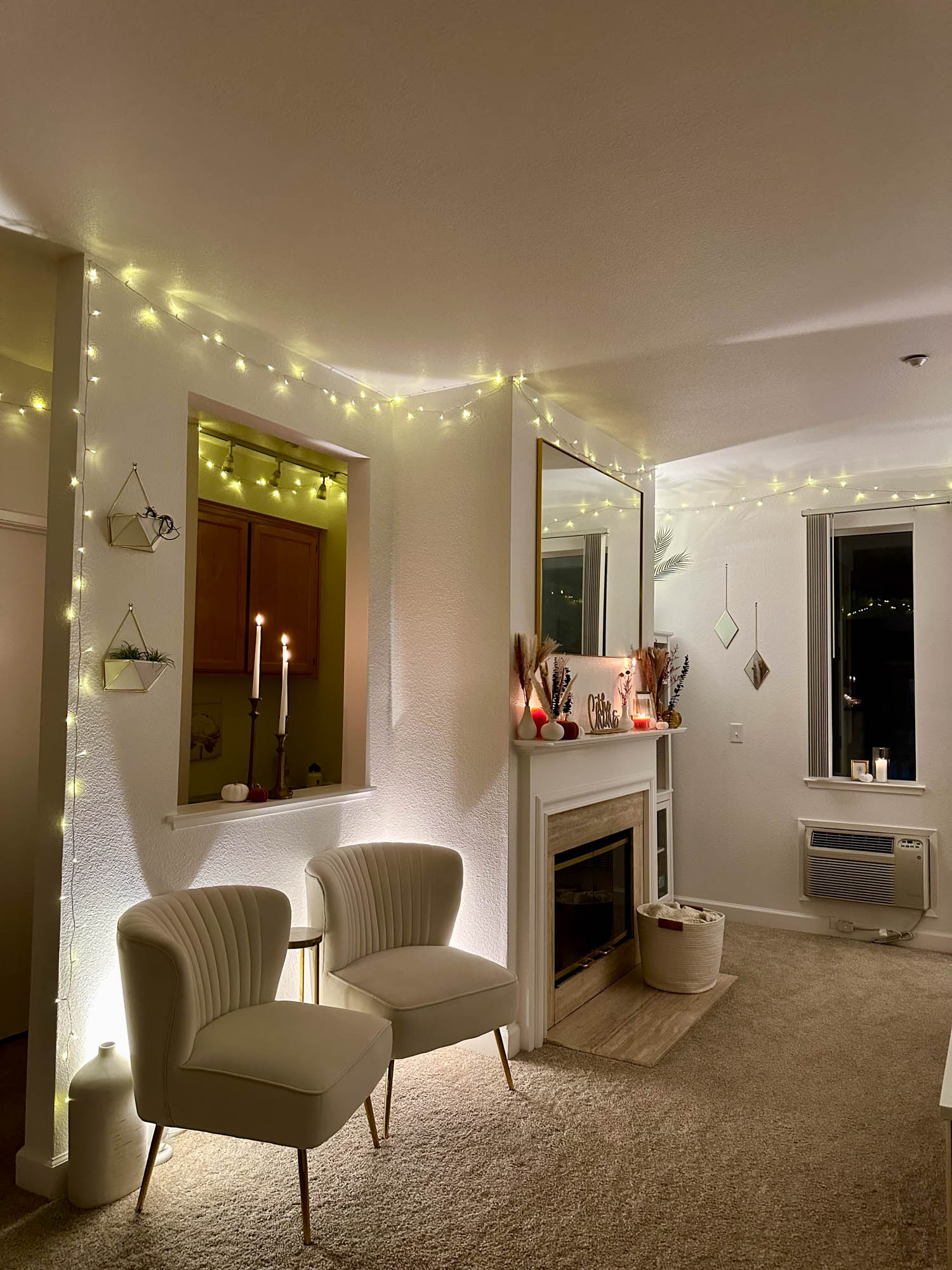
4. Use Lampshades for a Softer Glow
There’s a reason that lampshades exist — bare lightbulbs are incredibly bright. While some intentionally choose this style of lighting, for ambient lighting, you want to find shades or covers that diffuse the light (Again, we’re all about the glow!).
5. Maximize Natural Light
As much as I love playing with different lighting, nothing beats natural light! This type of lighting is easy to forget about, but it is one of the most powerful (and accessible) types of lighting! Plus, it’s free!
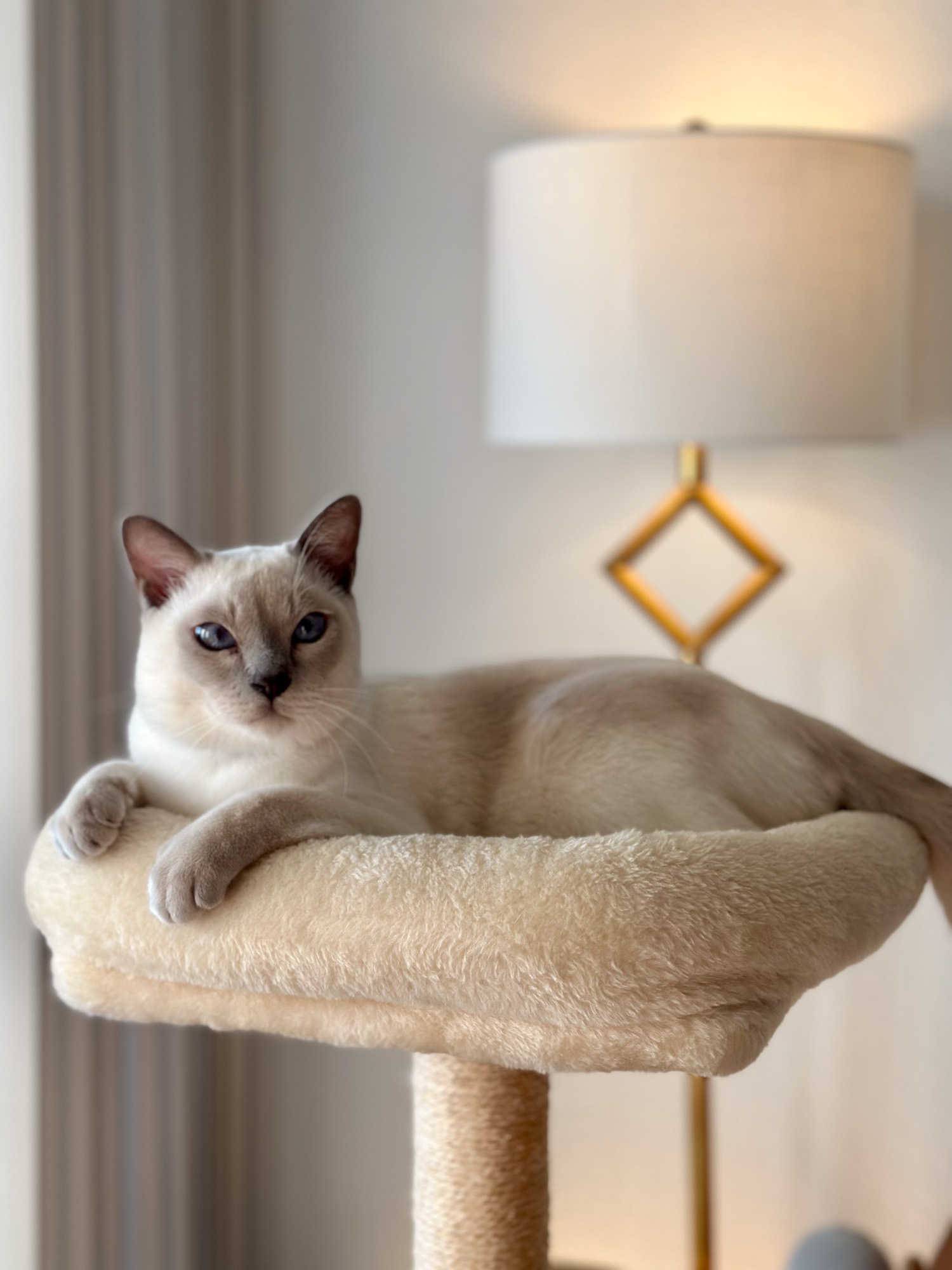
Obviously, using natural lighting as part of your ambient lighting only works during daylight hours. But whenever you can, take advantage of any natural light in your space by opening up your blinds. Using natural light is a very organic and easy way to softly brighten your home.
6. Use Privacy Film to Let in More Light
Our old apartment didn’t get quite as much natural light as I would like, but it did get some! However, one of our windows that got the most light was next to a corridor that gets a lot of foot traffic. At first, we always kept our blinds closed. But then, a friend recommended privacy film, which has been a game-changer! It enabled us to keep our blinds open as much as we wanted and brought a lot more light into our space.
7. Layer Lamps Throughout Your Home
Especially if you have a lot of pre-installed overhead lighting, lamps are your friend!
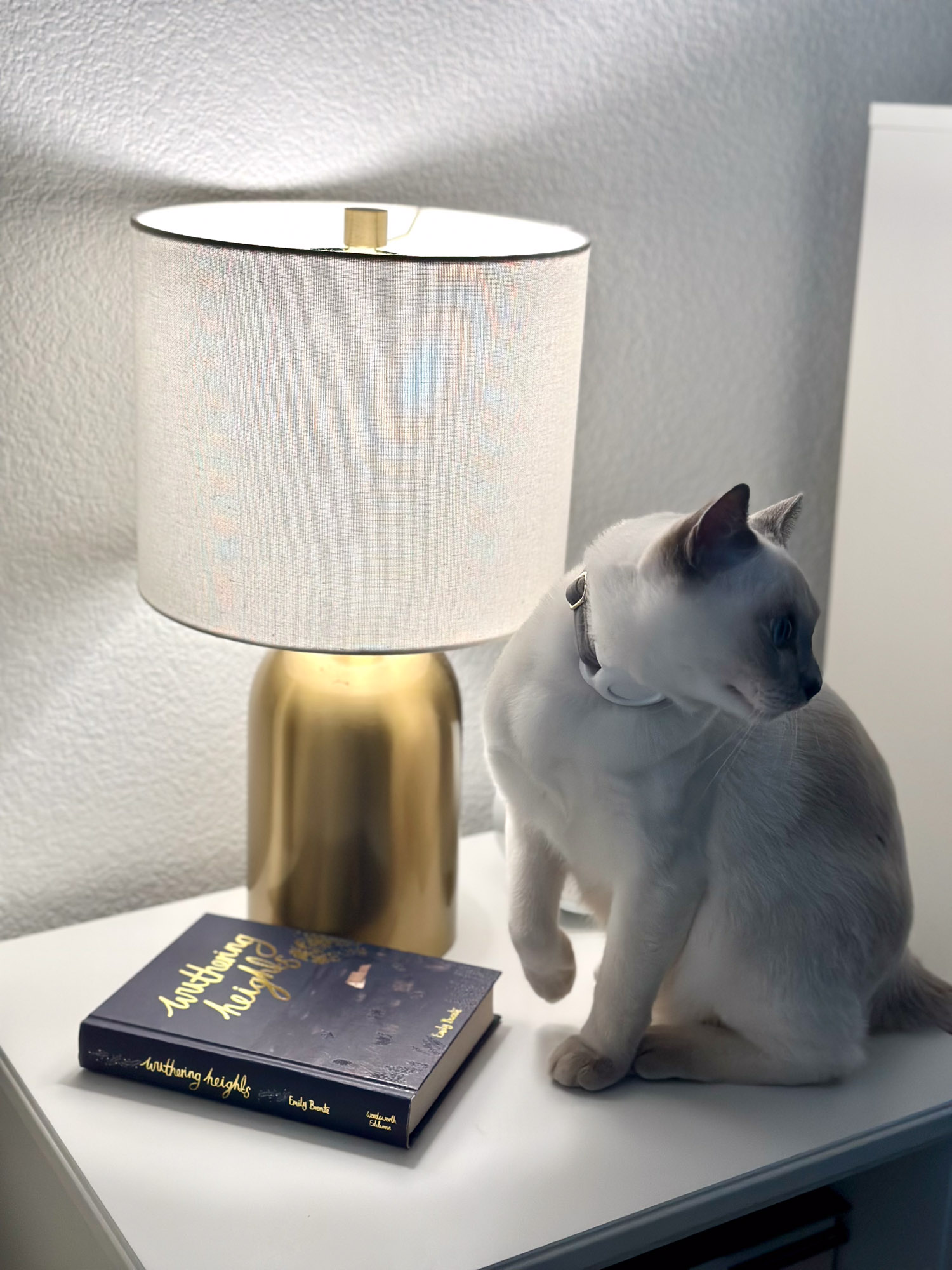
Identify the places in your space that a) need the most light and b) have a good spot to place a lamp without it being obtrusive. Typically, this is either in corners, along walls, and on or next to furniture. You can use a combination of floor and table lamps for variety and even distribution of light.
For interior design purposes, lamps have the added benefit of doubling as decorative pieces. Our gold floor lamp is originally from Target but is now available on Amazon, and I love it! In addition to being functional, it helps tie our home’s color scheme together.
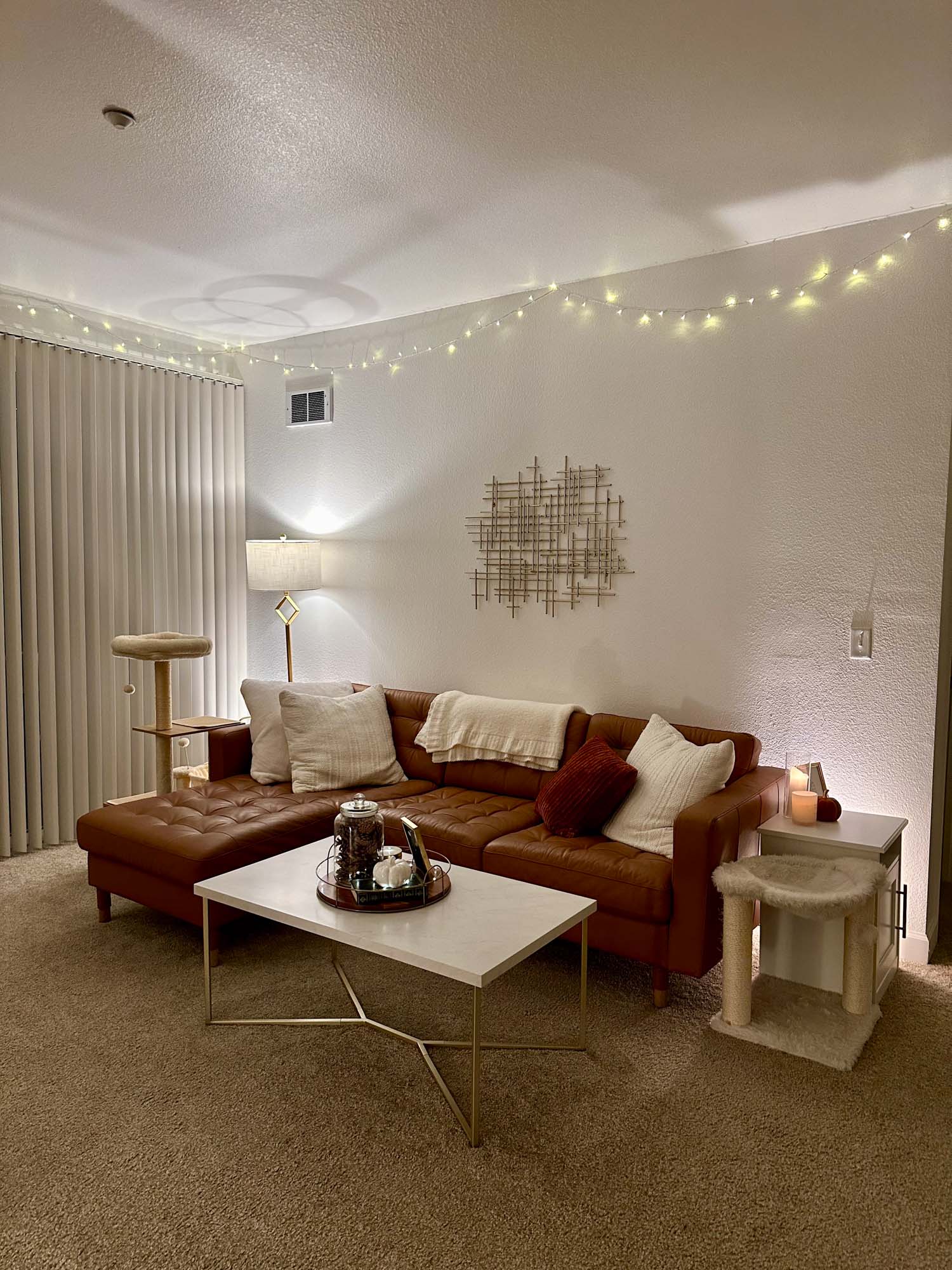
8. Use Mirrors to Magnify Light
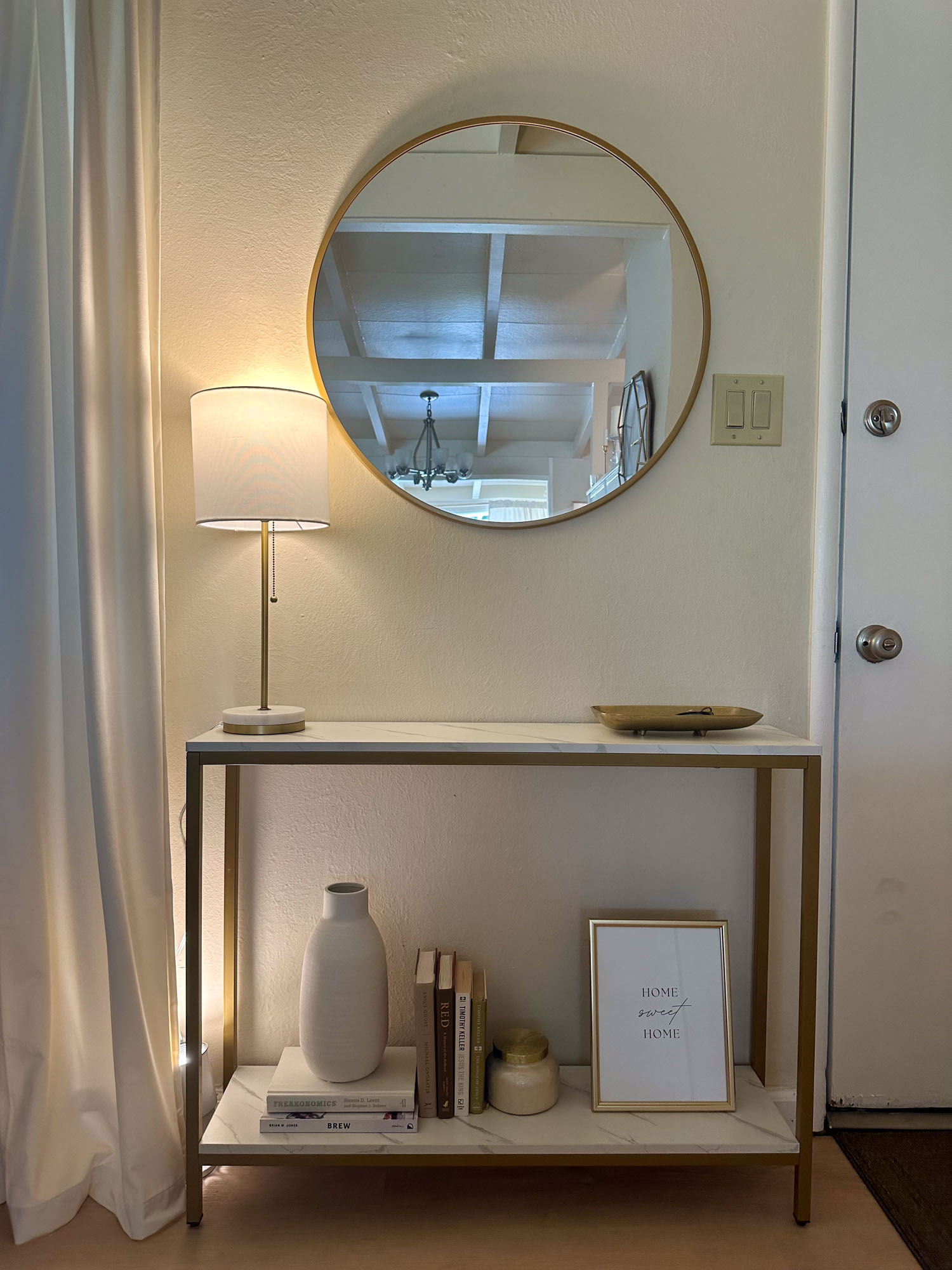
Mirrors are a key part of my interior design — they are beautiful decorative pieces in and of themselves, and make any room feel bigger and more open. They also have the added benefit of reflecting light, which augments any of your existing ambient lighting and helps create the overall glow.
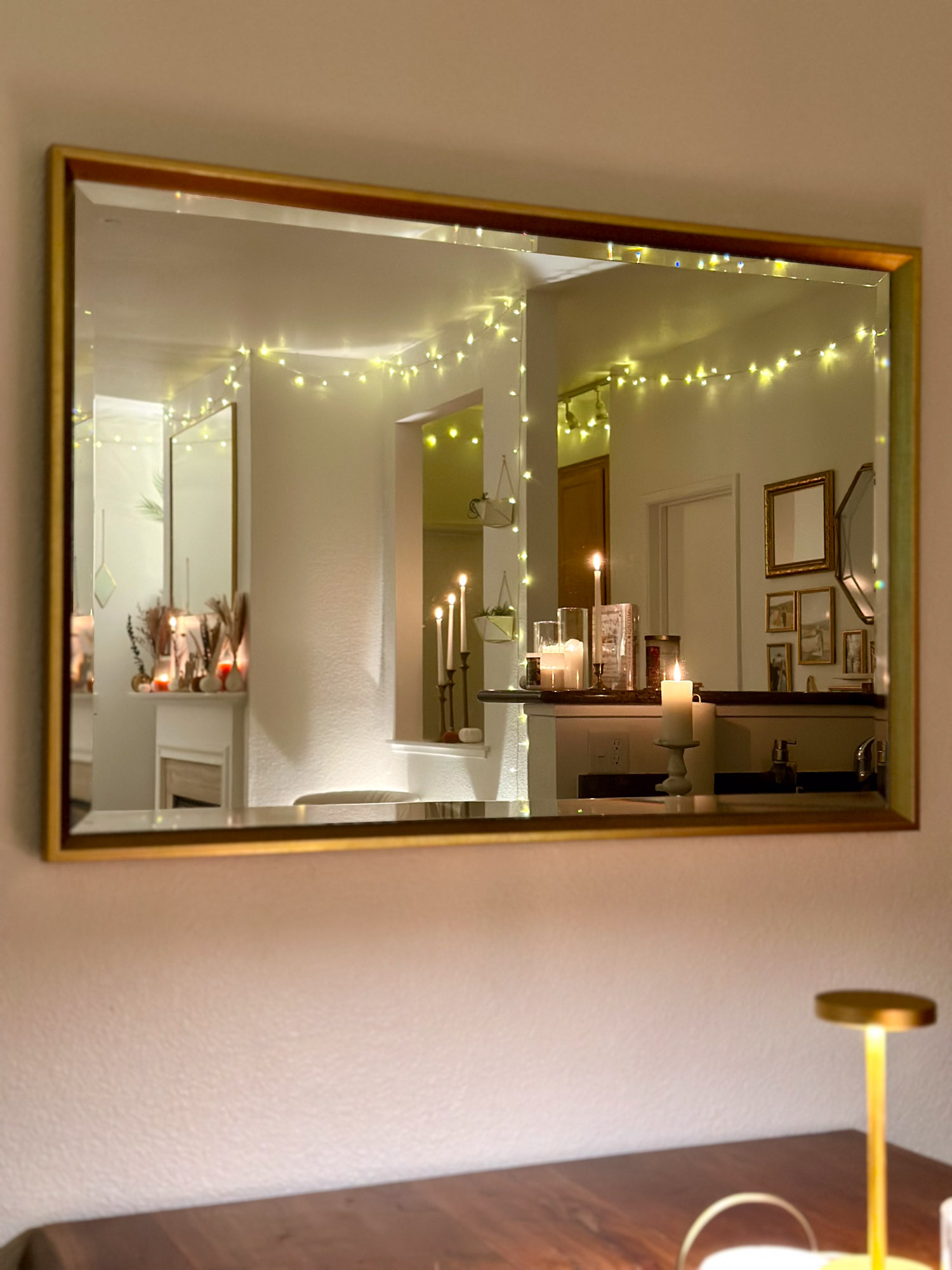
9. Add Uplights to Brighten Corners
Ever heard of an uplight? Don’t overthink it — it’s just a light that points up. Uplights are a great way to brighten a space with indirect light, as they are softer and more subtle than other types of lighting. They are also a very effective way to brighten some of the darker corners of your space.
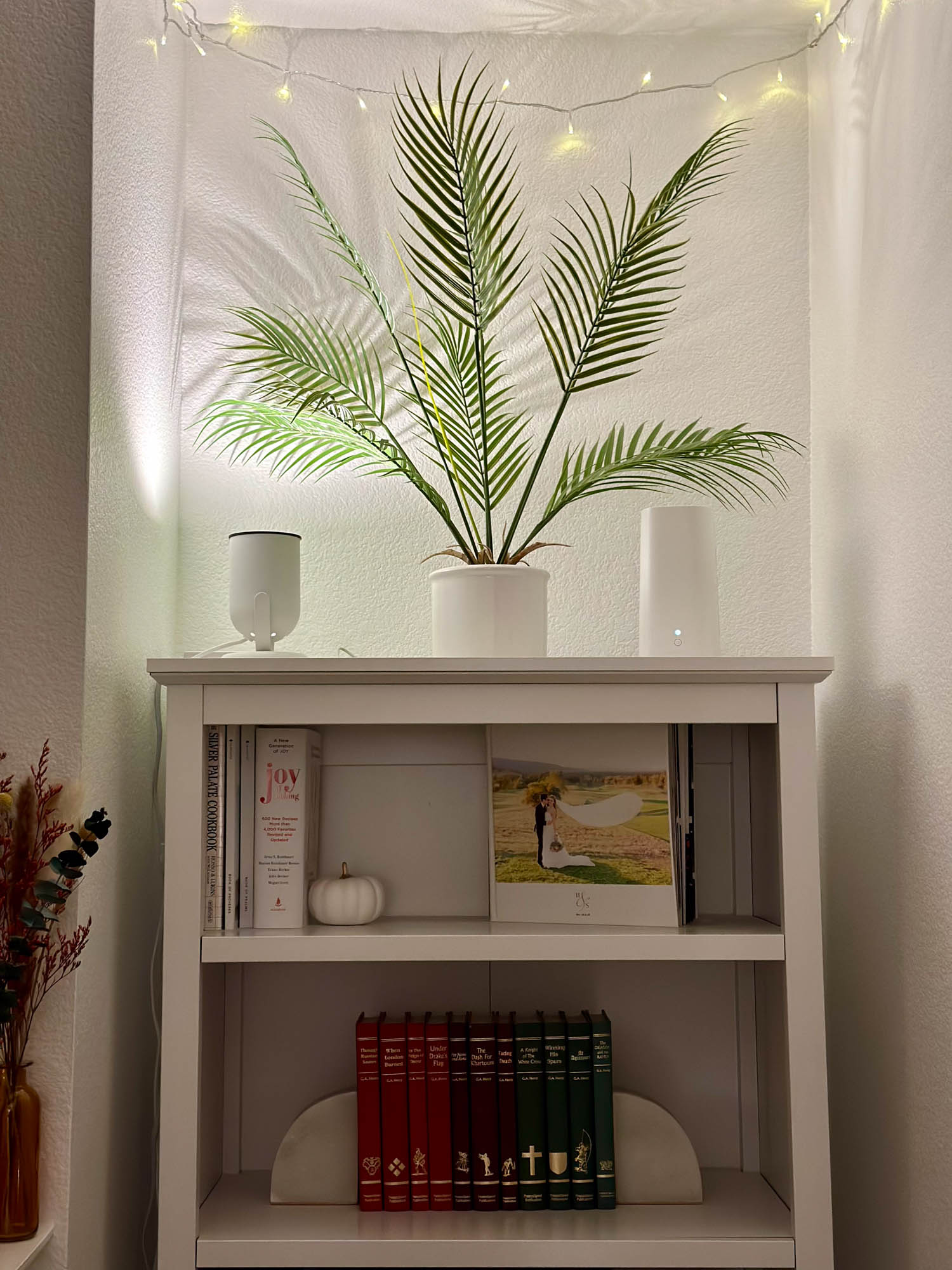
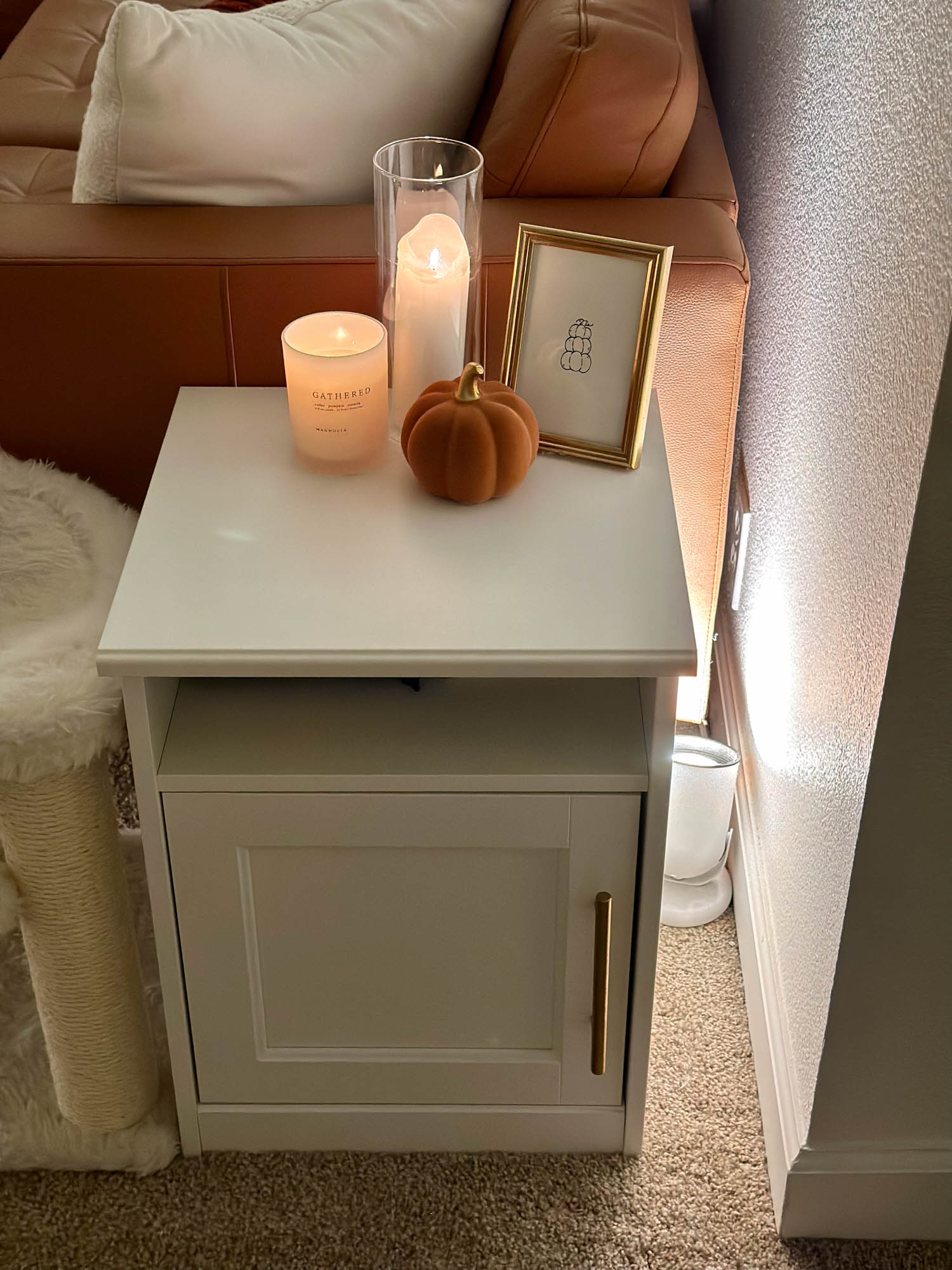
You can place uplights in corners, next to or behind furniture or plants, or on top of tall furniture. My favorite uplights keep going out of stock, but there’s a similar version available on Amazon. They add a lot of dimension to a room and play an important role in ambient interior lighting.
10. Place Downlights on Flat Surfaces
Like uplights, downlights aren’t too hard to figure out. Typically placed on tables or other flat surfaces, these directional lights add ambience by diffusing light in a downward direction. Again, my mom is the queen of all things lighting, and she first discovered these in use at a restaurant and gifted them to me!
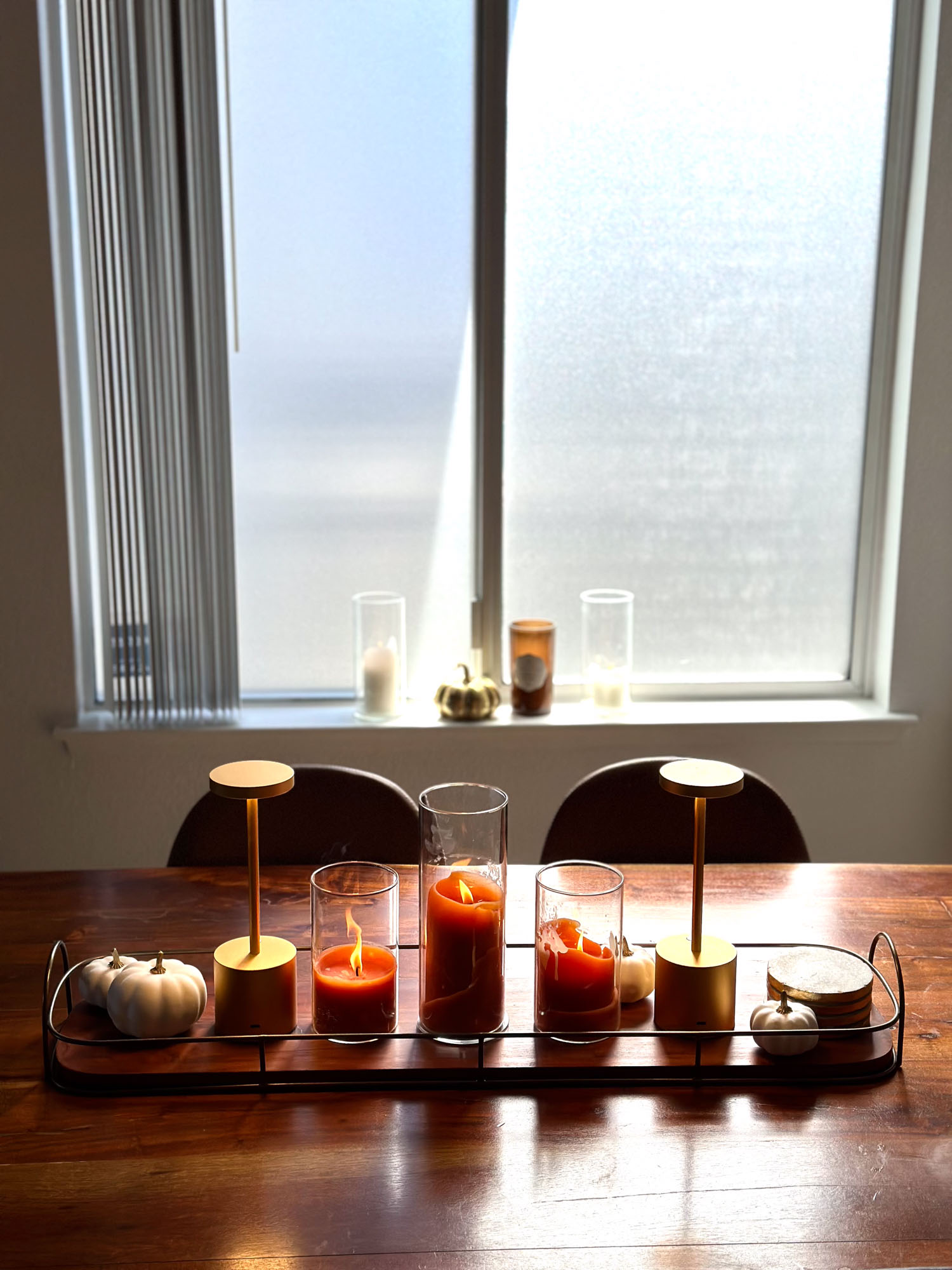
Similar to uplights, the light from downlights tends to be softer. Since the only light we had in our previous apartment’s dining area was a harsh overhead light, we used our downlights on our dining room table. They create a lot of atmosphere and are also quite functional.
Other great places for downlights are side tables, coffee tables, or any other surfaces that need a little extra light.
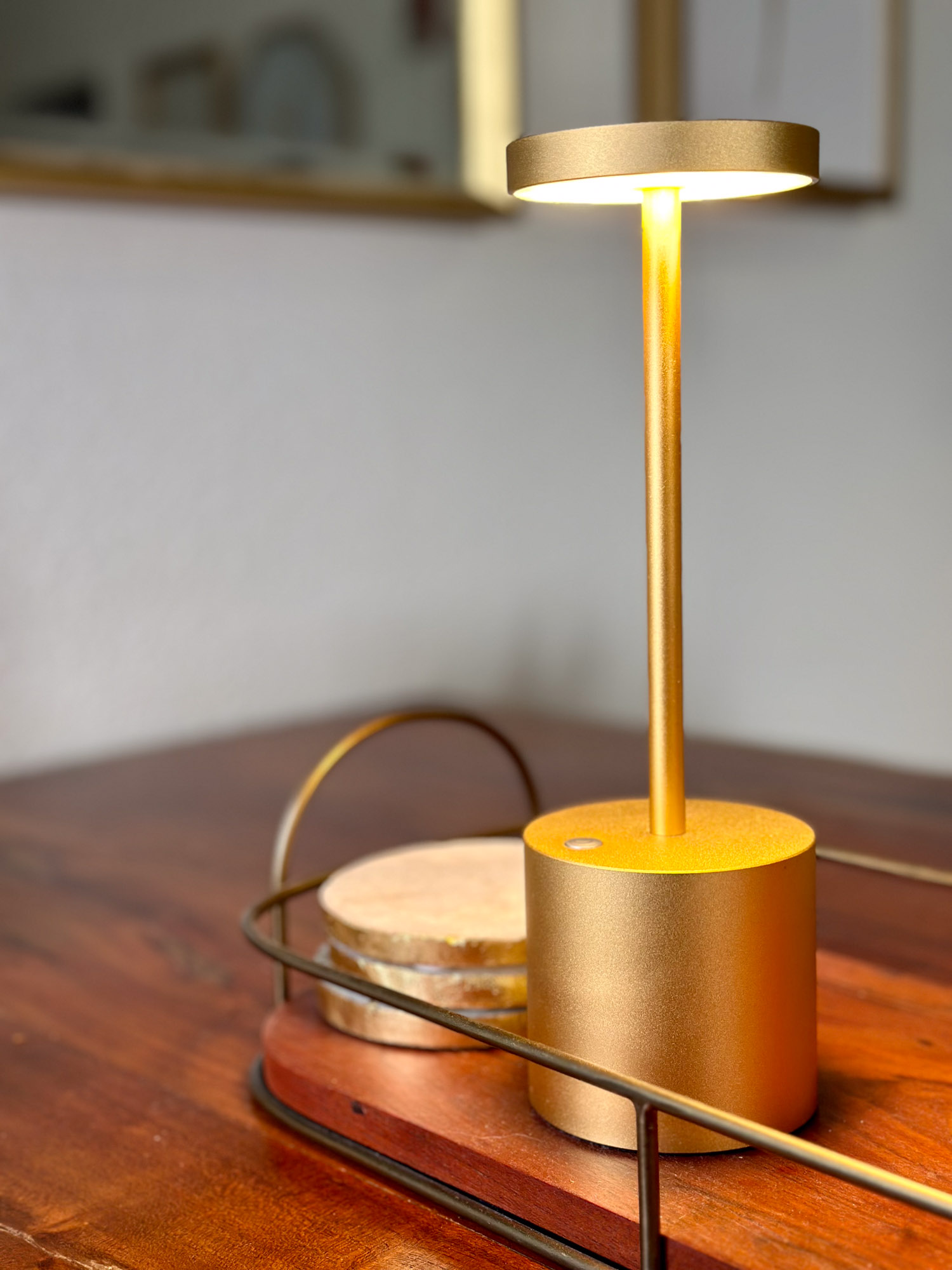
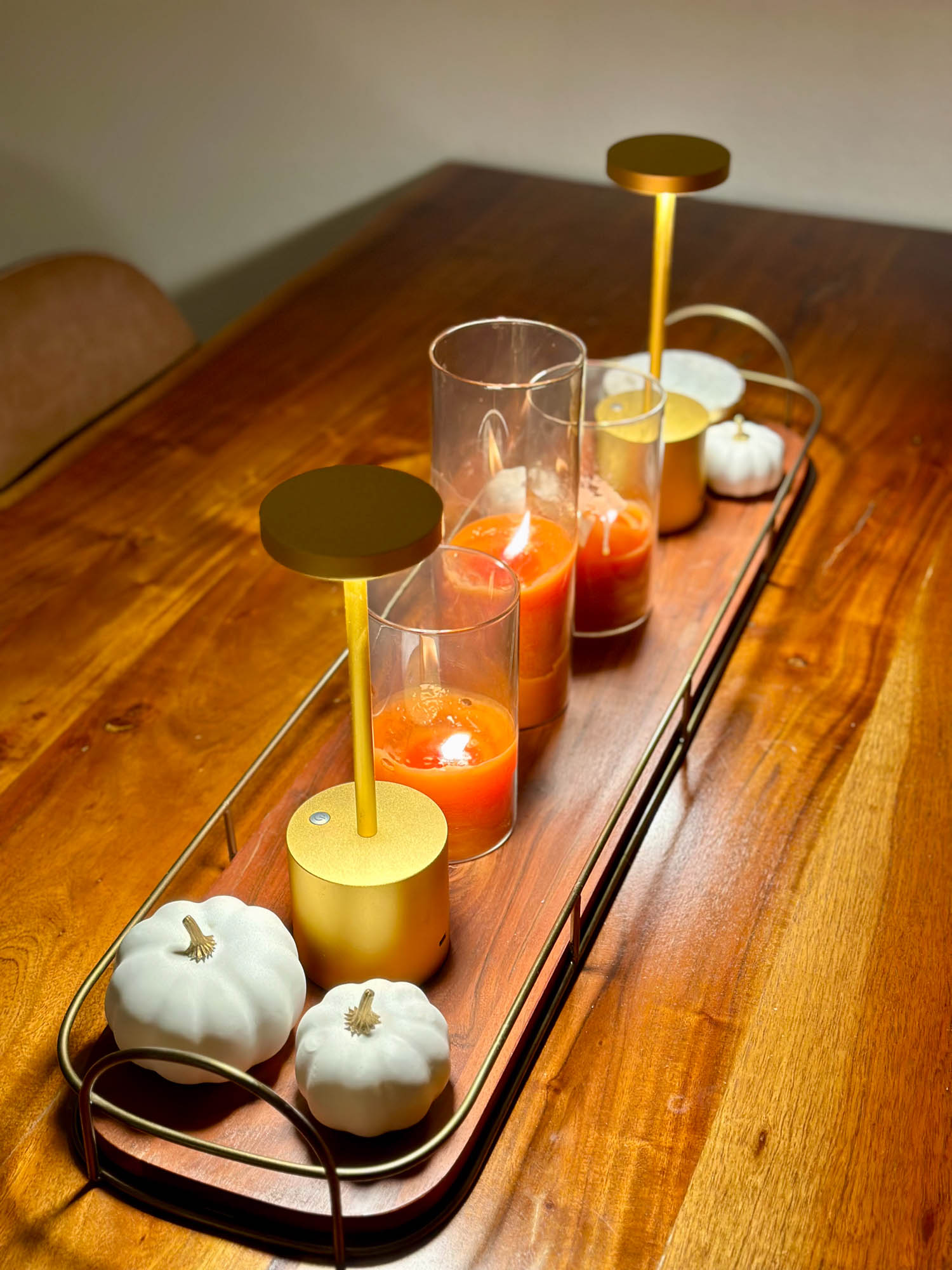
Since our downlights are gold, they also play a role as decor in our interior design and help tie together our color scheme. My favorite part: they’re rechargeable via USB-C. You can purchase them on Amazon. They have different temperature options available, but I always use the warmest.
11. Light Candles for Warmth & Mood
In my fall decor post, I talked more about my love of candles (and the fact that I managed to hang on to a bunch from our wedding!). It may surprise you, but even a few candles actually generate a great deal of light. Also, the fact that they flicker also adds a lot of dimension and warmth.
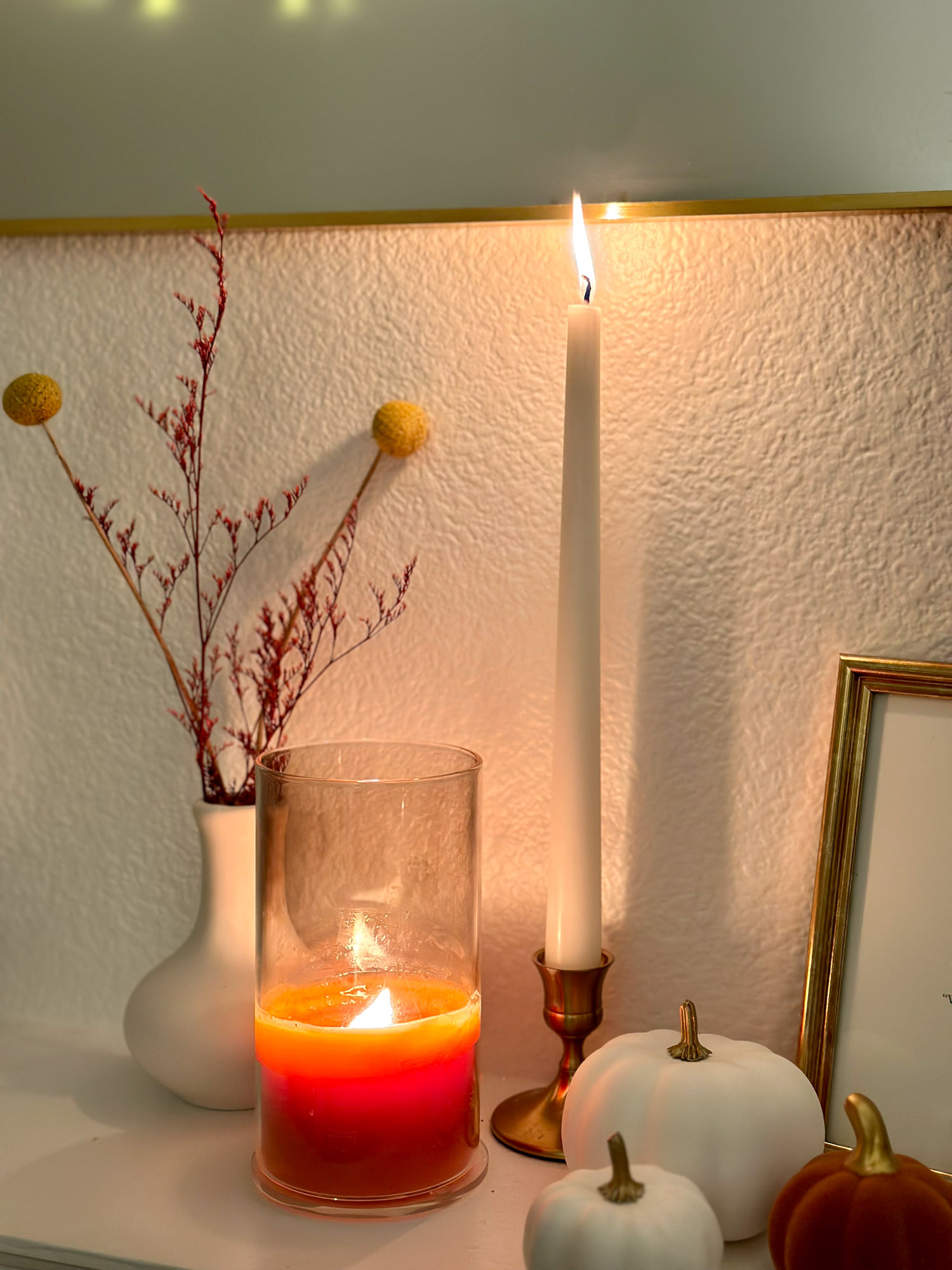
There are a few different types of candles you can use.
Pillar Candles in Glass Vases
These are my staple candles, because a) I have so many of them and b) they’re one of the safer/more cat-proof candle options. Since the candles are enclosed in vases, they’re less of a fire hazard (and easier to clean up!).
Our glass vases and white pillar candles are from Yummi Candles. The quality of these candles is superb. Supposedly, the burn time is only 15-55 hours, but I’ve been burning them regularly for the last two years, and I’m just now starting to finish them all off!
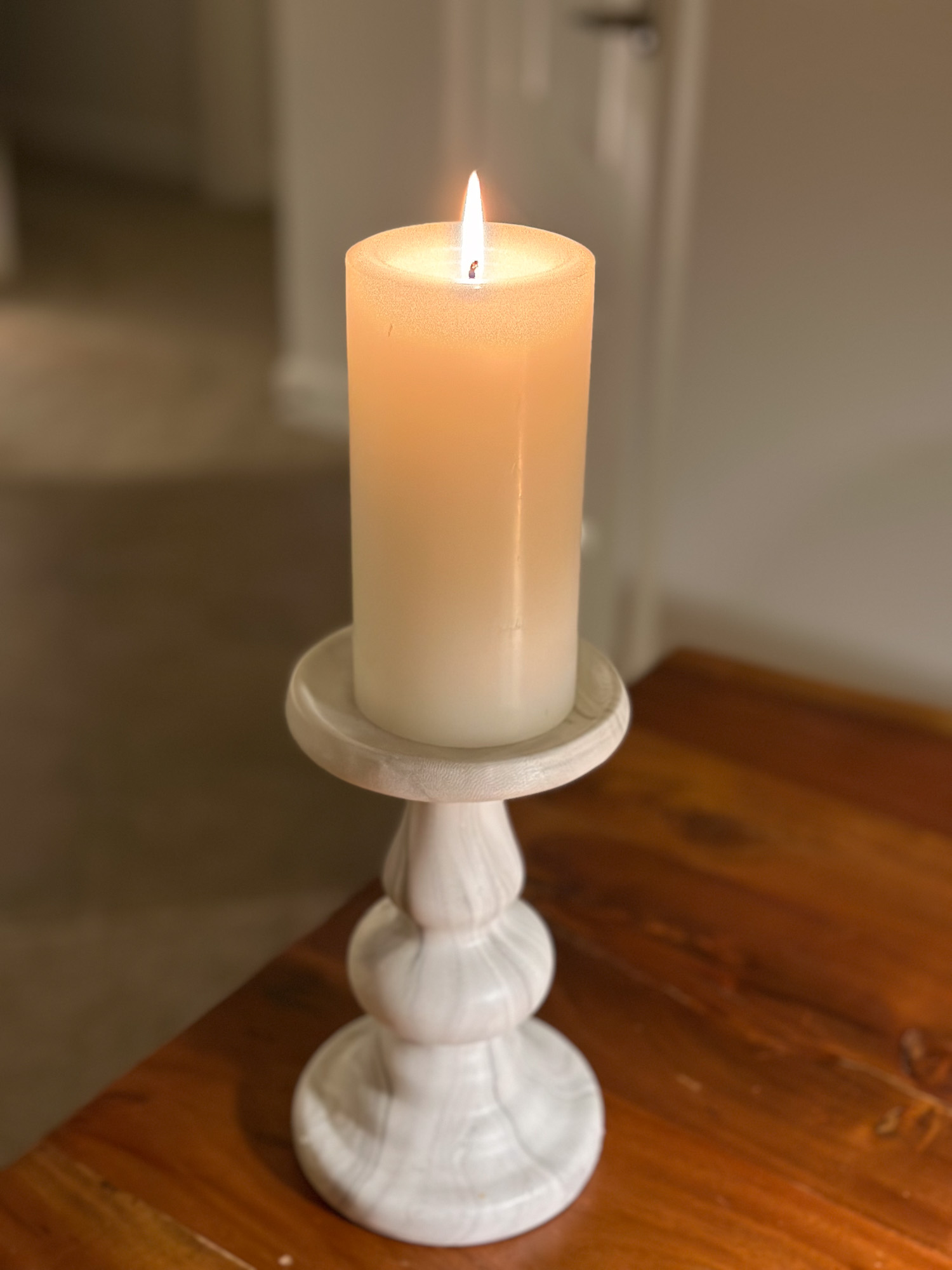
Pillar Candles on Stands
If you want to be a little more daring, placing a pillar candle on a stand is a very elegant way to light up a room.
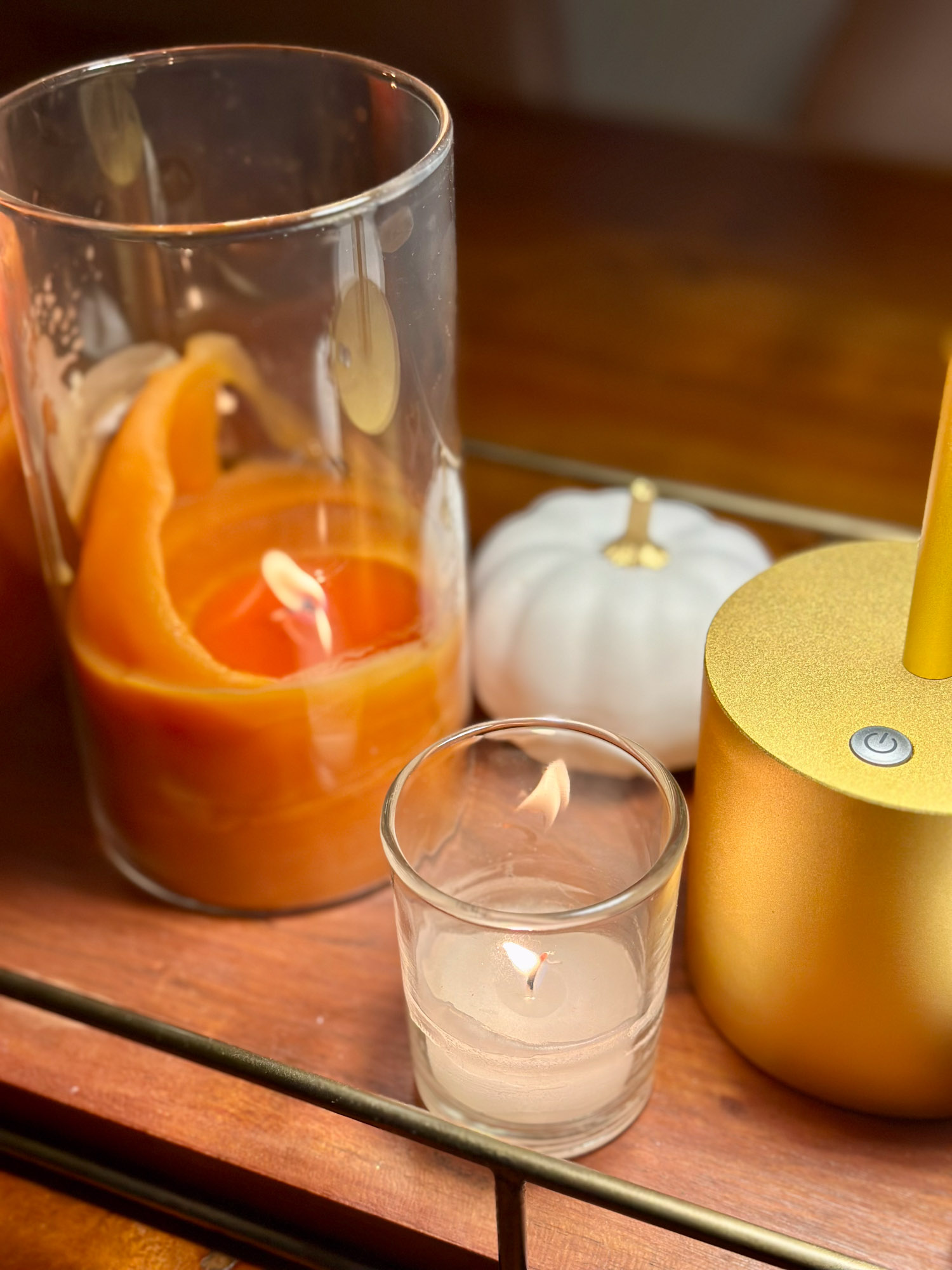
Tealight Candles
Tealight candles are an easy and fun way to add a glimmer of candlelight to a space! If you can, purchase ones with a longer burn time, or they won’t last long.
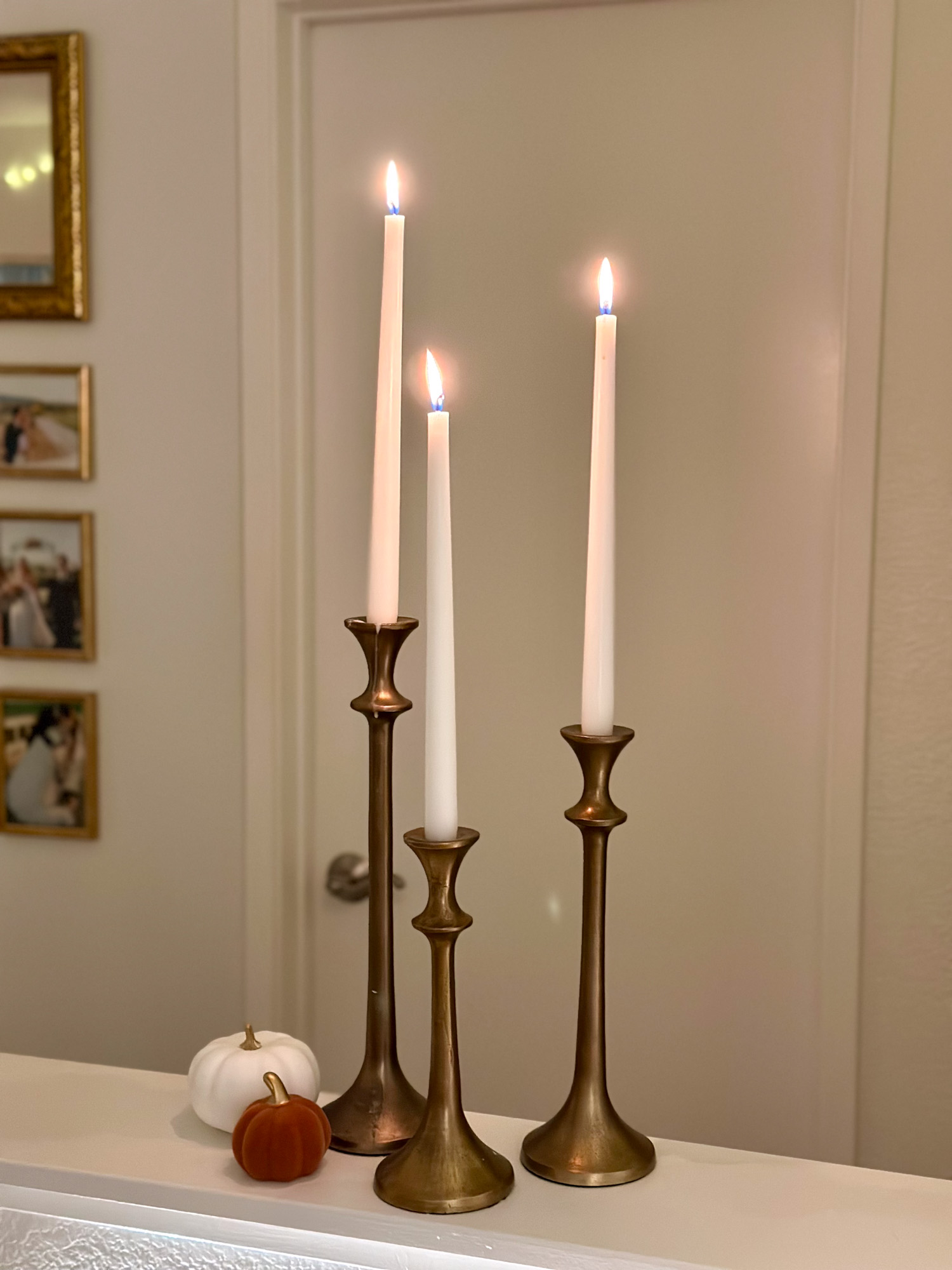
Taper Candles
Although taper candles tend to be messier (and can be a bit of a fire hazard), they are so classic and beautiful. As always with candles, use caution. Consider identifying one or two locations that are safe to place them in your home. My favorite taper candles are from Amazon.
12. Hang Twinkly Lights Year-Round
While twinkly lights are stereotypically used for Christmas decor, we leave ours up year-round! Although incandescent string lights are still legal in the U.S. and are beautiful, I switched to LED after I realized the incandescent lights were leaving soot on my walls (eep!). Fortunately, there are plenty of warm-toned LED lights available.
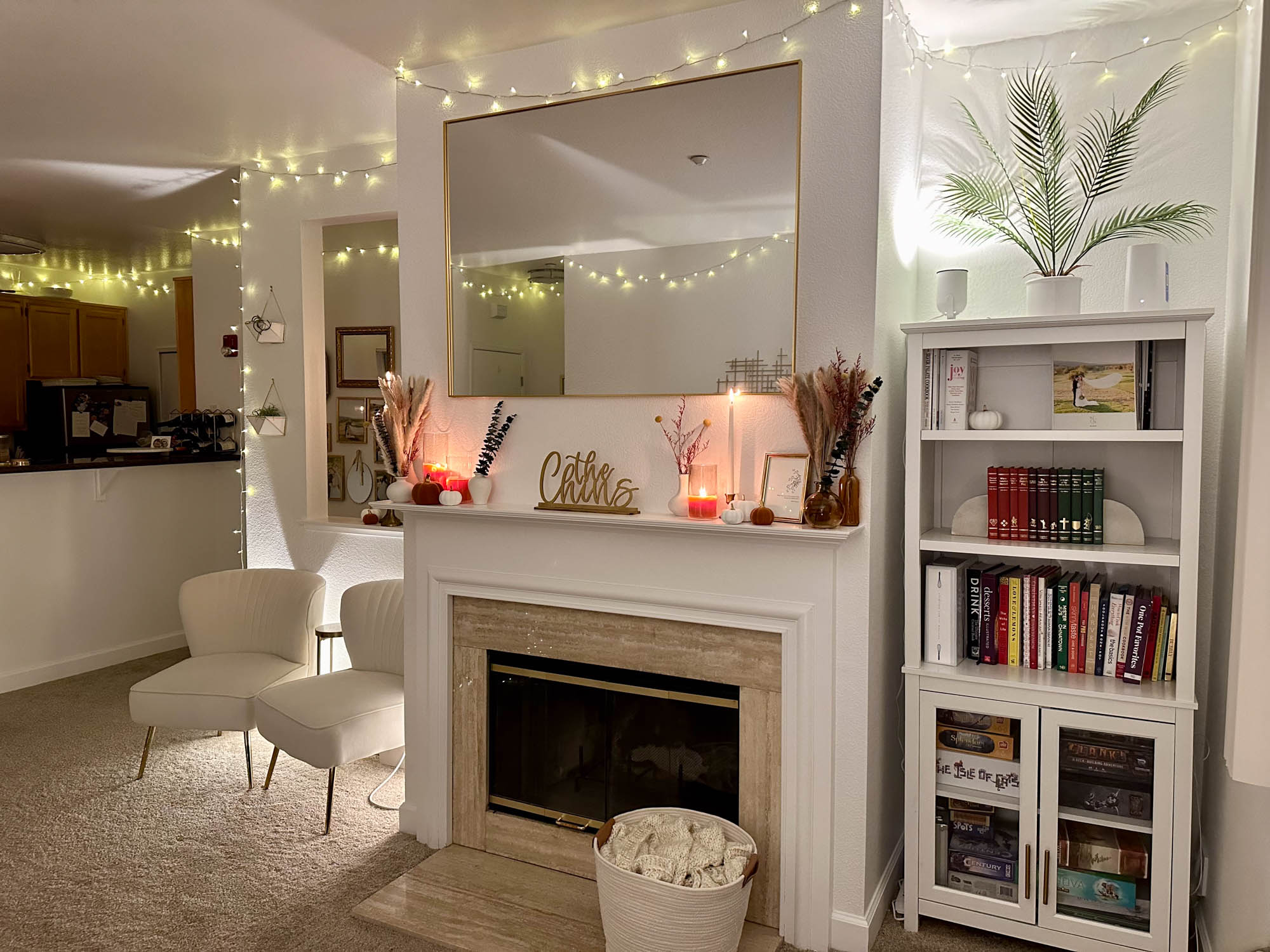
You can also use battery-operated fairy lights for centerpieces or decor. Even though they’re small, they give off a decent amount of light and add a lot of whimsy and magic to the atmosphere.
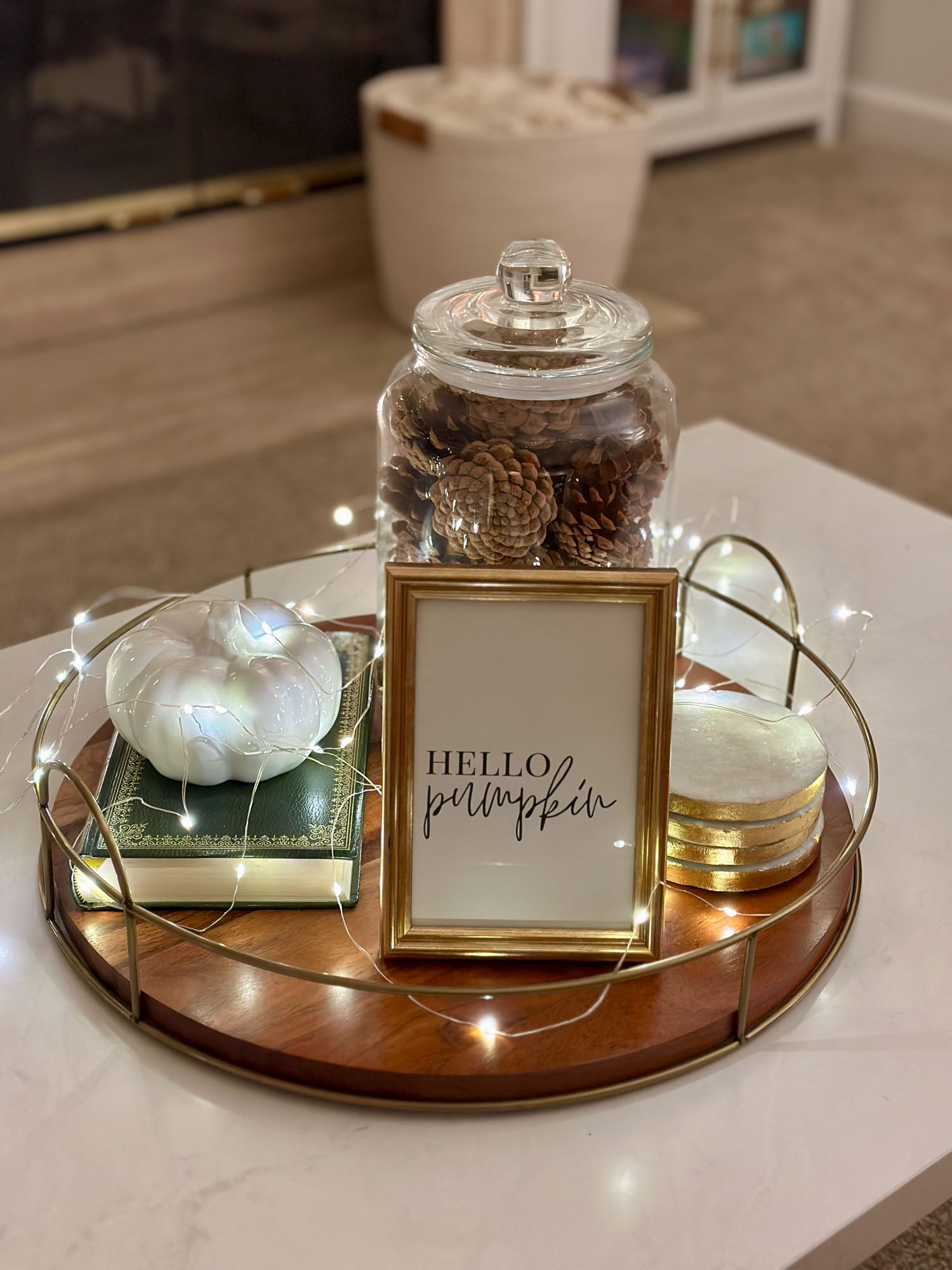
Those are a few of my ambient lighting ideas to warm up your space!
My favorite part about lighting is that it can truly make a room feel magical. By layering cozy, indirect light, you can create a warm and inviting atmosphere that brightens your home.
From Lighting to Layout: Next Steps in Your Interior Design
Okay, so your lighting is officially cozy. Now what?
If you’re ready to level up the rest of your space, check out these interior design posts.

Renter-Friendly Decor Ideas
These easy renter-friendly hacks help you add personality to your space (without losing your security deposit).

Peel & Stick Wallpaper Mistakes
Learn from our mistakes and get all our tips for installing peel-and-stick wallpaper.
