

The Greatest Old-Fashioned Molasses Cookie Recipe Ever
My family loves to bake (and eat) desserts, and has curated quite the collection of family recipes. I know it’s a bold claim, but I believe we have the greatest old-fashioned molasses cookie recipe of all time!
These molasses cookies are everything they should be — dense, chewy, and flavorful. And the best part is they’re so easy it’s actually crazy!
Molasses cookies are the underdog of baked goods. With a little PR, they could probably overtake at least the snickerdoodle. This is one of my most popular cookie recipes that I make (if not the most popular).
If you’re looking for a quick and easy dessert for your next gathering, these chewy molasses cookies are sure to be a crowd-pleaser.
This post contains affiliate links that earn me a commission. For more information, read my disclaimer.
What Are Molasses Cookies?
The primary ingredient in molasses cookies is (surprise surprise) molasses — a syrup made during the sugar beet and sugar cane refinement process. Before refined sugar became prevalent in the early 1900s, molasses was the sweetener of choice in most kitchens.
Unlike refined sugar, molasses has a strong, slightly smoky flavor. Although it’s obvious why this isn’t always ideal for use in baking, it’s what makes molasses cookies taste so good.
Although molasses cookies aren’t necessarily a seasonal dessert, do you notice that you get a craving for them around the holidays? That’s probably because molasses is also a key ingredient in gingerbread! Some of the main spices — cinnamon, cloves, and ginger — are also used in both desserts.
The time-honored tradition of making gingerbread houses around Christmas time is one of the most fun (and tastiest!) out there. Exactly how gingerbread became a holiday dessert is a little unclear. However, its flavors are strongly associated with the holiday season.
Regardless of the time of year, classic old-fashioned molasses cookies are a delicious dessert.
Key Ingredients for Old-Fashioned Molasses Cookie Recipe
Most of the ingredients are pretty straightforward. Although you probably have many of these already on hand, there are a couple of key ingredients that are essential to this recipe.
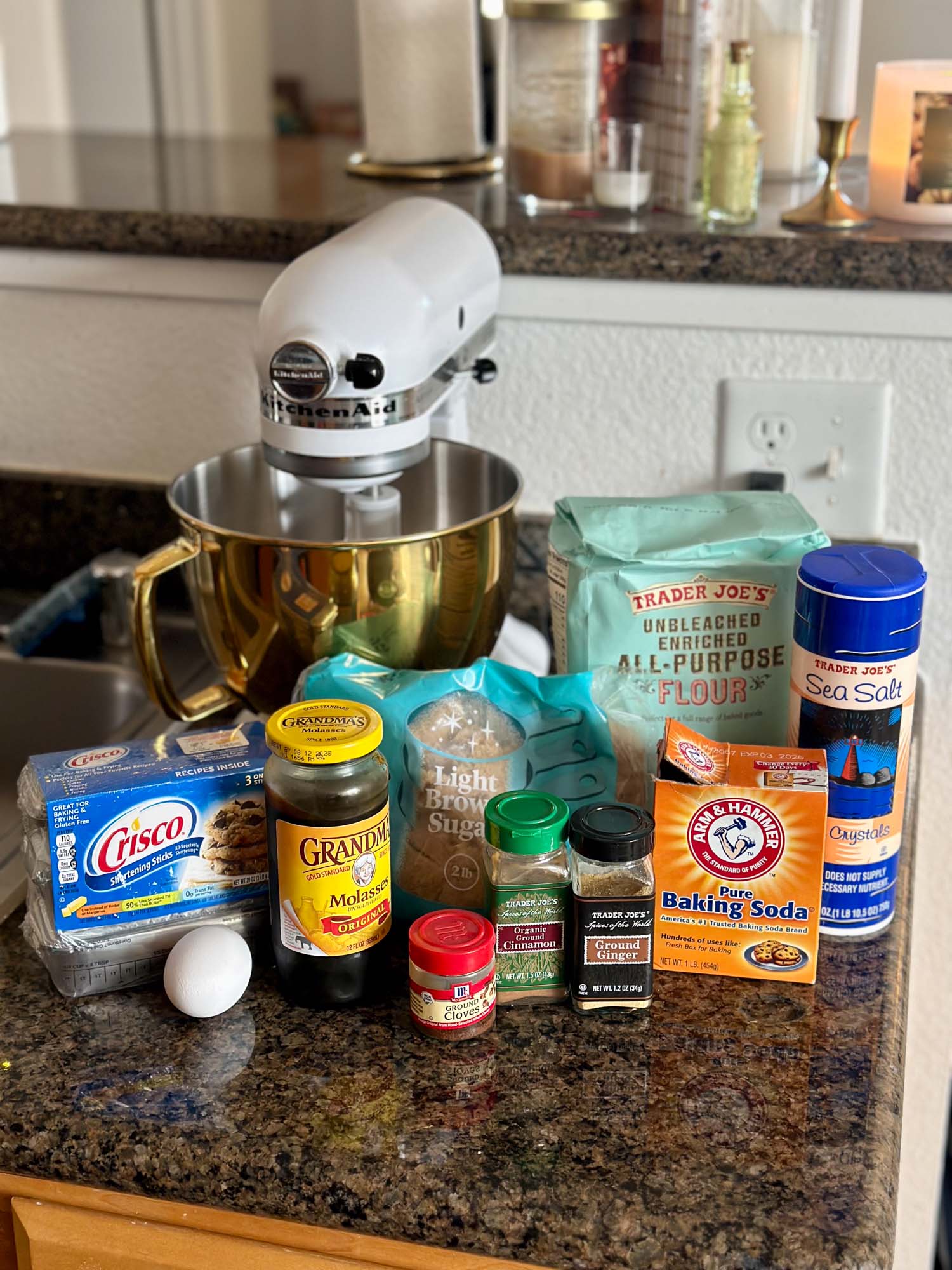
Molasses: What Kind Is Best?
If you’re not familiar with molasses, the number of options can be a little intimidating — especially since they’re not very self-explanatory. Let’s dive into the terms and what they mean.
Sulphured vs. Unsulphured Molasses
The two main types of molasses are sulphured and unsulphured.
As All Recipes explains, sulphured molasses is made from unripe sugarcane and is treated with sulphur dioxide as a preservative.
Unsulphured molasses is made from ripe sugarcane and doesn’t require any preservatives, which results in a cleaner, sweeter taste.
Most baking (including this recipe) calls for unsulphured molasses due to the taste. If you’re worried about accidentally grabbing the wrong one, most commercial molasses is unsulphured (such as the famous Grandma’s), so it’s unlikely you’ll stumble across sulphured. If in doubt, the package should be marked clearly.
Light, Dark, or Blackstrap Molasses?
Once you’ve ventured into unsulphured molasses, you still have a few more choices before you: light, dark, and blackstrap.
I find the differences between these confusing, since the color variations aren’t actually very distinctive (all molasses is pretty dark). Let’s break down the different kinds:
- Light molasses is what’s used in most baking and is the mildest (Grandma’s “original” is light).
- Dark molasses, also known as “full flavor” or “robust,” is slightly stronger, darker, and less sweet than light molasses. Although this recipe calls for light molasses, dark also works — I’ve used it before.
- Blackstrap molasses, on the other hand, should be avoided at all costs. It’s extremely dark, has been boiled down even further to remove most of the sugar, and is very bitter. Do not use blackstrap molasses in this recipe!
TL;DR: Use unsulphured molasses for these cookies (preferably light, but dark will work).
Brown Sugar: Light or Dark?
This recipe calls for light brown sugar, and I haven’t ever tried it with dark. Usually in baking, I use light and dark brown sugar pretty interchangeably. However, the difference between the two is that dark brown sugar has twice as much molasses as light brown.
Given the fact that this recipe already has molasses in it, I probably wouldn’t recommend switching them if you can avoid it. But if you’re a huge molasses fan, and it’s all you have on hand, you can use dark brown sugar — your cookies will probably just taste extra molasses-y.
Shortening: The Secret Ingredient
I am convinced that the secret ingredient that makes these cookies the best old-fashioned molasses cookies ever is …vegetable oil shortening!
This article from King Arthur Baking dives into the difference between using butter and shortening in baking. The main difference between the two: butter is about 80% fat, while shortening is 100%.
The result? Cookies made with butter will be flatter and spread more, while cookies made with shortening will be fluffier and spread less.
Since the flavor of butter is hands-down better than the flavor of shortening, in some recipes I use a combination to achieve both flavor and rise. However, since molasses is such a dominant flavor in these cookies, using shortening alone is the best way to get that dense, chewy texture while allowing the molasses flavor to shine through.
That’s it! That’s the secret ingredient in this recipe. I use (and recommend) Crisco shortening, but any brand of hydrogenated vegetable oil shortening should work — just don’t use butter-flavored.
You can use the sticks or the tub — the sticks are generally a little easier to work with, but the tub is a bit cheaper per ounce, so it comes down to personal preference.
Other perks of shortening: it’s shelf-stable, so you can store it in your pantry for months, and it’s dairy-free for people with allergies.
The main downside — shortening has a reputation for being pretty unhealthy. One reason for that is that Crisco used to contain trans fats until the company changed its formula. Even without the trans fats, its high fat content means it’s high in calories but very low in other nutrients.
Although shortening isn’t great for you, it’s fine as long as it’s consumed in moderation. Some desserts are worth splurging for!
Tips for Perfect Molasses Cookies
In addition to the key ingredients, there are a couple of important notes for achieving the perfect old-fashioned molasses cookies.
Crinkly Top: What Is It & Does It Matter?
A crinkly top is often touted as an important component of the ideal molasses cookie — have you ever wondered about whether it actually matters?
Cookies crack when the exterior dries out before the interior has set, resulting in a crispy outside and a chewy inside.
This recipe calls for rolling the cookies in granulated sugar and sprinkling them with water to help with the cracking process. While a crinkly top can be the mark of a good cookie, it’s mainly important for the aesthetic.
Even if these molasses cookies don’t crackle, they’ll still taste delicious. This recipe varies considerably in the amount of crackle, and they’re still the best old-fashioned molasses cookies I’ve ever tasted.
The Most Important Step: Do Not Overbake Molasses Cookies
For years, I thought it was necessary to bake my cookies until they were completely “done.” Over time, I realized that cookies actually continue to bake on the baking sheet after they’re out of the oven.
That’s because of carry-over cooking, which means that as the exterior temperature cools, the interior temperature rises.
For these old-fashioned molasses cookies, remove them as soon as they start to brown and the edges are set. They should still appear doughy in the middle. As the cookies cool, they will finish baking, resulting in a soft and chewy texture.
Now, let’s dive into the recipe!
Molasses Cookies
Equipment
- 1 stand mixer or hand mixer
- Mixing bowls
- Baking sheets
Ingredients
- ¼ cup light unsulphured molasses (dark also works)
- 1 cup light brown sugar (packed)
- 3/4 cup vegetable oil shortening
- 1 egg
- 2 ¼ cups all-purpose flour, spooned and leveled
- 2 tsp baking soda
- ¼ tsp salt
- ½ tsp cloves
- 1 tsp cinnamon
- 1 tsp ginger
- Granulated sugar (for rolling cookies)
Instructions
- Using a stand mixer or hand mixer with paddle attachment, mix together molasses, brown sugar, shortening, and egg.
- In a separate bowl, sift or whisk together dry ingredients. Gradually add to the shortening mixture and mix on low speed until combined.
- Chill dough for at least 1-2 hours.
- Preheat oven to 375° F and line a baking sheet with parchment paper.
- Shape dough into one-or two-inch balls, roll in granulated sugar, and place on baking sheet 2-3 inches apart (the larger they are the more they will spread).
- Sprinkle with water and bake for 6-9 minutes, or until cookies just begin to brown and are still doughy in the middle (do not overbake as they will continue to bake once out of the oven).
- Let cool until set on baking sheet and then finish cooling on wire racks.
FAQs
Here are some answers to questions you may have about this old-fashioned molasses cookie recipe!
Do I need a mixer, or can I mix these by hand?
I recommend using a stand or hand mixer, but in a pinch, you can make these by hand. You just may end up with little clumps of shortening you aren’t able to fully incorporate, but the recipe is pretty forgiving, and any clumps should cook out. I’ve mixed them by hand before, and they tasted fine!
Can I make these in advance?
Yes! You can make the dough in advance and refrigerate it for two to four days, according to the USDA. You can also freeze the dough for up to two months, then thaw and bake, but I haven’t personally tried that.
To bake and freeze the cookies in advance, cool completely, then freeze in an airtight container. Thaw at room temperature before serving.
Can I substitute spices?
The spices are pretty important to this recipe, so I wouldn’t recommend substituting (especially more than one). If you’re out of just one of them, you could try substituting a combination of the other spices or adding spices such as nutmeg or allspice; they will just taste a bit different.
How should I store them, and how long do they keep?
Store in an air-tight container at room temperature. They are best when freshly baked, but should still taste good for at least several days.
Can I make these gluten-free?
Yes, I did try this once, and they tasted pretty good, although not as good as the gluten version (obviously). I substituted Bob’s Red Mill Gluten-Free flour and the amount of xanthan gum recommended on the flour package, and left the rest of the recipe the same.
However, they spread a ton and were pretty shapeless/flat. If I were to try again, I would probably freeze the dough for 30 minutes (in addition to chilling in the fridge) before putting them in the oven to see if it helped them hold their shape more.
More Easy Dessert Recipes
Looking for more quick and delicious desserts you can make in advance? Try these tested favorites.

Our Go-To Magic Bars (No Coconut, No Nuts)
These delicious magic bars are just 5 layers and so easy that they’re a little dangerous.

White Chocolate Crème Brûlée
Craving a decadent dessert? This white chocolate twist on the classic recipe is guaranteed to impress.
