
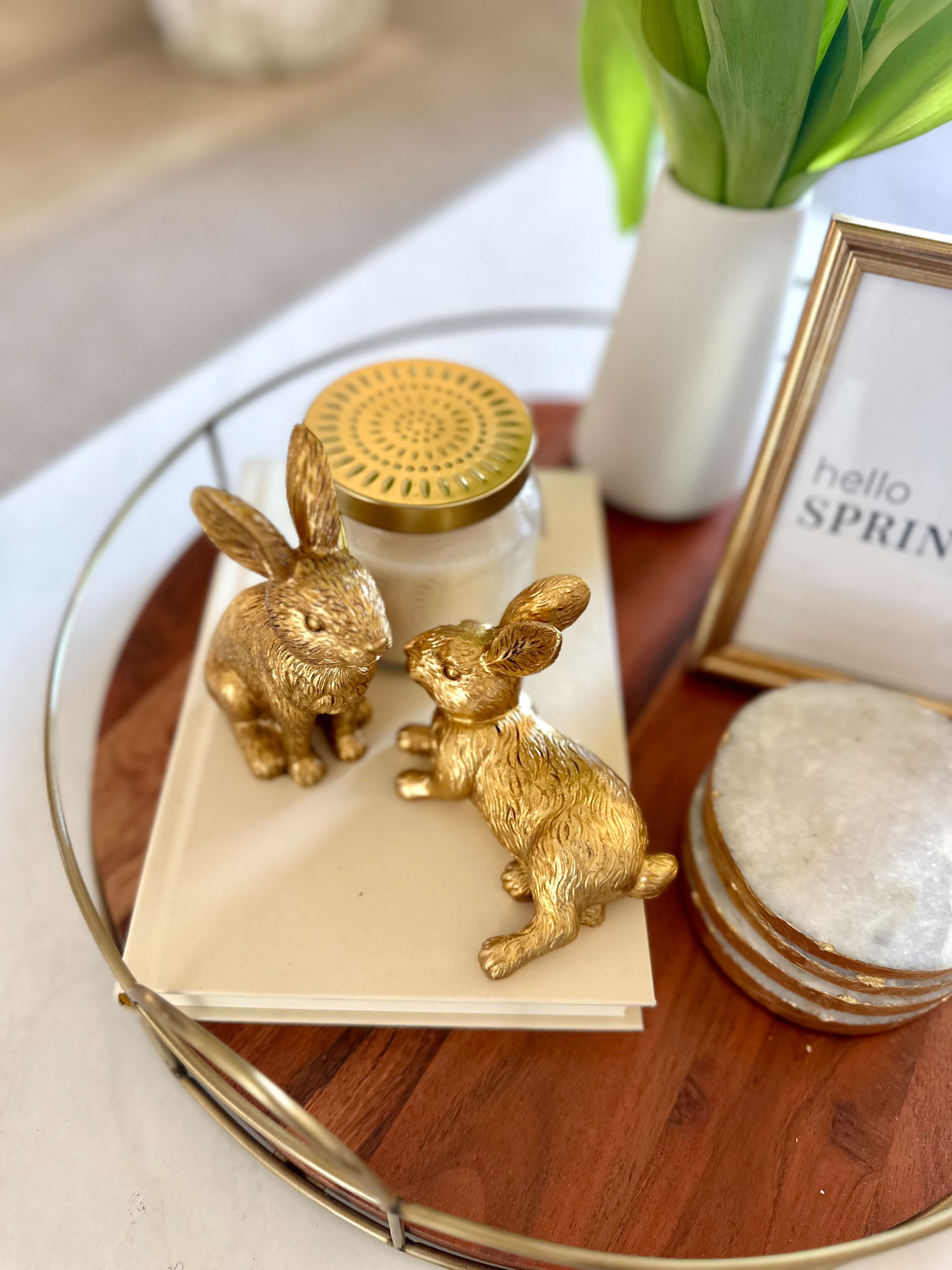
Minimalist Spring Bunny Decor: 7 Simple Styling Tips
For years, I resisted the temptation to use bunnies in my spring decor. My style leans minimalist, and I wasn’t convinced that seasonal bunny decor would integrate well (not to mention the fact that my husband would not be… thrilled about storing an army of bunnies the rest of the year).
But when I came across a few simple gold bunnies, I knew I had to take the plunge — and so the bunnies conquered!
Although bunny decor is often associated with bright pastels and heavily styled displays, it doesn’t have to be. It’s totally possible to incorporate minimalist spring bunny decor in your home.
In this post, I’m sharing seven simple styling tips to help you decorate with bunnies in a way that feels cohesive and elevated.
This post contains affiliate links that earn me a commission. For more information, read my disclaimer.
Skeptical About Spring Bunny Decor?
Don’t worry — if you’re skeptical about spring bunny decor, you’re in the right place. The main problem is that they can look cheesy for a few reasons:
- Real bunnies live outside, not in your living room, which can make blending bunny decor with the rest of your space feel unnatural.
- There are some very ugly bunnies out there.
- It’s easy to get carried away.
But when I came across a few simple gold bunnies, I asked myself: Is there a minimalist way to style these? And after some careful consideration (and a little restraint), I discovered a few ways to accomplish this!
So let’s explore how to navigate those challenges and use spring bunny decor in a way that’s aligned with a minimalist aesthetic.
1. Complement Your Color Scheme
My first tip is to find bunnies that complement your color scheme.
Maintaining a cohesive palette is a fundamental part of good interior design. It supports repetition and balance, two principles that are essential to creating a visually pleasing space.
One of the challenges with decorating with bunnies is that their natural habitat is the outdoors. That contrast can make them feel out of place in your home.
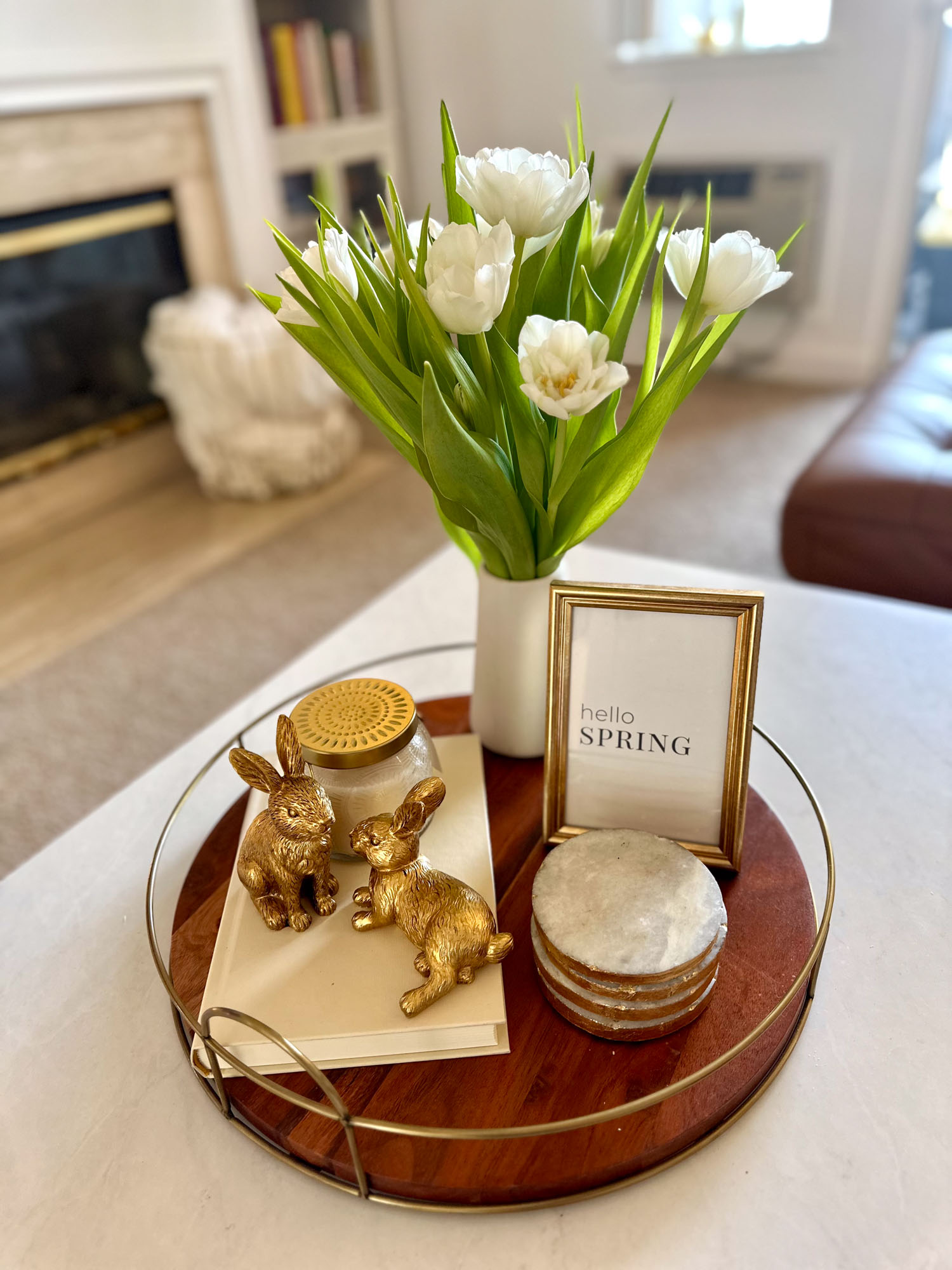
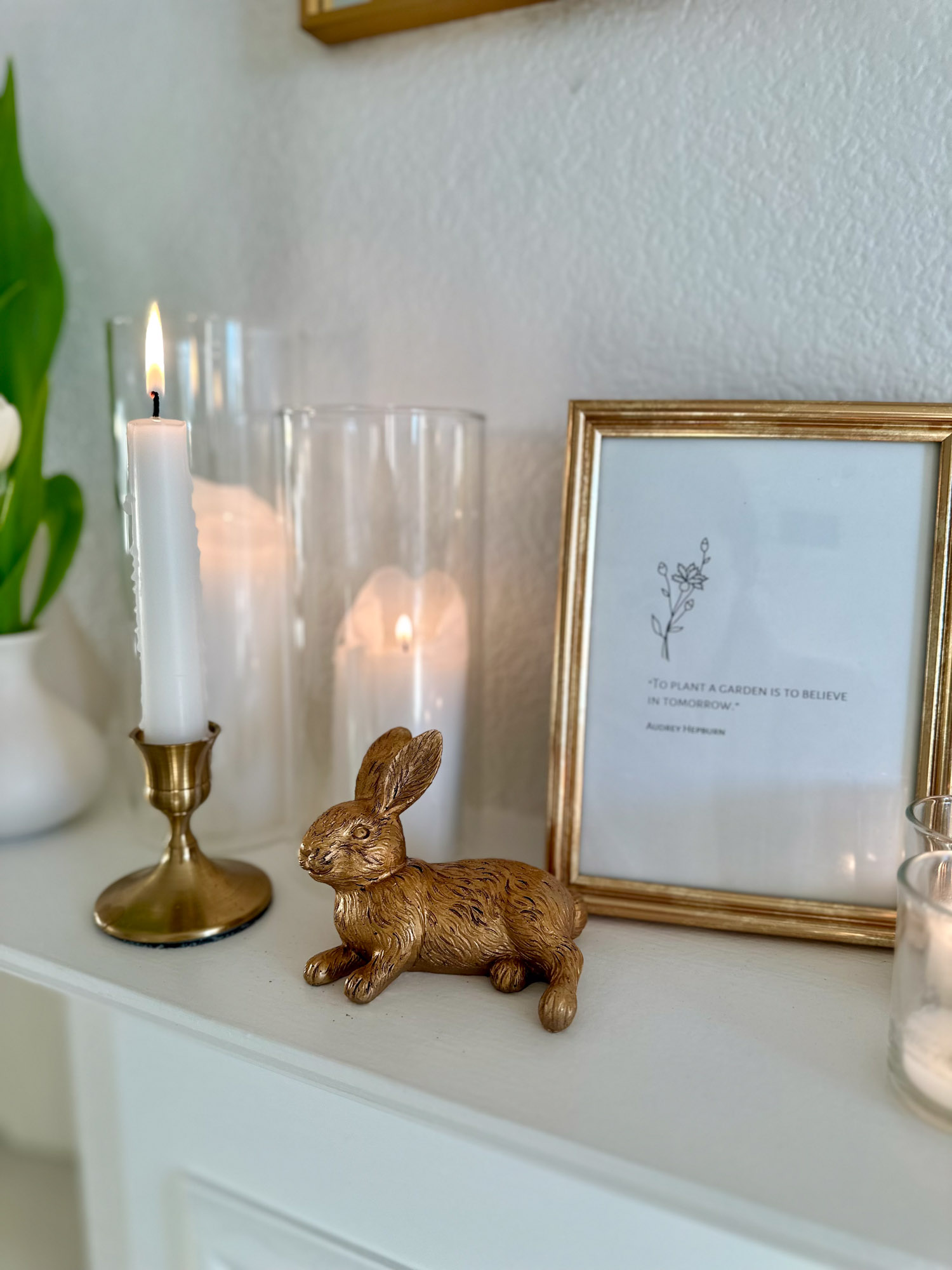
Choosing bunnies that align with your space’s colors helps bridge that gap. The ones I found happened to be gold, which worked well because my color scheme includes white, gold, and dark brown accents.
Whatever your palette, select bunnies that blend in rather than compete. In general, you can’t go wrong with neutrals such as white, cream, taupe, beige, brown, or grey, especially since these are common natural colors for bunnies.
Pastels are also popular for spring decor, so if those tones already exist in your space, pastel bunnies can work well. Whatever color you choose, keeping your bunnies monochromatic will help them integrate seamlessly with your decor.
And remember — there are some very ugly bunnies out there. Avoid cartoon-esque pieces with exaggerated faces and whiskers, and opt instead for simple, minimalist silhouettes.
When your bunny decor complements your existing color scheme, it supports your space rather than distracting from it.
2. Incorporate Botanical Elements
Another way to help your bunny decor feel more natural is to incorporate botanical elements. While bunnies’ habitats vary, they almost always involve dense vegetation that they can hide behind.
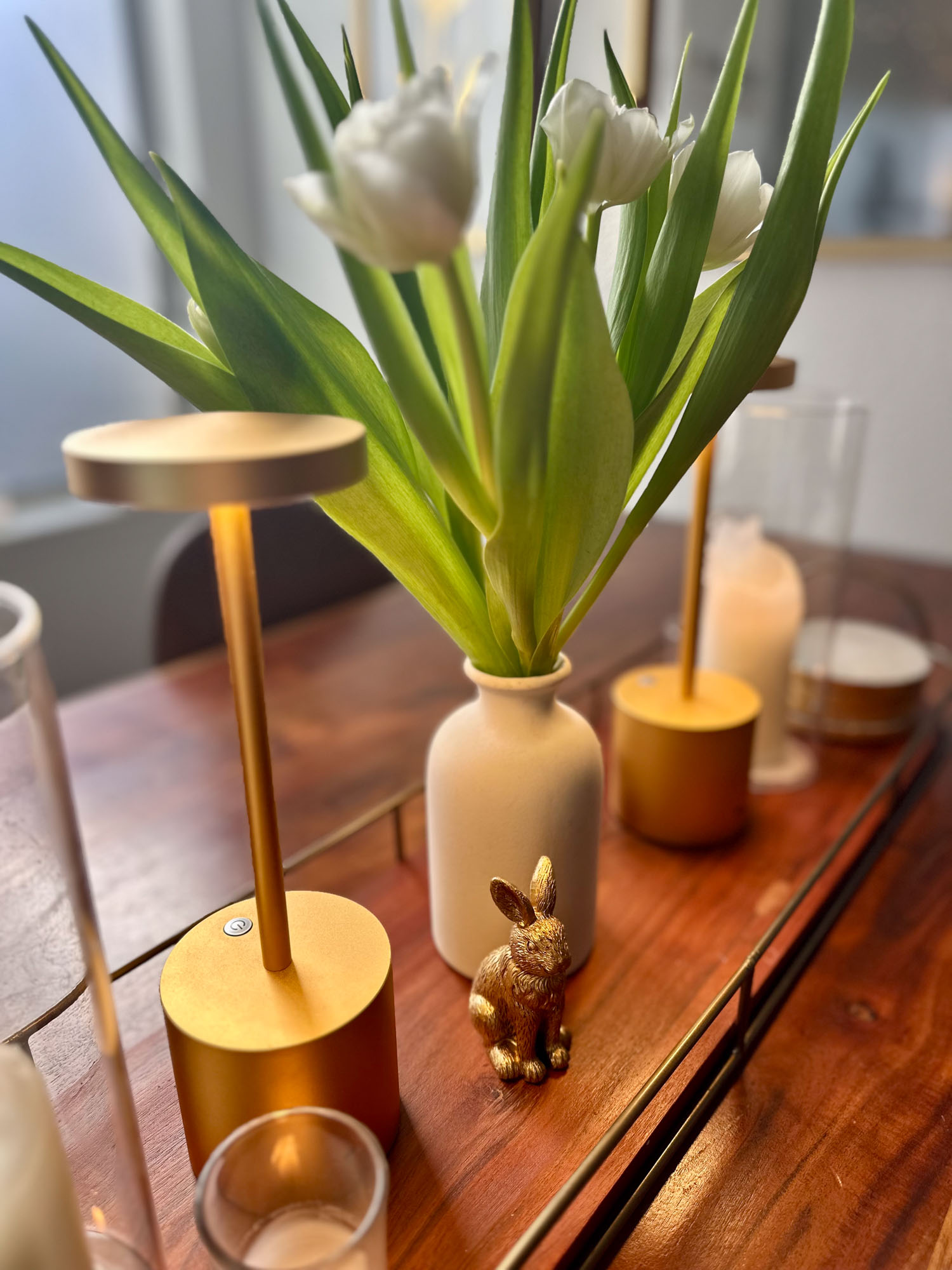
Think about it — bunnies are timid. In the wild, they aren’t usually sitting in the middle of a cleared space. They prefer to crouch near bushes or plants, where they feel safe.
Placing your bunnies beside greenery helps them feel more grounded and less staged. Conveniently, vegetation is also part of their diet, making plant life an essential part of their environment.
Living elements are a key part of spring decor in general. I love using flowers whenever I can, but especially in spring, when everything is beginning to bloom.
When decorating with bunnies, adding plant life, whether that’s potted plants, cut flowers, or simple greenery, helps your space feel more cohesive.
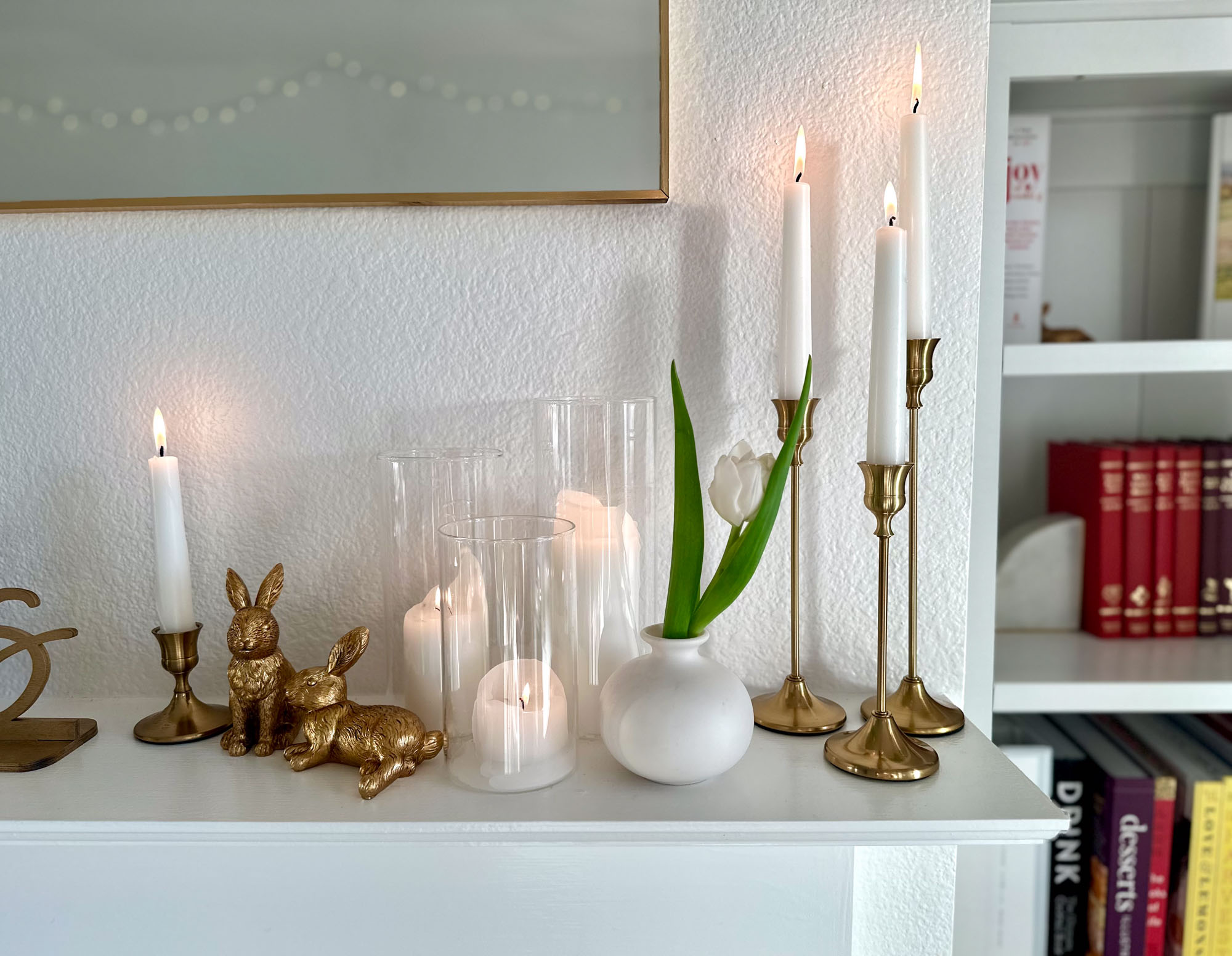
I like to use white or pale-colored tulips since they’re quintessentially spring and align with my color palette. I’ll arrange a few as a coffee table centerpiece and place others in bud vases throughout the space.
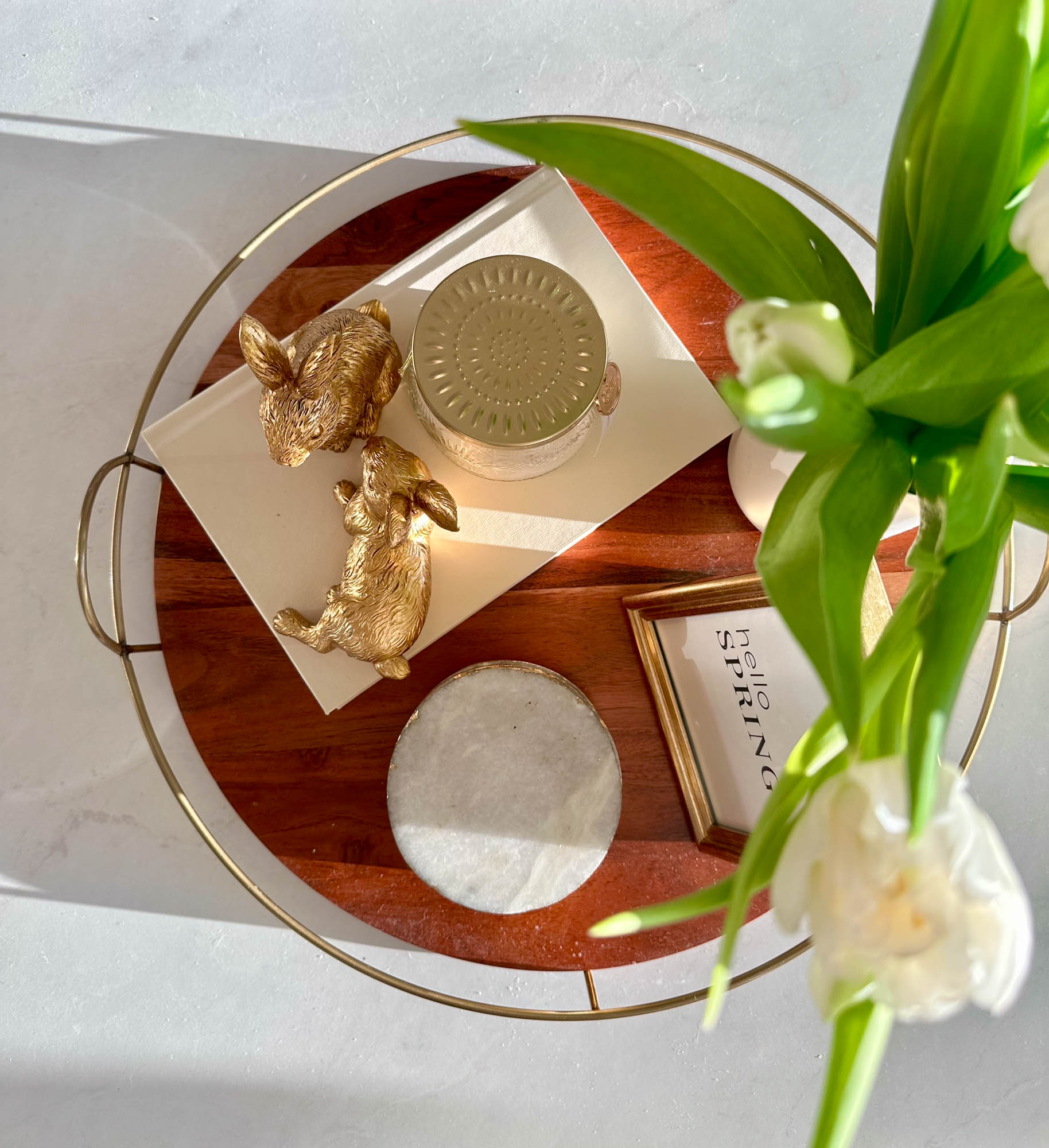
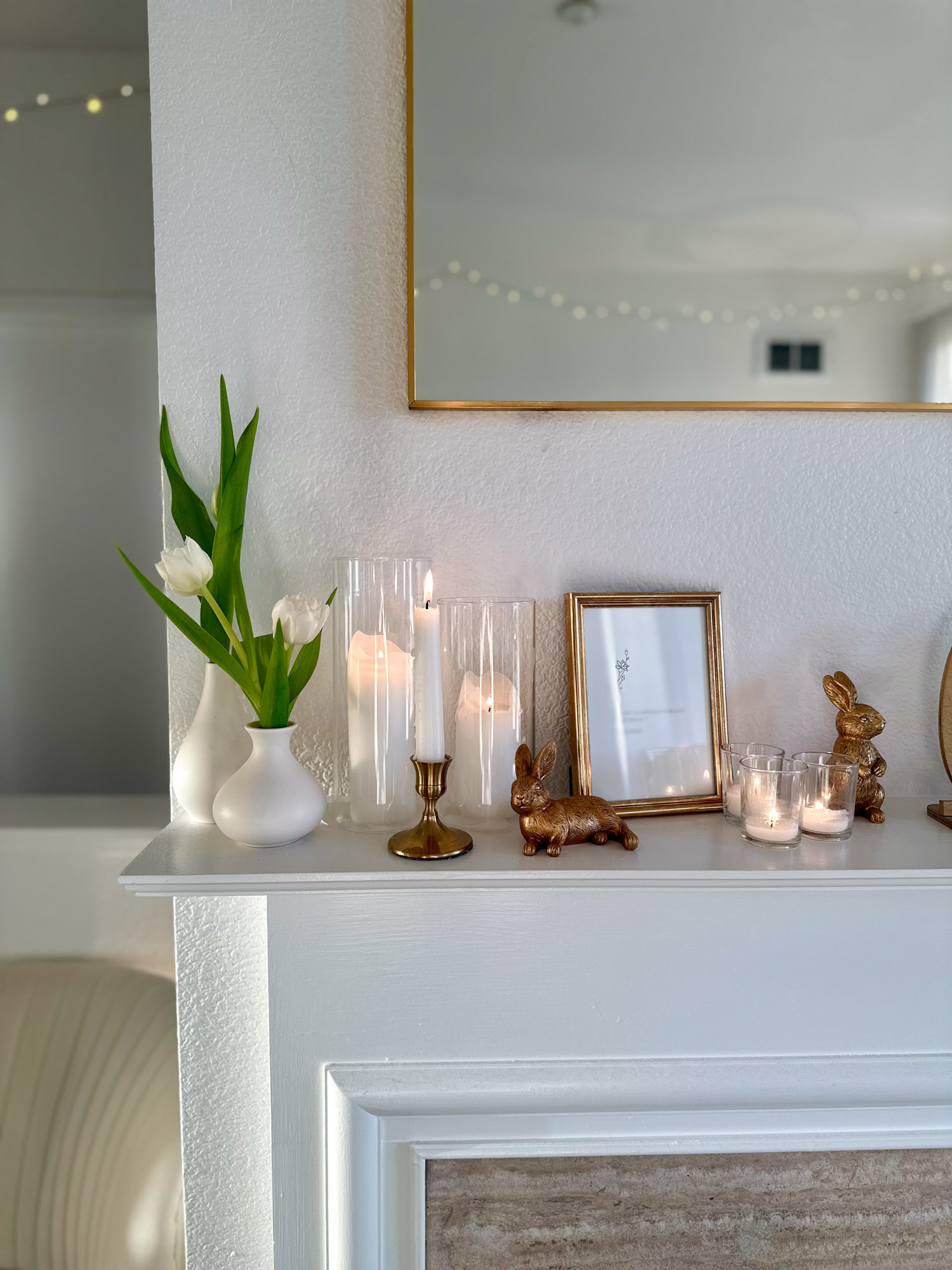
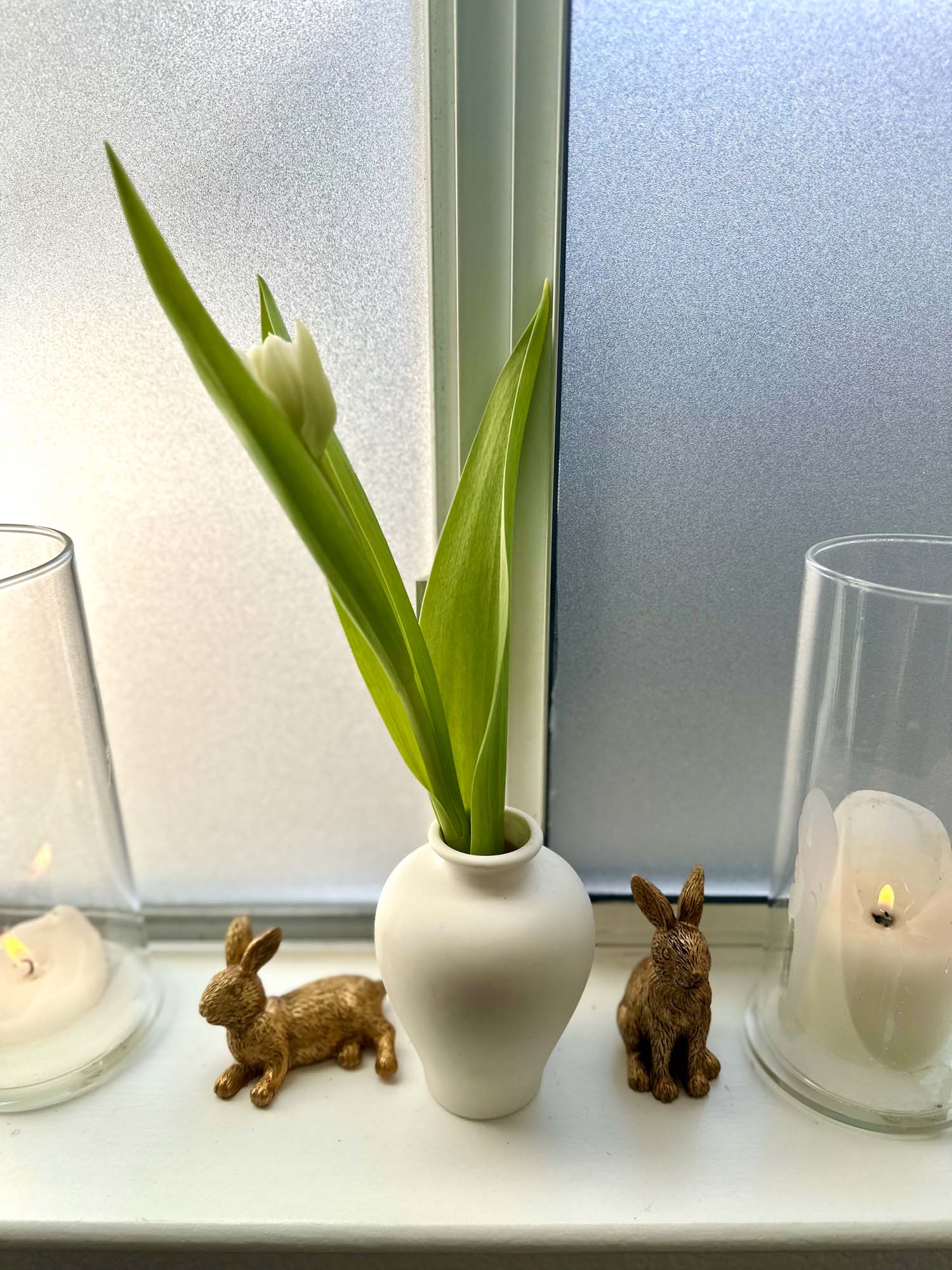
Placing your bunnies next to botanical elements helps make your bunny decor feel just a bit more realistic.
3. Include Other Decor Elements
Although botanical elements are essential to minimalist bunny decor, it’s also important to incorporate other decor pieces. The goal is to blend the outdoors with your interior and create a sort of hybrid space.
Using items such as books, candles, or framed decor alongside your botanical elements helps create that balance.
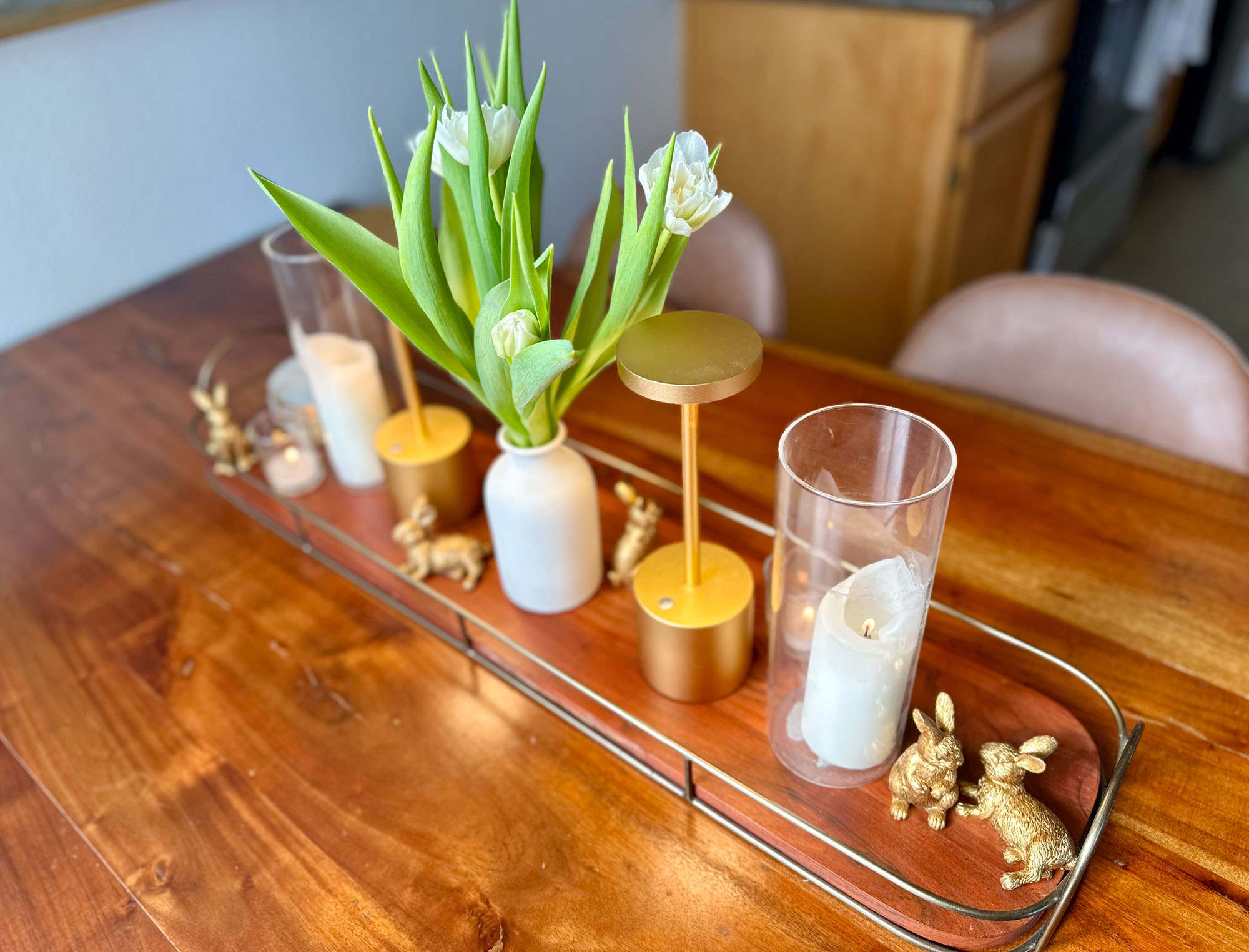
For example, a vase of tulips on its own is lovely. But when you pair seasonal elements with everyday decor, such as candlesticks, coasters, or books, the space feels layered and intentional rather than styled just for the season.
4. Choose Varying Poses & Sizes
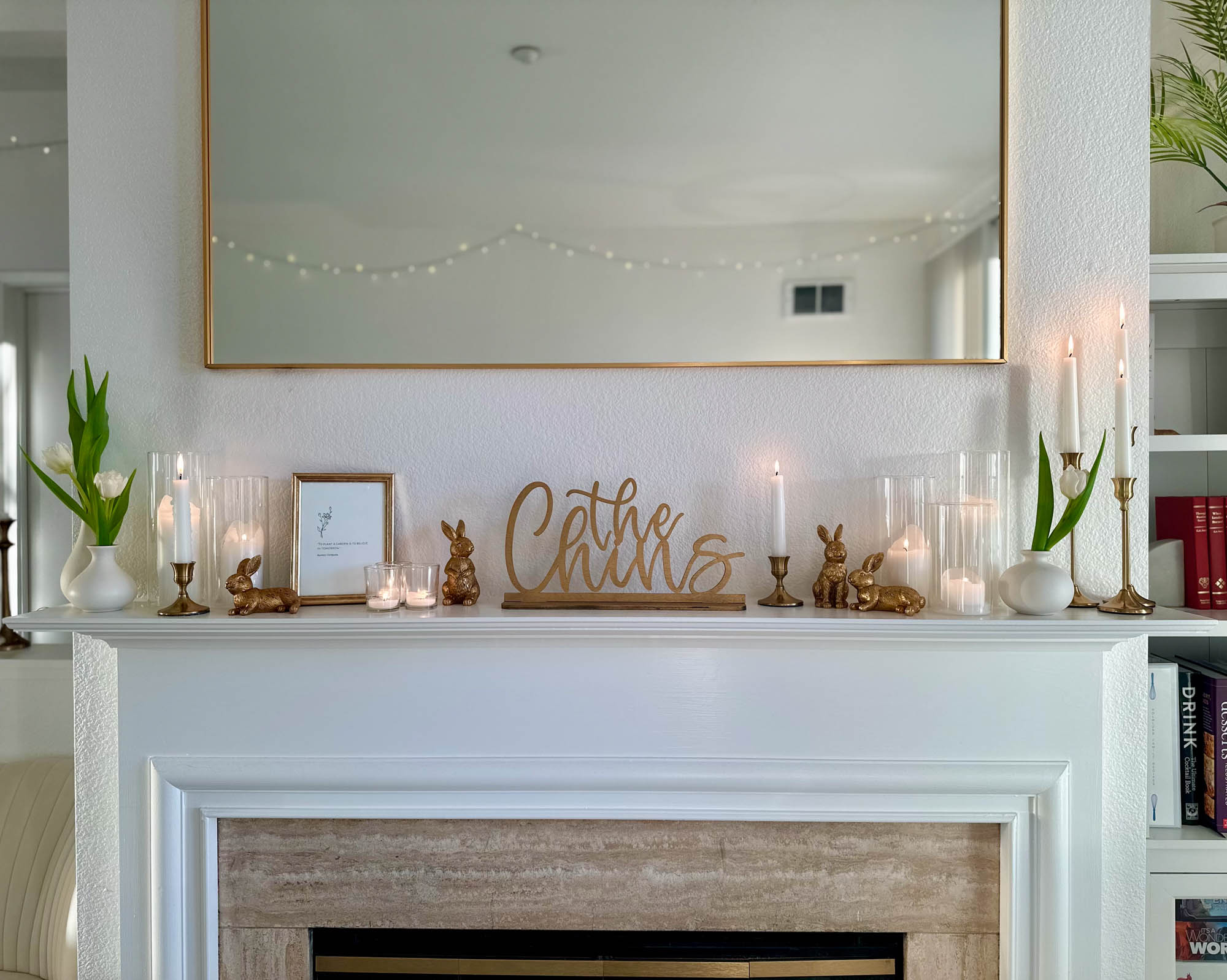
Another key principle when decorating with bunnies is to vary their poses and sizes. Having different poses (I used three, in two sizes) helps create the illusion of movement.
While incorporating multiple sizes adds interest, achieving the right balance can be tricky.
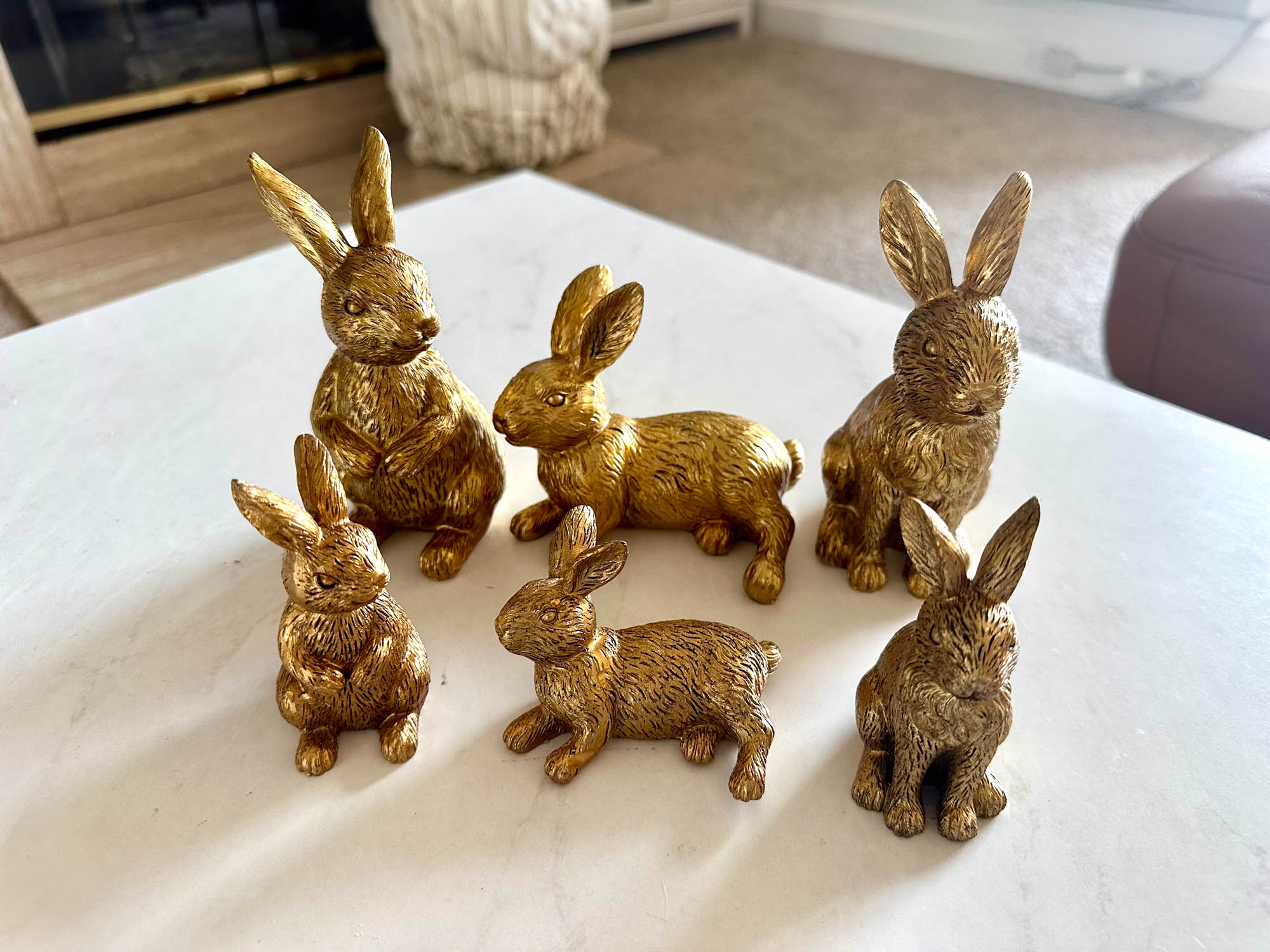
In general, the larger the bunny, the harder it is to position well.
For example, a large bunny can look out of place on a dining table or mantel if it isn’t proportional to the surface. If you choose a larger piece, placing it closer to the ground can help maintain visual balance.
That said, I generally recommend leaning toward smaller sizes for a more minimalist look. Smaller bunnies are easier to style (and easier to store!).
Variety is helpful, but too much contrast in scale can make a display feel unnatural.
Placing a slightly larger bunny beside a smaller one can be charming — it may resemble a mama bunny and her baby. But if the proportions are off, it can start to look like a giant mutant bunny next to a normal-sized one. That effect is less “whimsical spring” and a little more… unsettling.
To avoid this, I chose not to place dramatically different sizes directly beside each other. Instead, I distributed the varying sizes throughout different areas of my home.
Mixing poses, however, is essential. Think about how odd it would look to have a row of bunnies all in the exact same position, facing the exact same direction? How you position them matters just as much as which ones you choose.
5. Position Bunnies Naturally
Once you have a variety of sizes and poses, it’s time to position your bunnies throughout your space.
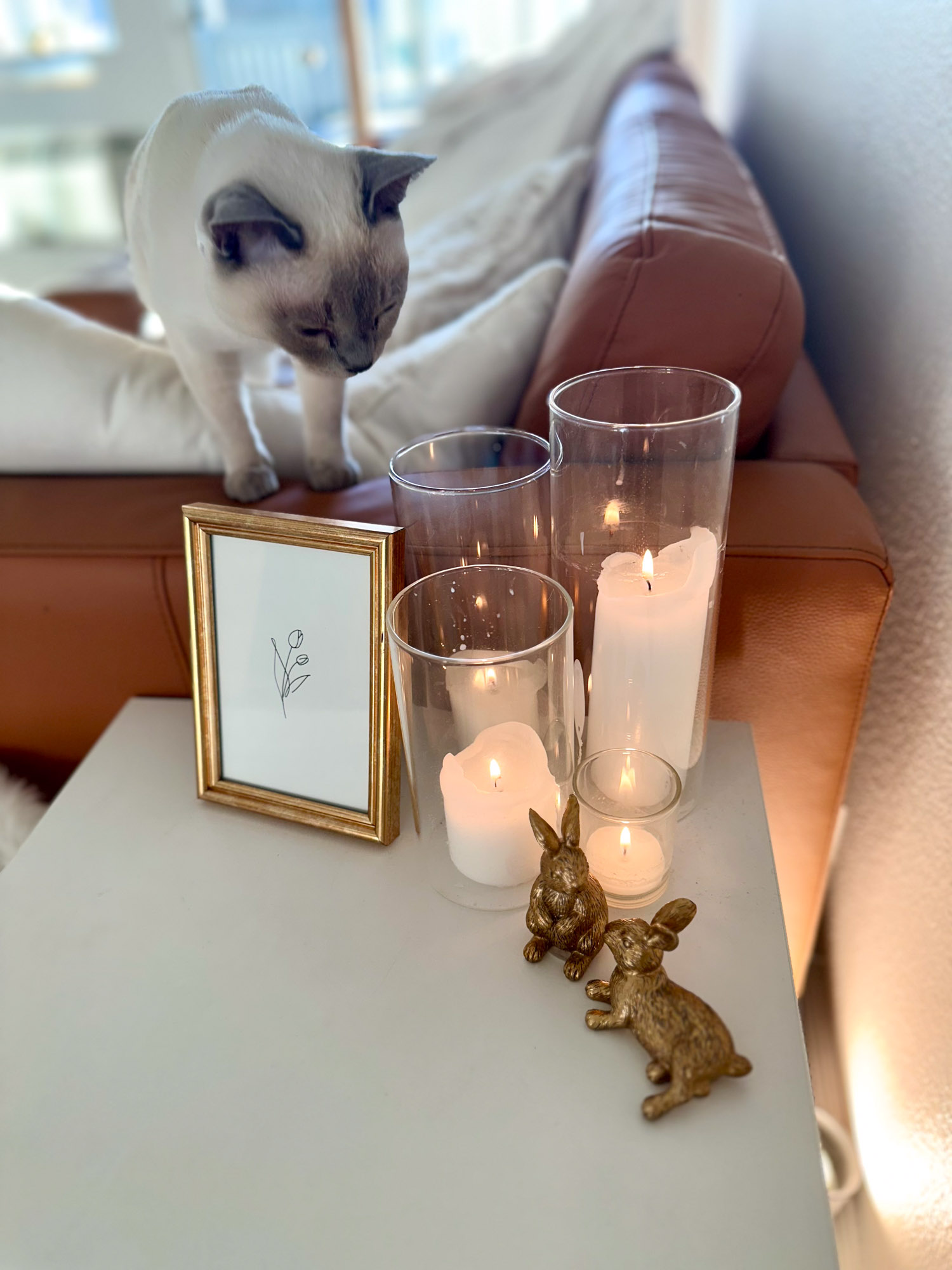
What I’ve found most effective is avoiding strict symmetry while still maintaining balance. Place them irregularly, close enough together that they feel connected, but far enough apart to create visual interest and integrate them into your existing decor.
A mixture of clustered and solo bunnies works well. In my own space, I grouped some in pairs and allowed others to stand alone.
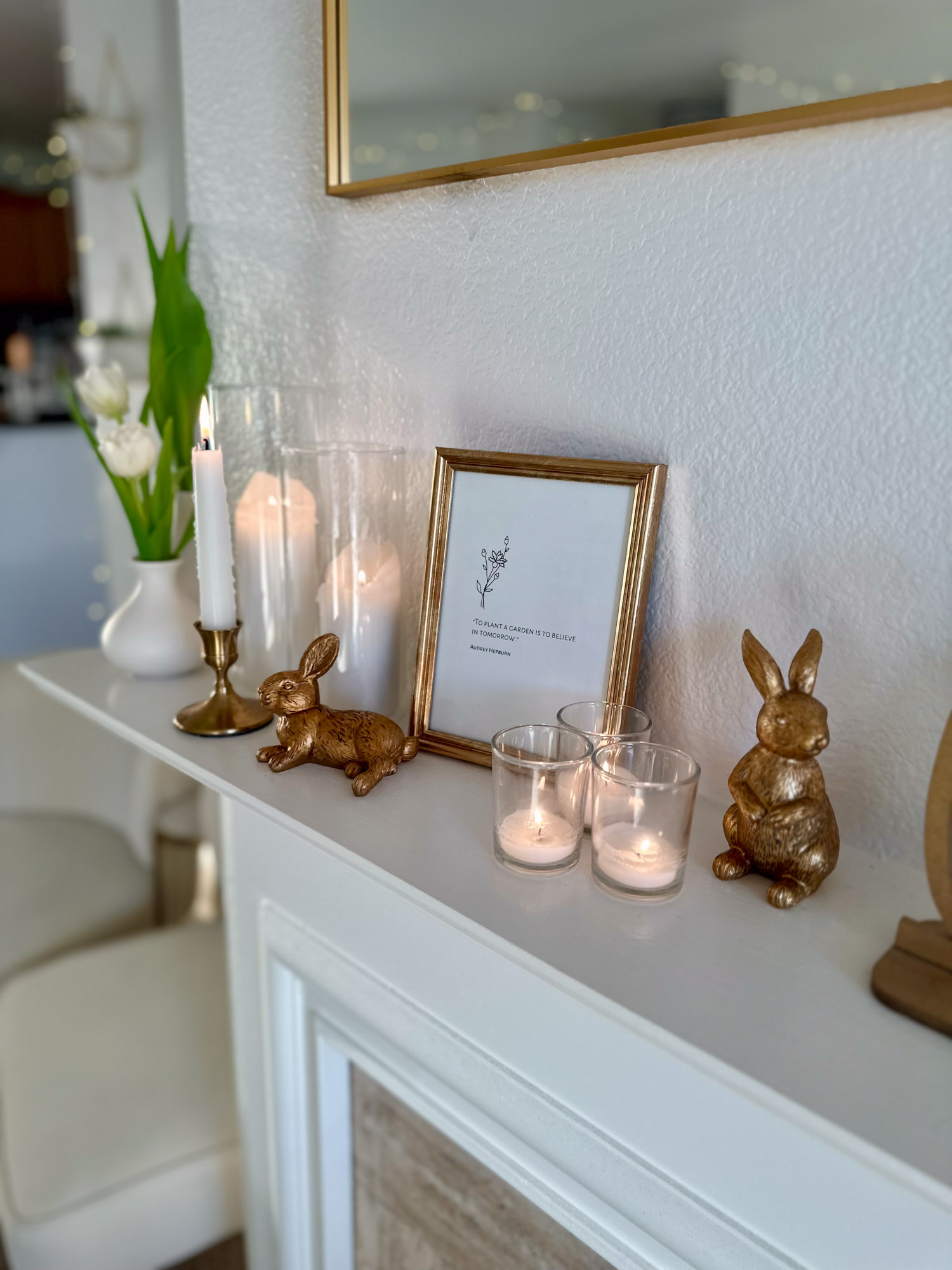
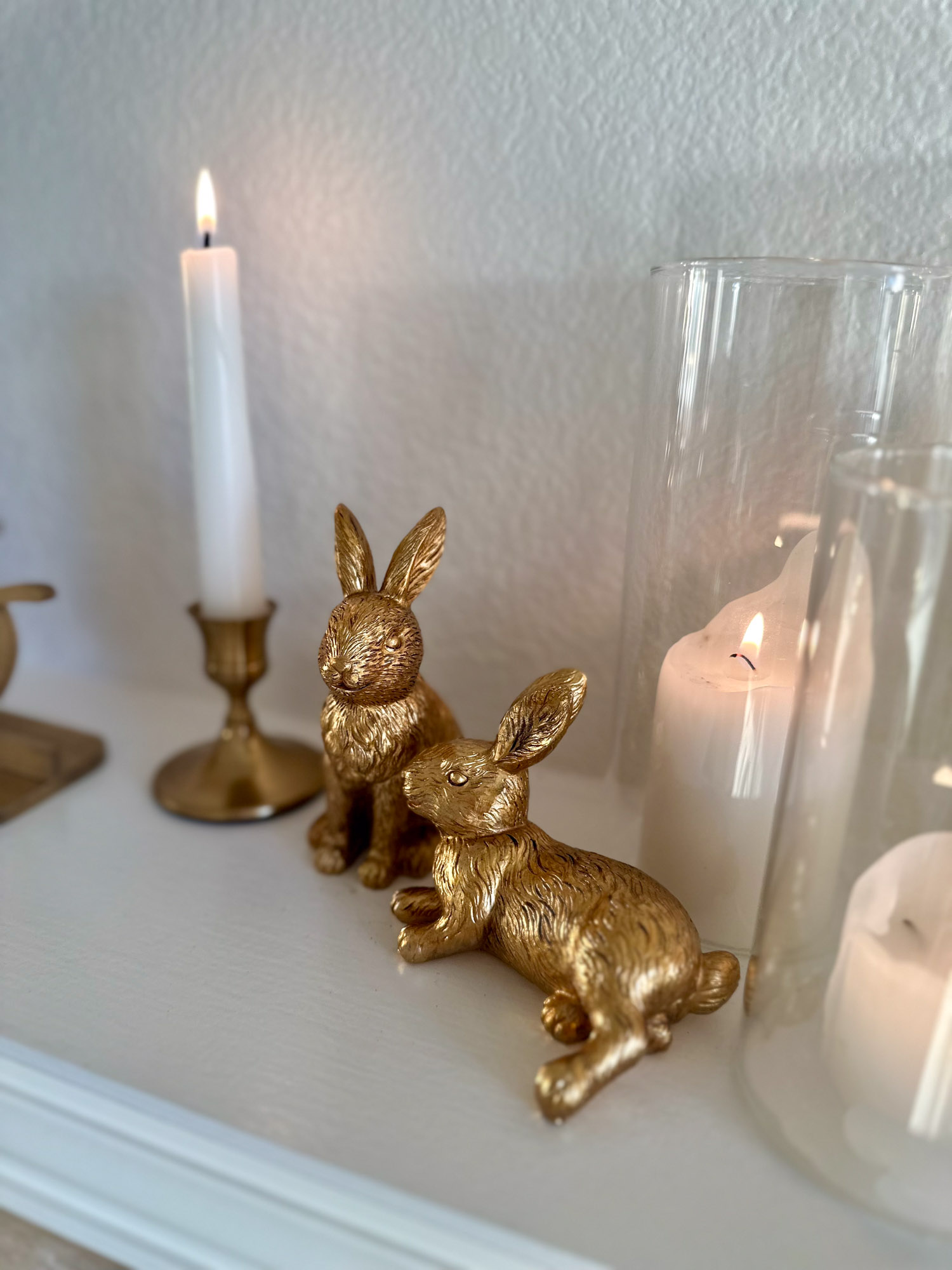
You’ll also want to vary the direction they’re facing.
In their natural habitat, a group of bunnies wouldn’t all stare at the exact same point at the same time — unless they’d spotted a predator and were fearing for their lives… probably not the aesthetic you’re going for.
Instead, position them so some appear to be interacting, while others look outward or slightly away.
6. Be Careful with Eggs
Eggs and bunnies often go hand in hand, and you’ll frequently see them styled together. That raises a fair question: since bunnies don’t actually lay eggs, why are they associated in the first place?
While the exact origin of the Easter bunny tradition is unclear, rabbits have long symbolized fertility and eggs new life, which are both tied to the Easter holiday. The tradition was later brought to America through the German legend of an egg-laying hare called the “Osterhase.”
Since this somewhat bizarre association exists, you’re certainly free to incorporate eggs into your bunny decor. However, be thoughtful about how you use them. Decorative eggs arguably have even more potential to look cheesy than Easter bunnies themselves.
Pay attention to scale, too. According to the legend, in theory, the bunny could have laid the eggs. That means the size and look of your eggs need to make sense given the size of your bunny. Oversized or brightly colored eggs can quickly tip a display from minimalist to overly themed.
To keep things simple, I chose not to use eggs at all. But if you decide to include them, use them sparingly and with intention.
7. Don’t Get Carried Away
My final tip for pulling off minimalist spring bunny decor is simple: don’t get carried away. This is where it’s easiest to go wrong. There are a couple of ways people tend to take things too far:
- Using too many bunnies
- Adding too many other spring baby animals
The thing about bunnies, real or decorative, is that they tend to multiply quickly. But when it comes to styling them, less is more.
Although wild bunnies live in groups, you don’t typically see large numbers of them all at once, and they tend to keep a low profile. Filling your space with too many can quickly disrupt the subtle, natural effect you’re trying to create.
The other way people take things too far is by adding so many other spring baby animals that they end up with a veritable zoo in their living room.
This one is hard because baby animals are cute, right? So it can be tempting to add more. However, putting too many different animals in proximity is not realistic, less cohesive, and can easily become cluttered.
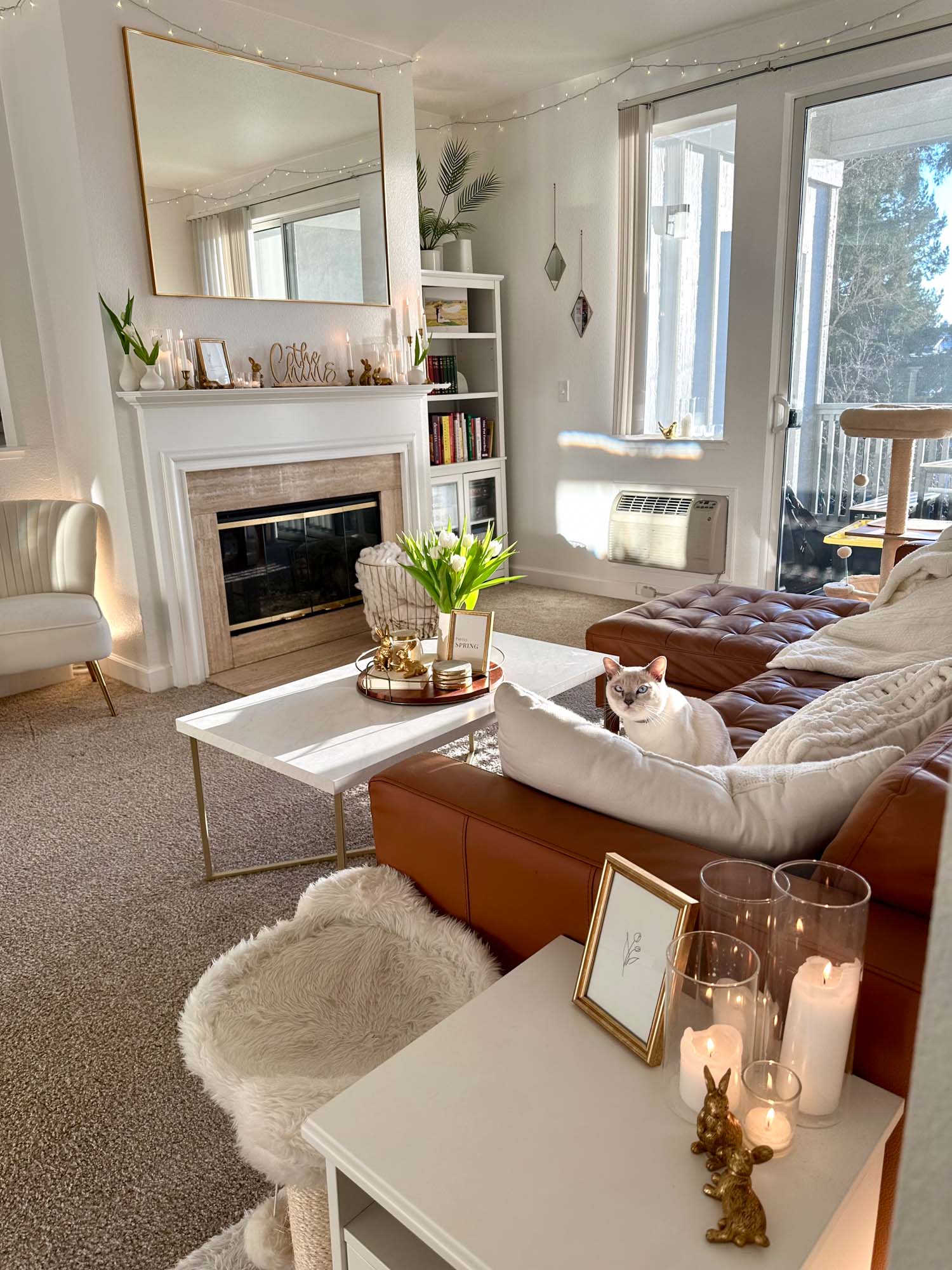
My recommendation for minimalist spring bunny decor is to primarily stick to bunnies, and perhaps add one or two other animals here and there (for example, I have a pair of decorative gold birds that I use in my spring decor). But exercise restraint — the end result will be more effective if you have consistency and continuity.
Bunnies may not be the easiest pieces to decorate with, but when styled intentionally, they can enhance your minimalist spring aesthetic and add some seasonal whimsy to your home.
Cheers to this joyful season of growth, renewal, and lots of bunnies!
More Minimalist Seasonal Decor
Looking to continue the minimalist seasonal aesthetic throughout the year?

Minimalist Fall Decor
My complete guide to minimalist fall decor (that still feels cozy).
