
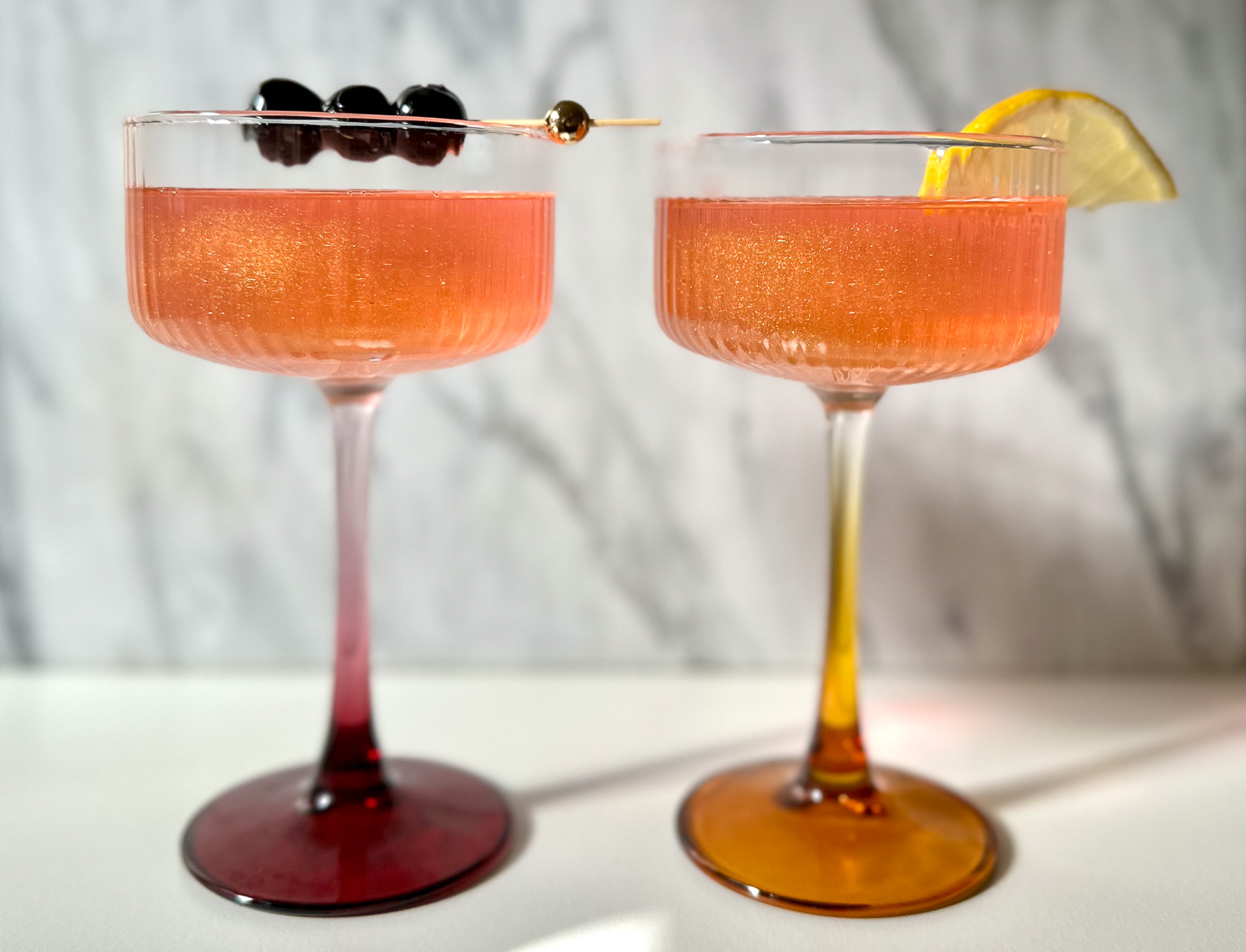
Cocktails vs. Mocktails: What Makes Them Different (and How to Make Better Mocktails)
Confession: While I love cocktails, I’m almost always disappointed by mocktails. What exactly makes cocktails and mocktails so different? And why do mocktails so often miss the mark?
In this post, I’ll explore what goes into a cocktail vs. a mocktail, and then dive into the question that matters: Is it possible to make mocktails that actually taste good?
Spoiler: the answer is yes!
This post contains affiliate links that earn me a commission. For more information, read my disclaimer.
Definition of a Cocktail
According to Merriam-Webster, a cocktail is “a usually iced drink of wine or distilled liquor mixed with flavoring ingredients.”
Some classic cocktails include a Margarita, Old-Fashioned, Cosmopolitan, Martini, Whiskey Sour, and Moscow Mule.

If a cocktail is a mixture of alcohol and flavored ingredients, what then is a mocktail?
Definition of a Mocktail
A mocktail is defined as “a usually iced drink made with any of various ingredients (such as juice, herbs, and soda water) but without alcohol: a nonalcoholic cocktail.”
The absence of alcohol is the most obvious differentiating factor, but what people might overlook is that a mocktail must also contain various ingredients, just like a cocktail. That’s why a soda isn’t considered a mocktail.
Some of the original mocktails from the early-to-mid 1900s include the famous Shirley Temple, Roy Rogers, and Cinderella mocktail, but over the years, they have come to mimic many classic cocktails, such as the Mint Mojito, Moscow Mule, Grapefruit Paloma, and Piña Colada.

Essentially, a mocktail should replicate the sophisticated, complex flavors of a cocktail — but without any alcohol.
Seems easy, right? Well, it’s not quite so straightforward.
The Difference Between Cocktails & Mocktails
If the only thing that’s different about cocktails and mocktails is the presence or lack of alcohol, what makes them taste so different?
Apart from the buzz that alcohol can give you, the two main differences between cocktails and mocktails are 1) bite and 2) depth of flavor.
Bite
The heat and sharpness that you get from liquor are difficult to replicate. Do you know what actually causes the “burn” of spirits?
Fun fact: your brain has TRPV1 receptors that alert your brain when you’re going to drink something hot. The temperature threshold for that is 42°C or 107.6°F.
Ethanol, which is the alcohol we drink in wine, beer, and spirits, binds to these receptors and lowers that threshold to 37°C or 98.6°F (which is our normal body temperature). That means that the drink will feel hot even though it isn’t.
That bite is what gives cocktails their edge and makes them feel more “adult.”
Depth of Flavor
In addition to the bite, cocktails usually have a great depth of flavor. While some of this comes from mixers, much of it is rooted in the alcohol itself.
That flavor starts with fermentation, which creates fruity, floral, and earthy compounds — the base notes of many spirits. As Renaissance Flavors notes, alcohol can then be enhanced through centuries-old techniques such as infusions, macerations, barrel aging, and distilling with botanicals, all of which add depth, aroma, and character to spirits.
Since the combination of the bite and complexity of flavor is what differentiates cocktails from mocktails, the secret to making better mocktails is replicating them as closely as possible.
However, as you’ve probably experienced, many mocktails fall short here.
Common Pitfalls of Mocktails
In my experience, mocktails tend to fall into several camps.
Too Forced
Sometimes, a mocktail tries too hard to be a cocktail, and you can tell. Although the goal is to replicate the effect of a cocktail, you need to ensure the drink stands on its own merit. Otherwise, it ends up feeling like a sad, watered-down echo with a weird aftertaste.
Zero-proof liquor (which we’ll discuss later) is one of the biggest culprits in making mocktails feel forced. While some brands are decent, many are overpriced and underwhelming.
Too Sweet
Another common mocktail pitfall is being too sweet. While cocktails are often quite sugary, the alcohol helps cut the sweetness. If you don’t have enough sharpness to balance out your mocktail, it can taste syrupy.
Too Watery
Water is a critical ingredient in many cocktails, as the dilution from ice — whether from shaking or stirring — is critical to a good drink.
However, while ice/water can be an important mocktail ingredient, dilution is not desirable in mocktails, and adding too much water will instantly ruin your beverage.
Too Boring
Have you ever gotten a mocktail that tasted like juice or soda? Sometimes mocktails are just…boring. If a drink lacks the proper layering of flavors, it’s not a true mocktail, and you’re going to feel cheated.
How to Make Mocktails Taste Better
Now that we’ve examined a bit behind the science of cocktails and mocktails and discovered some common problems with non-alcoholic drinks, let’s dive into the real question: how to make mocktails that actually taste good.
1. Don’t Expect a Cocktail
Many mocktails often try to mimic existing cocktail recipes. While I certainly enjoy making these drinks, they’re harder to perfect than original mocktail recipes since you can’t make a virgin drink taste the same as an alcoholic one (no, trust me, it’s not possible).
Since you know what the cocktail is supposed to taste like, if you expect your mocktail to taste the same, you’ll be sad that it doesn’t.
One way around this is to focus on mocktail recipes that are original and don’t try to replicate cocktails, such as the popular Cinderella mocktail.

Now, that’s not to say you shouldn’t try to replicate cocktails, but it’s important to have the right mindset.
That’s why my first rule of making good mocktails is to set your expectations. If you drink a mocktail expecting a cocktail, you’ll inevitably be disappointed.
I actually first learned this principle with sparkling water. I never liked it, until a friend told me that if I expected soda, I would be underwhelmed, but if I expected water, I’d be pleasantly surprised by the bubbles. That was the mental shift I needed to enjoy it!
Whether you’re making an original mocktail recipe or a virgin version of a cocktail, adjusting your mindset will help you enjoy it.
2. Add the Bite
While expectations are key, we want to make mocktails that taste good in their own right. To accomplish that, it’s critical to add the bite that is present in cocktails.
Many people try to use zero-proof alcohol to achieve this, but zero-proof spirits are tricky. They’re pricey, vary in quality, and honestly just not necessary to make a great mocktail at home. I prefer building flavor from fresh ingredients you probably already have.
I recommend focusing on these elements to add the “bite.”
High-Acid Fruits
High-acid fruits are an easy way to create a drink that is naturally sharp. Plus, they add great flavor.
Citrus fruits — lemon, lime, orange, and grapefruit — are obvious choices, but other great contenders are pineapple, cranberry, sour cherry, pomegranate, passion fruit, and kiwi.
Using fresh juice from one (or multiple) of these fruits will help create a strong, acidic mocktail.
Carbonation
Another key way to mimic the burn of spirits is through carbonation.
I recommend using bubbles in most mocktails, since it’s an easy way to achieve this effect and feels celebratory.
Ginger beer is one of my favorite hacks, since it’s not only effervescent but has a spicy bite. While it’s commonly used in Moscow Mules, if you get creative, it can also work in a variety of mocktails — you don’t have to use a lot if you don’t want the ginger flavor to overwhelm.
Ginger ale or lemon-lime sodas like Sprite or 7 Up are also great bubbly contenders since they add sweetness, a hint of flavor, and carbonation all in one. More tangy and sophisticated soft drinks, such as grapefruit soda, can also be effective, depending on the mocktail.

And then of course, there’s sparkling water, which is an essential ingredient for many mocktails. However, be cautious with how much you add, or it can water down your drink.
I generally use less sparkling water and more of a flavored carbonated beverage to get the right balance of fizz and flavor.
Heat
Adding heat is the final way to add edge to your mocktail.
We already talked about ginger beer, but muddling fresh ginger or using ginger-infused simple syrup can also help you achieve this.
Mint is another flavor that works well for adding the burn, since it contains menthol. It works similarly to ethanol but in the opposite direction — it tricks your nerves into thinking that the area is colder than it actually is. While it technically cools rather than heats, in a mocktail, it will add that edge that you’re looking to create.
Adding a very small splash of vinegar is also a great way to add heat. While it doesn’t play with the actual temperature the way ethanol or menthol does, its high acidity gives a drink the tangy snap of a cocktail.

I like using white wine vinegar since it’s clear and neutral, yet layered. Apple cider vinegar is another popular addition.
Incorporating spice is another technique to replicate the burn effect. Even if you don’t enjoy spicy drinks, lightly muddling jalapeño or infusing black pepper into simple syrup can add edge without overwhelming the flavor.
High-acid fruits, carbonation, and heat are the three building blocks for giving mocktails their bite. You can use multiple or all three, but you need at least one to make a good drink.
3. Build Complexity of Flavor
While the bite is important, it doesn’t make a mocktail on its own. For example, while some might enjoy a shot of tequila, very few people would enjoy a shot of lemon juice or vinegar.
In addition to achieving the bite, you also need to build complexity of flavor. Since spirits achieve this through fermentation, aging, and botanical infusions, with mocktails, you need to get creative to have a similar depth.
To add dimension to your mocktail, it’s important to follow a few techniques.
Choose Strong Hero Flavors
First, choose a strong hero flavor, preferably multiple. Two or three flavors tend to work best to keep things balanced yet interesting.
It’s important to choose flavors that aren’t too sweet, or if you do, then consider what flavors you can add to compensate. The high-acid fruits I mentioned above are often good places to start.
Layer Ingredients
Once you have your hero flavors, layer additional notes to create depth.
Herbs such as basil, mint, rosemary, lavender, and sage often work well here, as do many of the ingredients we just talked about that are used to add heat — vinegar, ginger, spice, etc.
Keep it Sharp & Strong
The last principle for building complex flavors is to keep your mocktail sharp and strong. I recommend taste testing as you go to ensure it stays that way as you add other ingredients.
Make sure it’s sweet enough but retains an edge, and try to add flavor whenever you add sugar if possible.
Grenadine is one of my go-to ingredients for both cocktails and mocktails since it’s sweet but also has a deep pomegranate flavor. Flavoring simple syrup with herbs or spices is another way to achieve this.

And lastly, don’t water your mocktail down. Use less sparkling water than you think you need, and compensate with a flavored carbonated beverage.
Remember that less is more. While you can always add water or sparkling water, you can’t remove it from your drink.
4. Use High-Quality Ingredients
The next tip for making good mocktails is to use high-quality ingredients.
While this is a good principle of mixology in general, alcohol covers a multitude of sins, which makes cocktails a lot more forgiving than mocktails.
Fresh citrus juice is key for cocktails, but non-negotiable for mocktails. And even for non-citrus fruit juice, I recommend using fresh if at all possible for the best results.

Avoid low-sugar, low-calorie alternatives such as diet soda and artificial sweeteners. While you can use them in alcoholic beverages and get away with it, a “skinny mocktail” is setting you up for disappointment.
If you have a medical reason for a low-sugar mocktail, go for it. But if you’re just cutting calories, it’s not worth it — you’re already saving plenty by skipping the alcohol, and real sugar will make your drink taste infinitely better.
5. Focus on Preparation & Presentation
My final tip for making mocktails taste better is to focus on how you prepare and present your drink.
Preparation
For some reason, people don’t think to use a cocktail shaker for mocktails. But in addition to making a drink colder, the act of shaking citrus actually opens up the citrus aromas and will make your drink taste better — alcoholic or not.

While cocktails also rely on shaking for dilution (most shaken drinks dilute between 15 and 25%!), mocktails behave a little differently.
Since alcohol lowers the freezing point of a drink, it allows the liquid to get colder during shaking, which leads to more ice melting. Cocktails benefit from this dilution because it softens the alcohol’s edge and helps the flavors blend.
But when you’re shaking a mocktail, the liquid can only cool to 32°F. Once it hits that point, the ice stops melting as much, so you don’t get the same level of dilution.
That means a quick 5–10 second shake won’t dilute your mocktail much at all, and that’s a good thing. We want it cold, not watery!
When shaking your mocktail, always shake citrus first, then top with bubbles — otherwise, you’ll have a mess on your hands.
You can also stir or muddle ingredients in your cocktail shaker before pouring. How you prepare the mocktail varies based on the drink, but preparing it the same way you would a cocktail will help elevate it.
Almost always, you’ll want to serve mocktails over ice, since they taste way better ice cold.
Presentation
In addition to considering how you prepare your drink, it’s also critical to think of how you present it. Presentation won’t improve a bad mocktail, but it can ruin a good one.

Use gorgeous cocktail glasses to instantly elevate your beverage. I love my gold-rimmed coupes from Amazon!
Consider creative and beautiful accents such as clear ice cubes, Luxardo cherries (not just for cocktails!), dehydrated fruit, garnishes on cocktail picks, and edible glitter or luster dust.
A sugar or salt rim is another fun way to add flavor and enhance the aesthetic.

These visual details are small yet important: the final touch that will help your mocktail stand up to a real cocktail.
Cocktails & Mocktails: When to Serve Each One
Hosting a gathering and thinking about whether to serve cocktails, mocktails, or both? As a host, you’re free to serve what you like. However, there are a few things to consider.
Most importantly, know your crowd. Are there guests who avoid alcohol for health, religious, or personal reasons? Are you hosting a baby shower?
In some of these cases, cocktails may not be the right move. Serving mocktails alone is completely fine and is the most inclusive solution.
However, you can also choose to serve cocktails alone, as long as you have plenty of water and set expectations in advance. Having another non-alcoholic beverage, such as soda or sparkling cider, is a great compromise if you don’t have the bandwidth to serve mocktails.
In general, if you’d like to serve alcohol, the safest thing to do is provide a variety of options when you can. I really love serving both cocktails and mocktails since it allows everyone to enjoy the fun of mixology!
Whatever you serve, I recommend communicating it ahead of time so people know what to expect.
The Rise of the Mocktail: Why Non-Alcoholic Drinks Are Trending
You may have noticed that mocktails are trending. According to Gallup data that has tracked alcohol consumption in the U.S. over the past 90 years, current consumption is at an all-time low.
With the rise of the Sober Curious movement, many people are choosing to cut back on alcohol either partially or completely — and young adults are leading this charge. Mocktails are on the rise, with the global ready-to-drink mocktail market estimated to be valued at over $12 billion by 2030.
That doesn’t mean cocktails are going anywhere, but it does mean mocktails are finally earning the attention they deserve.
The bottom line? Cocktails and mocktails each have their place. But if you use the principles from this post, you’ll be able to make mocktails that don’t just fill a gap — they actually shine.
Make Your Mocktails Magical
Now that you know the difference between cocktails and mocktails, it’s time to put that knowledge to work — starting with a recipe and a simple trick that takes it to the next level.

The Best Cinderella Mocktail Recipe
Fruity, tangy, and sophisticated, this OG mocktail gets a touch of gold luster dust for a fairytale-worthy finish.

How to Make Clear Ice Cubes at Home
Crystal-clear ice instantly makes any drink feel elevated. Learn how to make your own at home using affordable Amazon molds — no fancy equipment needed.
