

6 Ways to Stay Motivated When You're Self-Employed
As you may know, I’m self-employed full-time as a freelance writer and designer. Being self-employed is great, but it does come with some hurdles — staying motivated is definitely one of the biggest.
I’ve always worked remotely, which comes with its own challenges and perks (my favorite perk: getting to hang out with my kitten Mochi), but being your own boss is an entirely different story. While I’ve savored the freedom of being able to create my own schedule and be more goal-oriented in my work, it can be hard to stay on track.
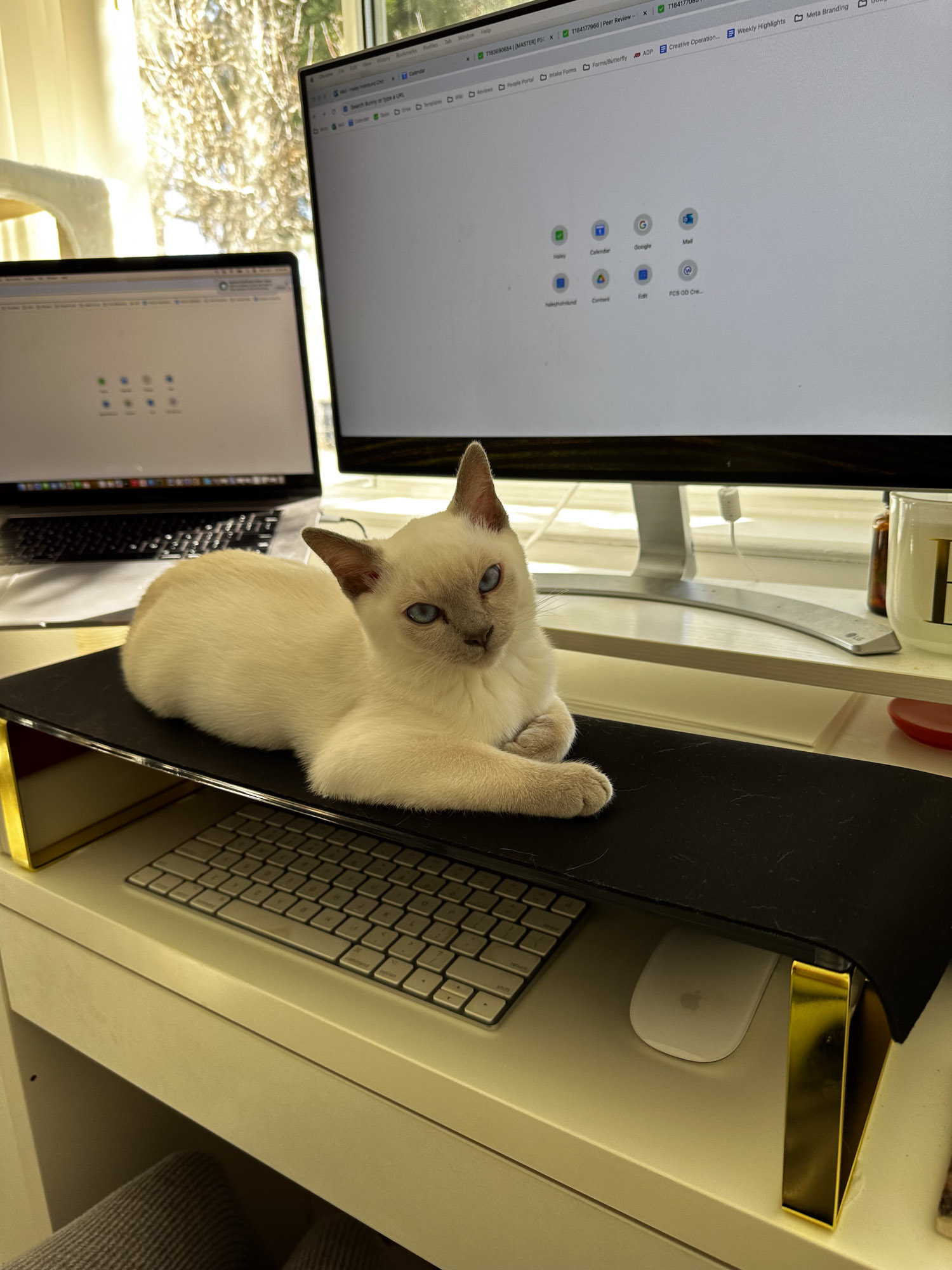
In self-employment, there are a lot of high highs and low lows, but overall I’ve found that it increases my motivation to work. There are a few key practices I’ve discovered that help me stay motivated.
1. Figure out a routine that motivates you.
Being self-employed can lead to procrastination, especially if you’re already naturally prone to this. A recent study revealed that 99% of Americans procrastinate, and 78% said that procrastinating makes them anxious.
I don’t know about you, but feeling anxious doesn’t motivate me to get work done — or do it well. I’m definitely guilty of procrastinating, especially on tasks that intimidate me or are boring. The more I procrastinate, the more stressed I get, which means I procrastinate more, and it’s a downward spiral that leads to nowhere good.

This is why it’s crucial to identify a routine that helps you stay motivated when you’re self-employed. Many people say, “Create a schedule and stick to it,” but not everyone functions that way. I’ve found that when I try to implement strict start- and end-by times, it ends up feeling very limiting and doesn’t help me be more productive.
If operating on a defined schedule works for you, by all means, go for it. But if you’re more like me, I recommend figuring out a) what times of day you are most productive and b) what type of work you tend to procrastinate on.
For example, I tend to be more productive in the morning, but find I do some of my best creative thinking in the afternoon. I also tend to procrastinate on stressful or “less-fun” (typically administrative) tasks.
Knowing when I’m most productive, as well as what I procrastinate on, I realized that if I tackle those tasks first thing in the morning, then I can focus on creative projects later in the day. I have a much easier time staying motivated when I can figure out what I enjoy working on and avoid falling into procrastination.
Of course, that all depends on the nature of your workload and deadlines, which brings me to my next point.
2. Use the Eisenhower Matrix to stay motivated.
Along with procrastinating, “urgency culture” has become prevalent — and detrimental — in our culture. In a constantly connected world, you can’t escape the influx of messages, updates, or requests. And for a society that isn’t used to waiting more than a day (or sometimes even more than an hour) for a package to be delivered, it is increasingly difficult to identify what requests are actually urgent.
Many people face this tension in demanding workplaces, but for those who are self-employed, it’s also deceptively easy to put this on yourself.
The Eisenhower Matrix is a fantastic tool for prioritizing your tasks according to their actual urgency and importance. I love to-do lists, but they can get out of control pretty quickly. Sometimes, they can become overwhelming enough that I don’t even know where to start. There’s nothing more demotivating than making a long list of things to accomplish and leaving it unfinished.
When you have a lot of conflicting priorities and don’t know which to work on first, that’s when it’s time to pull out the Eisenhower Matrix. First, make a list of everything that you need to work on. Then, place each one in the correct box according to the item’s urgency and importance as shown in the matrix. Finally, execute them in the order specified by the matrix. The categories are broken down as follows:
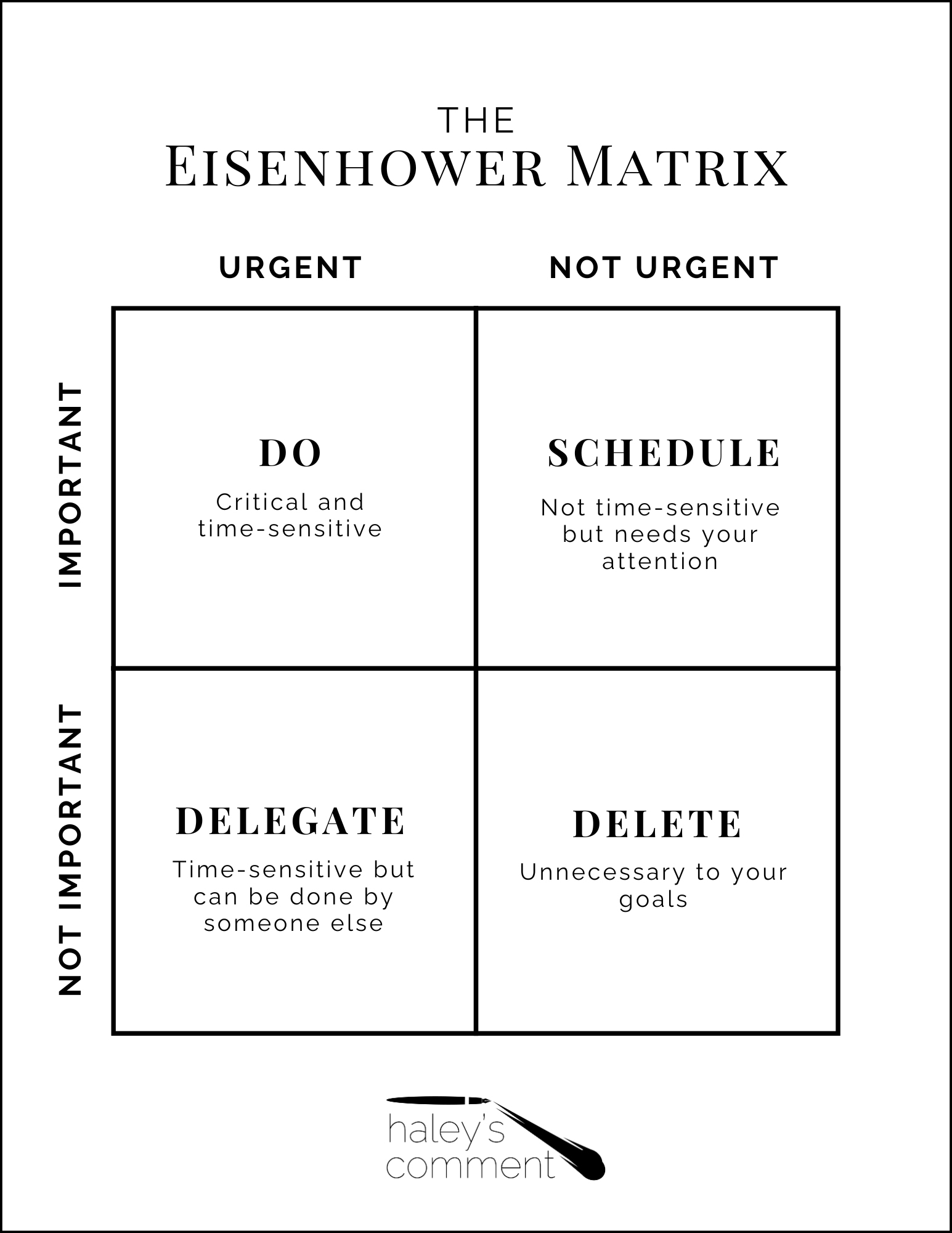
- Do: Critical and time-sensitive
- Example: Project with a deadline of tomorrow — you should do it immediately.
- Schedule: Not urgent but needs your attention
- Example: Huge project with a deadline in three weeks — pick a time to work on it after your imminent deadlines.
- Delegate: Time-sensitive but can be done by someone else
- Example: Grocery shopping — ask your roommate or partner if they can handle it.
- Delete: Unnecessary to your goals
- Example: Reorganizing your inbox — only work on this if you have literally nothing else to do, otherwise delete.
Following this process helps prevent you from getting derailed by things that don’t matter or from stalling on your highest priorities. You can download my Eisenhower Matrix template if you find this helpful!
3. Create tangible goals.
One of the most common challenges of being self-employed is that your work is never truly finished. It can make it hard to identify realistic objectives and figure out when you can feel like you’ve achieved enough.
It’s essential to break down your goals into smaller pieces that can be realistically accomplished. For example, when I created my website, I was pretty overwhelmed by the amount of work there was to do, so I broke it up into a few steps:
- Purchase WordPress plan & domain.
- Create logo & branding.
- Draft content for website.
- Assemble portfolio.
- Set up plugins.
- Publish and test website.
- Set up analytics.
- Post on social media.
Additionally, I find it really helpful to take things one day at a time. Once you’ve broken your project into steps, identify which of those steps you will accomplish that day. Establish that once those goals have been achieved, you will stop working — otherwise, you’ll get carried away and burn out.
4. Identify what environment gets you excited to work.

Everyone operates best in different environments. Some people function best in quiet; others need white noise. Some people love being alone; others can’t fathom it.
Personally, I’ve found there are different environments that motivate me to work and serve specific purposes for different aspects of my day.
- Physical exercise and being in nature help spark my creative juices.
- Working with a friend keeps me on task and motivates me to get through the drearier parts of my workday.
- Hanging out at a coffee shop gives me energy to get things done.
- Sitting at home with my cat calms me and helps me get into a routine.
Whatever motivates you, figure out what it is and work from that environment. There’s nothing more pointless than sitting at your computer trying to force yourself to get in the right mindset if it’s not helping you accomplish your goals.
5. Create a motivational reward system.
I love reward systems! They can be simple — reward yourself with doing the fun part of your work after finishing the less-fun parts, or give yourself that second (or fifth) cup of coffee after you accomplish something challenging.
When you can, reward yourself by taking breaks. I think when you work from home or are self-employed, it can actually be a lot harder to remember to stop working. I am really awful at this, but breaks are necessary for your health and well-being!
Don’t forget the 20-20-20 rule — take a few moments away from your screen and save your eyes! In addition to giving your eyes a break, be sure to get up and move. A Columbia University study discovered that ideally, you should walk for five minutes every 30 minutes.
While physical breaks are necessary, it’s also important to take mental breaks. Call a friend, read a fun book, or watch a few minutes of your favorite TV show to decompress. Rewarding yourself with activities you enjoy will help you be more productive.
6. Give yourself some grace.
For me, one of the greatest challenges of being self-employed is the weight of responsibility. If it feels like your career is resting entirely on your shoulders, that’s a lot of pressure!
When you’re having trouble staying motivated, it’s easy to be way too hard on yourself. The reality is, everyone has trouble with motivation, but with self-employment, the stakes feel higher because you’re counting on just yourself. It can also be lonely if you don’t have someone to commiserate with.
It is so important to give yourself grace. When I beat myself up about not getting enough done, it doesn’t motivate me — it discourages me. If you’re feeling down or lonely about your lack of productivity, ask for encouragement from friends and family. They can reassure you that you are doing a great job, since you’re unable to get that from a manager or coworkers. That support can help motivate you to stay on task and get work done!
These are a few practices that have helped me stay motivated on my self-employment journey so far! For my fellow self-employed workers, what are some things that help motivate you?
