

5 Ways to Develop an Effective Winter Morning Routine
Let's face it: mornings are hard. According to Harvard Business Publishing Education, only 15% of people are truly morning people. For those who enjoy being awake early (I don't but I am trying to), you still have to carve out enough time starting from when you first wake up to accomplish all the things you want or need to do — and this is before your day officially starts!
Even when the days are long and the sun is shining, establishing a morning routine can be difficult. But in winter (my least favorite season), when the days are dark and cold, it can feel nearly impossible. However, given my current schedule, I need to make good use of my mornings, and winter isn't going anywhere just yet. So today, I'm going to dive into five ways to develop an effective winter morning routine.

This post contains affiliate links that earn me a commission. For more information, read my disclaimer.
1. Figure out how much sleep you need
Did you know that the amount of sleep people need varies considerably? While the old recommendation of eight hours a night is still true as an average, there's more deviation than you might realize.
In general, the older you are the less you sleep. Babies sleep all the time and elderly people can get away with just a few hours. However, the general consensus for most adults is anywhere from seven to nine hours per night.
Since sleeping is something we do every single day, that's a pretty big variation! For perspective, that could be the difference between going to bed at 9 pm and 11 pm or between getting up at 8 am and 10 am.
Regularly getting less than seven hours is associated with health issues, so everyone should shoot for at least that benchmark. However, I've found that I need closer to nine hours a night to feel fully rested. Sleeping that much is honestly quite inconvenient and requires intentionality, but prioritizing getting enough hours will pay off over time.
If you don't know how much sleep you need, the answer is pretty simple: if you still feel tired, you may need more. Figuring out how much sleep you need is the first step to developing an effective morning routine.
Disclaimer: I have no medical background; this is just my personal experience! Sleep is complex. If you have issues, you may want to consult a doctor.
2. Establish a consistent sleep schedule
Once you've figured out how much sleep you need, it's time to establish a consistent sleep schedule. Although getting enough sleep is clearly important, a study revealed that consistency may actually matter more than duration. Getting consistent sleep has been one of the most challenging parts of my morning routine, but when I go to bed and wake up at the same time every day, I have noticed I do feel better.
I find it so hard to get out of bed in winter, when it's so dark and cold. And since it gets dark so early in the evenings, it can be difficult to see the value of going to bed early. However, a regular sleep schedule will improve your quality of sleep and make mornings a little less painful.
If you're trying to establish a consistent sleep schedule for the first time and need to increase your sleep hours, my biggest piece of advice would be to not shift your schedule all at once — especially wake-up times. Try going to bed earlier, at the same time every night. If this is too difficult, you can shift your bedtime by just 15 minutes, and keep it at that time for a few days. Once it feels comfortable and you're able to fall asleep relatively quickly, you can shift it another 15 minutes.
Similarly, adjust your morning alarm 15 minutes earlier, and keep it at that time for a few days until it feels comfortable (Be sure to maintain your minimum sleep hours). You can bump it earlier once you feel less dead when your alarm goes off. Repeat the process until you're waking up at your desired time!

Although consistency is important, don't throw in the towel if you miss a day or two. There have been nights where I missed my bedtime by a couple (or more) hours. However, I've discovered that if I power through and wake up at my established time the next day, my schedule can remain pretty intact.
Establishing a consistent sleep schedule is a key part of an effective winter morning routine.
3. Limit screen time in the evenings and mornings
My husband and I realized that we were having trouble getting to bed in the evening or out the door in the morning because we were on our phones (eep!). We implemented some pretty intense screen time limits, and it's improved our morning routine significantly. Apple's Downtime feature allows you to regularly schedule times to shut down your phone apps, apart from essential ones.
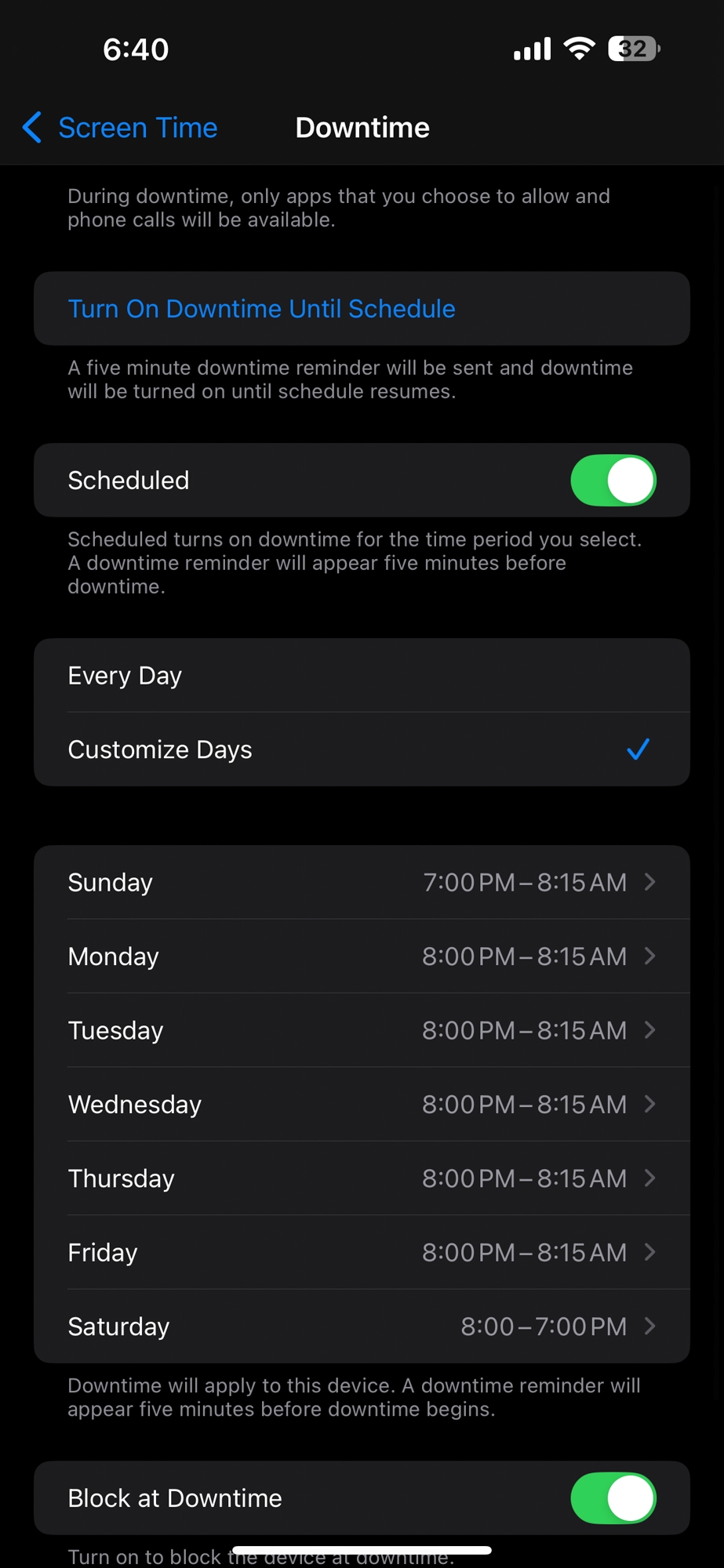
You can select apps to override the shutdown, but I recommend leaving as many as you can. Not having access to your email at all times might seem drastic at first, but I've found I don't usually accomplish too many productive things right before bed or first thing in the morning (looking at you Pinterest and Instagram).
Concentrating your screen time to a few hours per day can help improve your concentration, quality of sleep, and overall mood. The secret to success: have your spouse, roommate, or a trusted friend create your screen time passcode. Otherwise, it's a little too easy to succumb to temptation.
4. Identify your morning motivators
As mentioned earlier, I'm not a natural morning person, particularly in winter. Even when I get enough sleep and have a consistent schedule, I find it so hard to get out of bed.
To develop an effective winter morning routine, it's essential to identify your morning motivators. What is something that entices you to wake up? Is it caffeine? An activity? Using these motivators is a great way to add structure to your morning routine.
These are a few things that have helped me:
Sunrise Alarm Clock
If you hate being jolted awake by the sound of your alarm, maybe it's time to invest in a sunrise alarm clock! In addition to our screen time limits, my husband and I put our phones in another room while we sleep. That means we have to rely on good old-fashioned alarm clocks!
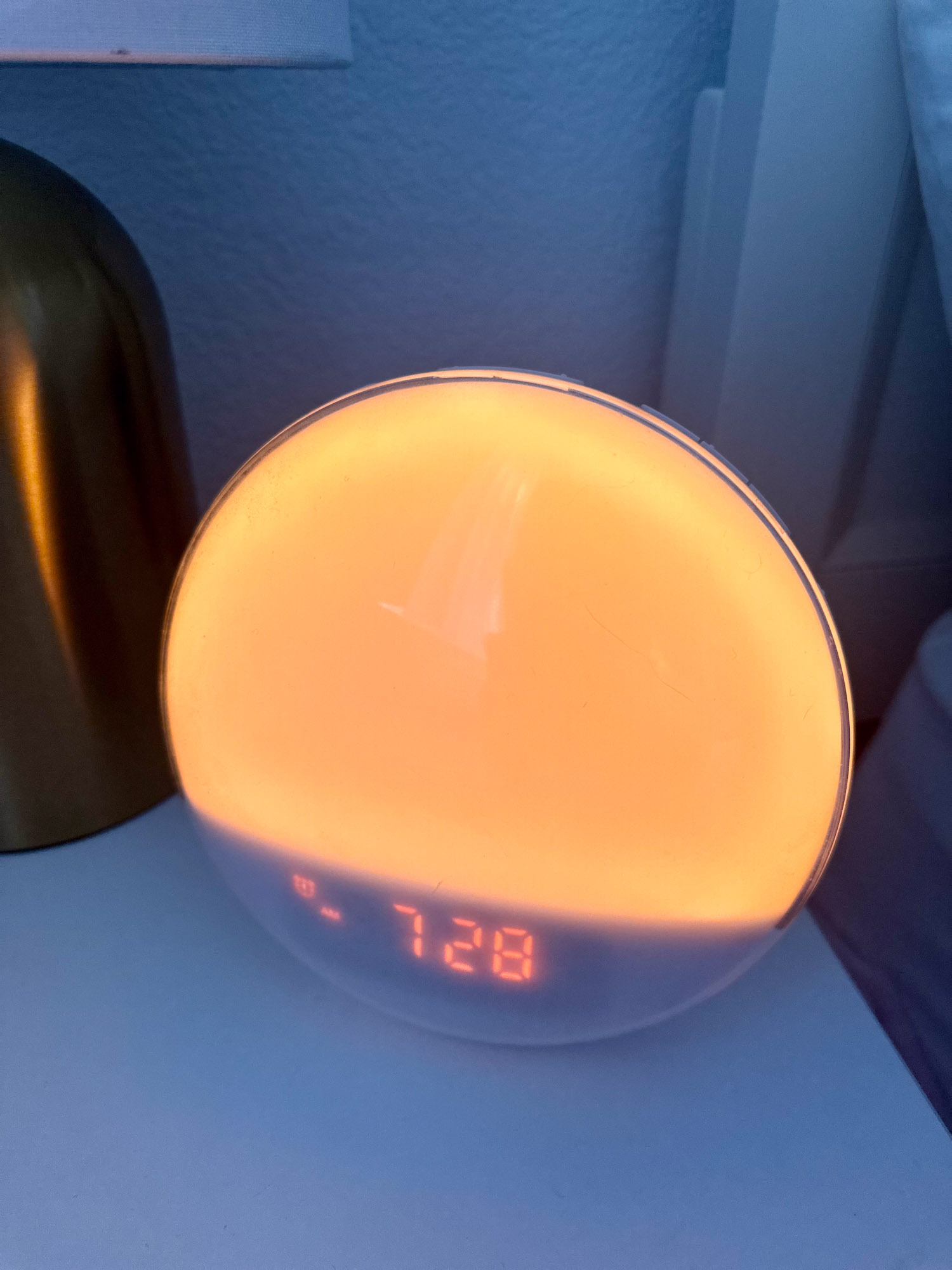
Alarm clocks have come a long way, so there are some benefits to this approach. My sunrise alarm clock can be programmed to light up gradually, with or without sound effects. The idea is that this wakes you up slowly and naturally, like a sunrise would. This is especially helpful in winter since the sun doesn't rise as early in the morning.
Tip: If you're trying to transition your sleep schedule to wake up earlier, one positive aspect of winter mornings is that the sun rises a little earlier each day. If you're struggling to get up in the morning, you could try to time your wake-up times with the sunrise and gradually wake up earlier throughout the season.
Coffee & Cozy
My coffee is the first thing I think about when I wake up. Although I am dependent on my morning caffeine, what matters more to me is its taste, ambiance, and temperature. Additionally, my wonderful husband makes it for me so if I don't get up it gets cold — that's a huge motivating factor to get me out of bed.
If coffee isn't your thing, consider drinking tea or hot cocoa. Find a mug that you enjoy holding and make a hot beverage a part of your winter morning routine.

In addition to a hot beverage, I recommend investing in a warm blanket that you love. Knowing that I have something cozy to wrap myself in significantly improves my mood and helps me leave my warm bed a bit more willingly. This blanket from Amazon is my absolute favorite and is a perfect weight for winter.
A couple of other ideas: if you have a pet, kitty cuddles make me a lot happier in the morning. Lighting a candle is another great way to add some light and warmth to the start of your day.
Prayer, Meditation, & Reading
I've found that prayer and meditation in the morning can feel like a burden or a chore. However, I realized that this has frequently been because of running late and feeling rushed. Allowing enough time in my morning routine to pray, journal, and read has been quite rejuvenating.
Morning Runs
This is absolutely the least fun part of my winter morning routine (mornings + cold = my ultimate nemesis). But, as an achievement-oriented person, I do love accomplishing goals! One of mine for this year is to run a half-marathon, and my husband and I have been training for it.
A few of the things that have helped us make running a part of our morning routine:
- Following a training plan where we only run three days a week: If we miss a day, it's not as hard to make up.
- Accountability: Having a buddy to run with has been a game-changer.
- Not having screen time before we run: Keeps us from procrastinating and helps get us out the door.
- Investing in cold-weather workout clothes: This is not always a necessity in CA but on winter mornings it is!
- Rewarding ourselves with spending money: Whatever it takes!

Once you get into a rhythm, I will say that getting in a morning run before you officially start your day feels pretty good — you don't have to dread making yourself work out at the end of a long day or figure out another time to do it. Also, getting outside has a lot of health benefits, and if you do it at the beginning of the day as part of your workout you can kill two birds with one stone.
Those are a few of my morning motivators! If you don't have anything built into your morning routine that motivates you, consider creating an incentive program for yourself.
For example, if you get out of bed at a certain time every day for a week, you can get yourself a treat. Understanding what incentivizes you will help you establish consistency in your morning routine.
5. Be kind to yourself
The most important part of developing an effective morning routine is to remember to be kind to yourself.

For me, the hardest part of maintaining a consistent morning routine is that I so often fail. I sleep through my alarm, or my cat keeps me awake all night and I can't even think about going for a run, or the weather is rainy and bleak and it just makes me feel like there's no point getting out of bed at all.
If you're like me, you don't like doing anything if you can't do it perfectly. But that's no way to live. An effective morning routine is not spotless and perfect. There will be many days when you fail, but consistency over time is what matters.
So each morning, regardless of your success or failures in your routine, be kind to yourself and remember that every day is a new day.
